
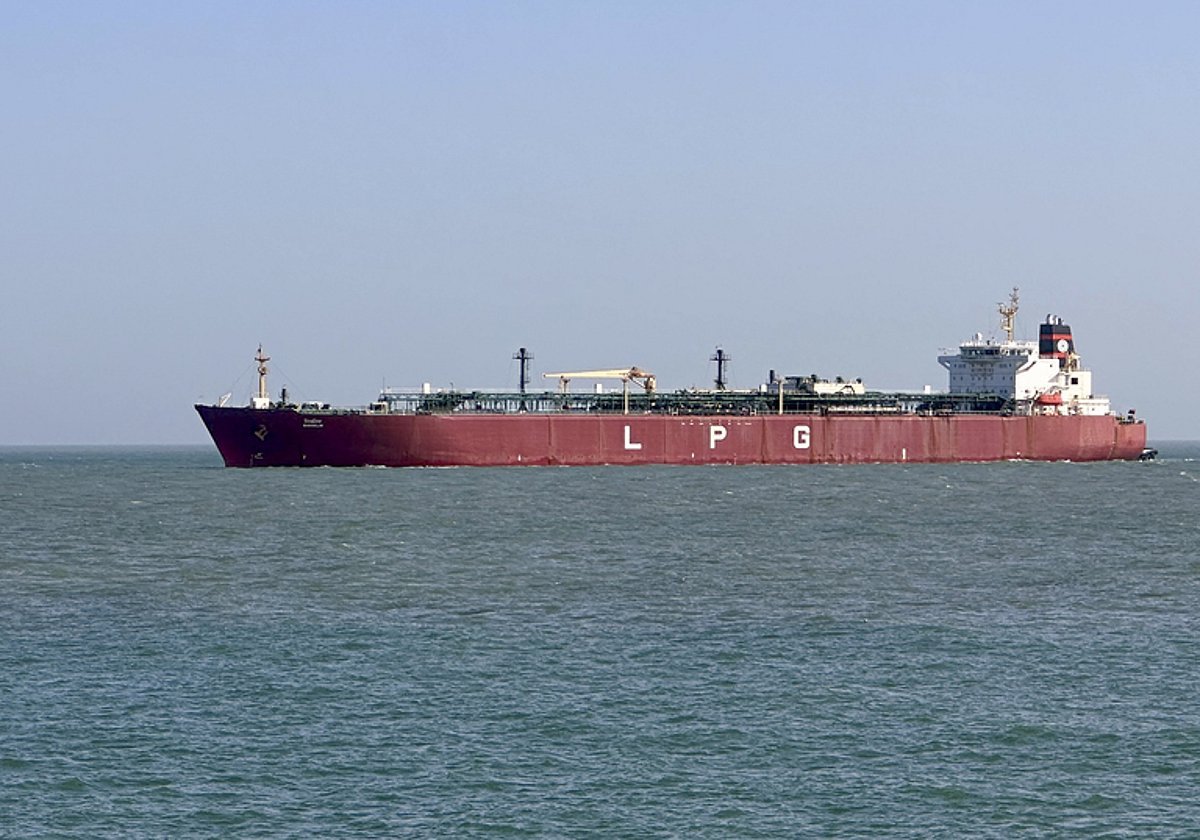

India’s LPG supply remains normal, with ships continuing to arrive through the Strait of Hormuz despite recent geopolitical tensions, Petroleum Secretary Neeraj Mittal said on Thursday.
Mittal, speaking at a conference on energy security and India’s growing gas demand, said ships have been consistently arriving through the strait despite concerns about disruptions.
“I don’t see any problem anywhere. All internal supplies are 100%… ships have been coming continuously even when there has been a blockage. It takes normal travel time. We are not talking about any delay in crossing the strait,” he said.
He noted that nearly 90% of India’s crude imports pass through the Strait of Hormuz, making it a critical route for the country’s energy security. India currently sources crude oil from 41 countries, natural gas from 30 countries and LPG from 13 countries, which should be considered in future policy planning.
Referring to recent developments in West Asia, Mittal said the crisis highlights the need to remain prepared for disruption even when systems appear stable. He added that energy security is not only about availability, but also affordability, sustainability and sustainability of supply systems, with natural gas playing a key role as a transition fuel.
He also said long-pending regulatory and operational issues are being addressed with greater urgency, with multiple approvals being fast-tracked. However, challenges remain in expanding the City Gas Distribution (CGD) network. About 10,000 PNG links are added every day, but nearly a million submissions are still pending.
He pointed to issues such as the lack of skilled manpower, including trained plumbers, and consumer preference for LPG cylinders due to familiarity and convenience. The government is also encouraging industries to switch to PNG, in some cases tying access to commercial LPG to willingness to adopt PNG.
Mittal stressed that improving the customer experience is just as important. He said the process of obtaining a PNG link should be simple, transparent and user-friendly, with fewer steps and better coordination between stakeholders. Digitization and standardization of processes will be key to faster network expansion.



