
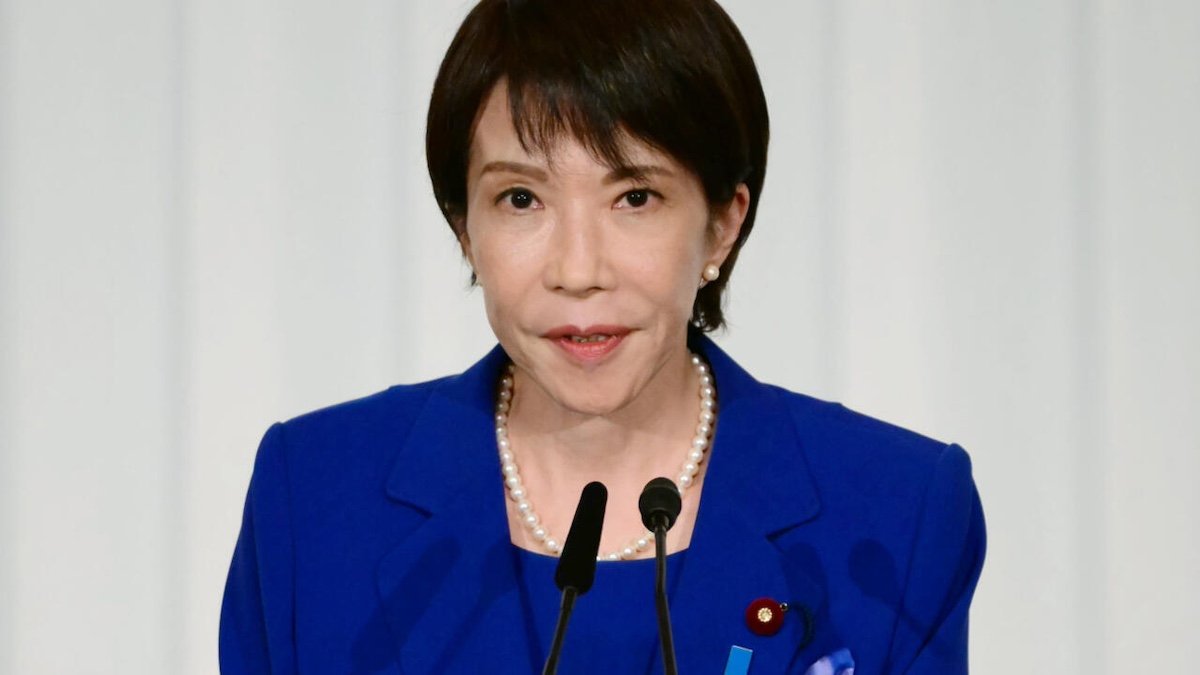

TOKYO – One reason many economists were disappointed with the election of Sanae Takaichi as Japan’s prime minister last October was concern that economic policy is not really her thing.
Certainly, the long-time Liberal Democratic Party lawmaker took the position of a reformer. She talked about tax cuts, lowering living costs and reviving the supply-side improvement strategy championed by her mentor, Shinzo Abe.
The economists, it now seems clear, were right as the war in Iran made Takaichi return to her true passion: changing Japan’s constitution.
One could argue that it is a defensible pivot as US President Donald Trump upends the global order by starting at least one war. And as Trump redeploys missile systems from Japan and South Korea to the Middle East and becomes increasingly erratic on the world stage, Takaichi has reason to question whether the US still has Tokyo.
Takaichi is therefore increasingly focused on freeing Tokyo from the yoke of the US-written 1947 constitution, which prohibits it from building a conventional army and increasing military spending.
This week, it took another step toward raising Japan’s military profile by positioning the country as a major player in global defense market. The LDP lifted most restrictions on arms exports, allowing Tokyo to sell weapons overseas for the first time since World War II. The move is also aimed at strengthening its defense industrial base.
Pivot is not without economic merit. Just last week, Tokyo and Canberra signed an agreement for the first three of 11 advanced Japanese warships to be delivered to the Royal Australian Navy.
It is a boon to the prime contractor on the deal, Mitsubishi Heavy Industries, and employment in Japan’s domestic manufacturing industry. The first three Mogami class frigates will be built in Japan with a budget of $10.5 billion to $13.2 billion. Many technological goods and circuits are integrated into today’s military equipment, spreading economic benefits.
However, the real mandate that Takaichi’s LDP has received from voters since 2012 is bold structural reform, not just a new wave of corporate profits that won’t necessarily fatten paychecks. That’s something Takaichi likely has little time for now that she’s trying to change Japan’s pacifist constitution — just like the late Abe before her.
Takaichi did not specify which provisions he intends to revise. Chances are, the most likely and most controversial target Article 9. It renounces war and forbids Tokyo from using force in international disputes. The LDP has also proposed other changes, including expanded emergency powers, education reforms and changes to constituencies.
In previous years, Abe had set a 2020 deadline for revising Article 9. He was unable to do so — or even put a revision bill to a parliamentary vote before stepping down in 2020. The question, however, is which prime minister is Abe Takaichi most likely to emulate: from 2006 to 2027 to 2001?
Abe’s first stint as prime minister was largely forgettable. In 2006, Abe was the preferred successor to the Japanese leader who did the most to rejuvenate the economy in recent decades – Junichiro Koizumi.
From 2001 to 2006, Koizumi worked to reduce bureaucracy, cut wasteful public works projects, and privatize sprawling Japan. She ran one of the globe’s largest savings banks, dwarfing local banks and making Japan less attractive to international institutions seeking growth markets. The Postal Savings Bank long funded complacency and dubious dealings, while politicians used the bank’s funds to fund their own pet projects.
Koizumi also oversaw efforts to induce banks to dispose of hundreds of billions of dollars in bad loans, thereby choking balance sheets and fueling deflation.
Koizumi then passed the reform book to Abe, who promptly abandoned the process. Abe was much more interested in rewriting the post-war constitution. After 12 months of neglecting falling living standards, the LDP showed Abe the door.
Five years later, Abe is back – this time after co-opting Japan’s answer to Ronald Reagan and Margaret Thatcher. And for a while after the LDP regained power in 2012, “Abenomics” was the talk of the economics world.
Abe’s plan was bold. He pledged to cut red tape, create a more meritocratic labor market, revive innovation, empower women and strengthen corporate governance to restore Tokyo’s place at the center of Asian finance. While Abe succeeded in this last promise, he relied largely on aggressive central bank easing and a are weaker.
It reached a fluid economy, with Japanese characteristics. The Nikkei 225 stock average boomed; family income no. As a result, Tokyo increasingly racked up the largest debt load in the developed world, while weak corporate profits increased.
Now that Takaichi is talking about dusting off the plan, investors have every reason to doubt it chances of success. The biggest concern is what economists call “opportunity cost.” These are the public benefits that are being overlooked by prioritizing one option over others.
As Takaichi focuses on her career-long goal of increasing Japan’s military footprint, she won’t be working to revive Japan’s animal spirits or increase productivity. Her team will not be working to produce a Japanese answer to China’s runaway success in electric vehicles and artificial intelligence.
The mistake the LDP has made these past 13 years is thinking that time is on Tokyo’s side. It is not. Thanks to this chronic neglect year after year, Japan is now facing stagflation.
As economies from the US to Europe try to avoid a scary scenario in which inflation rises ahead of economic growth, Japan is already there. Inflation is twice the GDP growth rate of 1.1% in 2025.
As oil and other commodity costs rise, Japan must import vital goods through a currency that is down 1.4% so far this year. There is also some optimism. The most recent round of “Shunto” wage negotiations with the unions went well, resulting in a An increase of 5.26%. for permanent employees. The problem is that a wage increase of that magnitude without a sudden burst of productivity growth would simply worsen Japan’s inflation battle.
Events in the Middle East hardly help. If Japanese bosses were reluctant to share profits with workers before the war began, they are likely to be even less inclined now.
“If the Iran war is prolonged, inflation will rise sharply, while demand for labor may decrease, both of which will hurt real wages,” notes economist Richard Katz, who publishes Japan Economy Watch. newsletter. “It is real wages that determine how much people can spend, and falling real wages have produced stagnant consumer spending since 2013.”
This reluctance is owed to corporate Japan which has seen government after government come and go after talking too much about raising the country’s economic game. At that time, Tokyo’s debt-to-GDP ratio rose to 260% and the population shrank year by year. In May 2025, this disconnect prompted Takaichi’s predecessor, Shigeru Ishiba, to warn that Tokyo’s deteriorating finances are “worse than Greece.”
Therefore, the fear of a “The Liz Truss moment” in Tokyo. In late 2022, then-UK Prime Minister Truss destabilized the debt market by trying to avoid an unfunded tax cut by bond traders. The extreme market turmoil remains a cautionary tale for Takaichi as her party considers tax cuts without complementary efforts to raise public revenue.
As the economy falters, so may Takaichi’s political capital to revise the constitution or even hold office for a very long time. Indeed, Japan’s giant revolving door is always ready to spin again, as it tends to do every 12 months or so. The vast majority of Japanese prime ministers since the late 1990s have served only one year in office.
This is it problematic cycle in which Japan is located. First of all, Takaichi will have to last much longer than 12 months before the political establishment really comes to grips with its wider agenda. Abe, for example, had been in power for almost eight years – and yet he barely made a dent in his economic to-do list.
Now that the Iran war — and Trump’s unpredictability — have returned Takaichi to her ideological roots, the odds are slim that Japan will turn to its economic weaknesses. As Japan’s first female leader, Takaichi is definitely a trailblazer. However, as a staunch supporter of Abenomics, she is an advocate of status quo policies where new ideas are most needed.
Apart from glacial implementation, the problem with Abenomics is that it is nothing new or innovative. It’s a list of steps Japan should have taken a decade or more earlier. Over time, the idea of doubling down on failure may not sit well with international investors, who this year pushed the Nikkei to all-time highs.
Takaichi’s support for fiscal easing, meanwhile, continues to keep the bond market on edge. Her rise to power has sparked what economist Yusuke Matsuo at Mizuho Securities calls “Takaichi trades.” These are bets on a weaker yen, a steeper Japanese government bond yield curve and higher stocks.
However, this means increasing the tension with Bank of Japanwhich continues to lean towards increasing interest rates. In December, board BOJ Governor Kazuo Ueda raised the benchmark to a 30-year high of 0.75%. Now that Japan is in the stagflation zone and Takaichi is trying to loosen fiscal policy, the BOJ is in an impossible position.
But so are Japanese bulls, seeing the opportunity costs of Takaichi’s preference for constitutional reform over economic retooling.
Follow William Pesek on X at @WilliamPesek



