

Ihor Fedirko, CEO of the Ukrainian Defense Industry Council, an organization representing the country’s armaments sector, is just happy to be alive.
“We’re all alive, so it’s okay,” he said Euractivanswering questions about how he is doing. It was a simple disarmament response, and yet it was representative of the atmosphere in the Ukrainian defense industry. Production lines run amid air raid sirens and engineers redesign systems that are used only hours later.
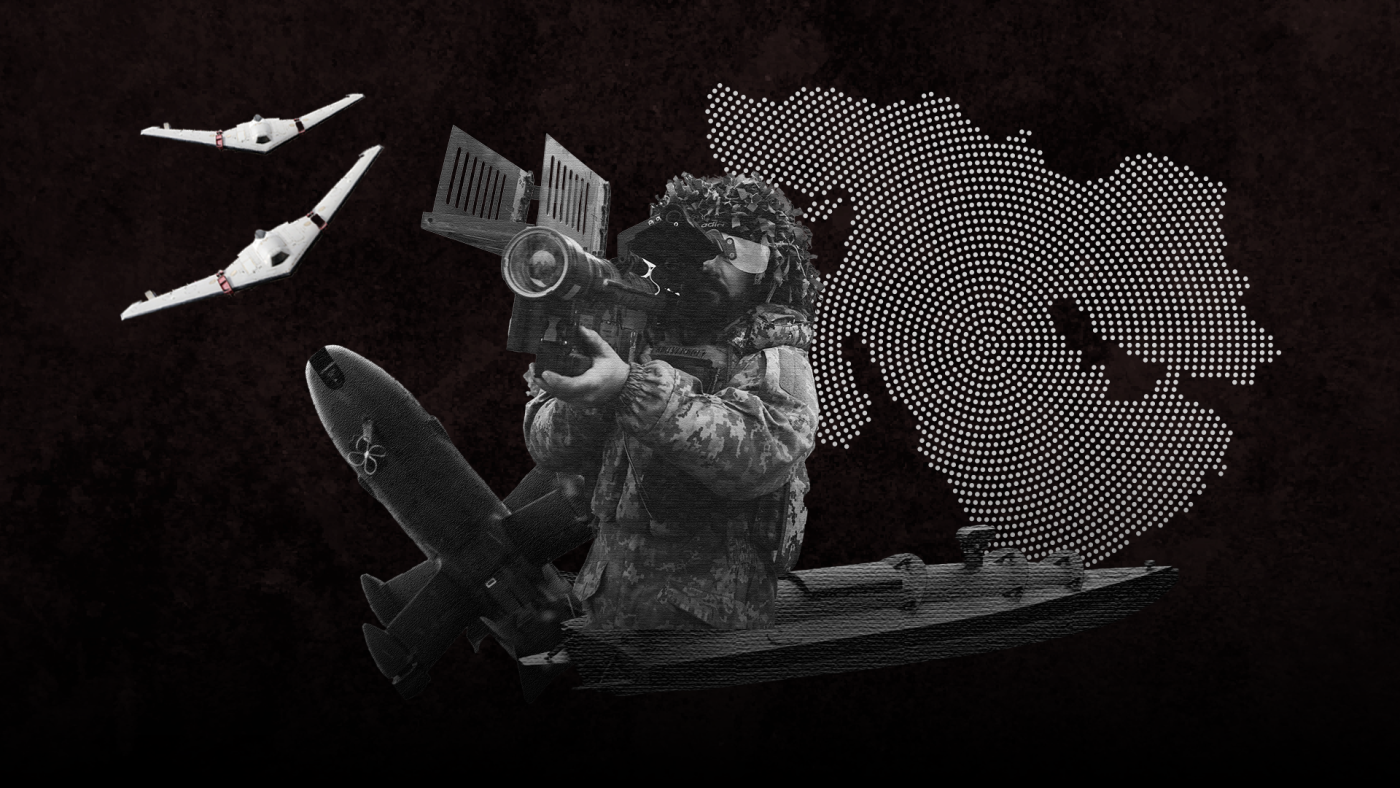
It is in the middle of this reality that Volodymyr Zelenskyy, the President of Ukraine last week announced a series of defense deals with Gulf countries, including Saudi Arabia, the United Arab Emirates and Qatar. He presented them not as conventional arms deals, but as the export of full-spectrum capabilities under a so-called “drone deal” that has officially transformed Ukraine into a global arms exporter.
The announcement marks a turning point. Ukraine is no longer just a recipient of Western military aid. It is becoming a provider of battle-tested expertise to other countries facing similar threats.
For the Gulf countries recently hit by Iranian drones and missiles, the appeal is immediate. For Europe, the implications, as seen from Brussels and beyond, are more complex.
The Gulf States: an urgent issue
At first glance, the deals appear to focus on drones, specifically interceptor systems designed to stop Iranian threats. But Fedirko insists that the reading makes no sense.
“We told them … the interceptor is only part of this picture,” the CEO said, describing talks with Gulf partners.
What Kiev is exporting is not a product in itself but an ecosystem. Years of opposition to Shahed drones — and increasingly sophisticated Russian variants — forced Ukraine to constantly adapt its air defenses. John Hardy, deputy director of the Foundation for Defense of Democracies’ (FDD) Russia program, noted that Russian air threats evolved, becoming more difficult to block and scale, prompting Kiev to respond just as quickly.
The result is a layered network that combines sensors, software, interceptor drones and mobile fire units. It’s less of a single shield and more of an ever-adjusting grid.
It’s also cheaper. Ukraine learned early that using expensive missiles against low-cost drones is unsustainable. Gulf states facing similar threats are now seeking the same answer: broader coverage at a lower cost.
However, direct replication is difficult. Ukraine’s large territory allows threats to be tracked at a distance, while smaller Gulf states operate in narrower airspace, Hardy noted. Therefore, systems require adaptation, not duplication.
That’s why the deals go beyond hardware. They oversee training, integration of these new systems into the country’s military combat instructions, and co-production. In many Gulf markets, localization laws require significant local manufacturing, meaning Ukrainian firms must build locally rather than simply export off-the-shelf systems.
Europe: looking closely, moving slowly
While the Gulf states move quickly, Europe’s response is more cautious.
Ukraine’s progress in drones, electronic warfare and rapid manufacturing has become increasingly important as the EU seeks to build its drone arsenal and expands defense production.
But Fedirko argues that Europe still faces a structural gap. “They still don’t fit their drones into their military doctrines,” the CEO said.
The criticism goes beyond drones. Ukraine’s wartime systems rely on close links between battlefield units, engineers and manufacturers, allowing rapid redesign and deployment. Europe, on the other hand, remains constrained by slower procurement cycles and fragmented national systems.
“Your weakness is around your speed,” he added.
However, Europe offers what the Gulf states cannot: scale. Funding, industrial depth and long-term demand make the continent a crucial future market for Ukrainian firms, especially through joint production.
A new defense exporter
Zelenskyy’s announcement on the Gulf reflects a broader shift. In just a few years, Ukraine has gone from being defense dependent to being a competitive defense supplier.
More than 80 co-production agreements have already been signed worldwide, according to the Ukrainian Defense Industry Council.
What partners in the Gulf, and increasingly in Europe, are buying is not just equipment. It’s experience under fire, compressed into systems that work and are adaptable for partners.
And in a world where threats evolve faster than the technologies to stop them, this may be Ukraine’s most valuable export.
(cm, bw)



