

As for the war in the Persian Gulf, Trump’s inability to end it on purely American terms may be satisfactory, but a prolonged closure of the Strait of Hormuz is not in China’s interest. His studied non-interference at every level suggests he is still no match for US global power. It would be more accurate to say that the two leaders met on more equal terms than when Trump last called on President Xi Jinping in 2017, but not as full equals.
Despite this, during Trump’s visit, Xi made every effort to put the relationship on par with that of two peers without equal. References to creating a ‘new paradigm of major country relations’, highlighting how this relationship was the most important globally, and even Xi’s reference to the ‘Thucydides Trap’ – the Greek theory that suggests a rising power threatens to displace an established dominant power – were meant to reinforce this point. China may not have explicitly mentioned a G-2, but given that Trump has used the definition before, her choice of phrasing suggests she is not opposed to the idea.
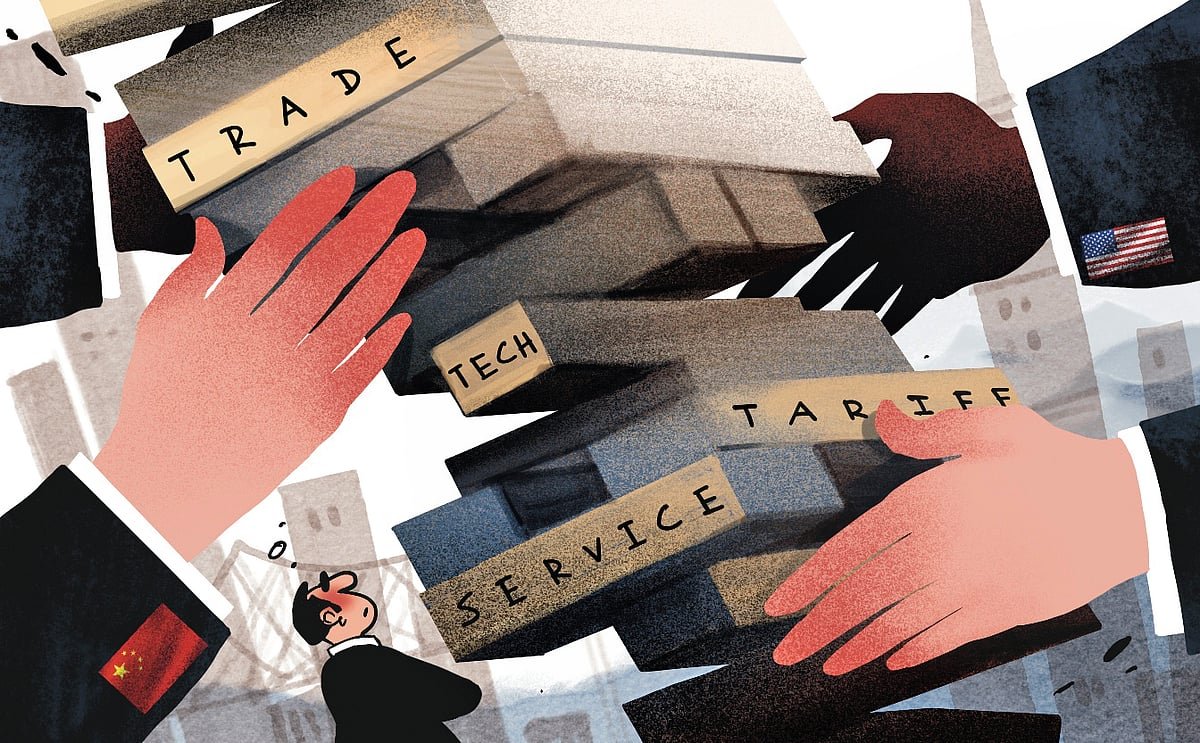
The optics suggest that neither side wants to return to the mutually damaging downward spiral of last year. Each party had their own bucket list. China was seeking tariff relief, easing of US sanctions against Chinese companies buying oil from Iran and easier access to advanced semiconductors and lithography to make the latest chips. The US wanted China to increase farm purchases, ease restrictions on rare earth exports, invest more in the US and loosen regulations on US companies in China. Both sides have claimed that there have been mutually beneficial results. As always, the devil is in the details.
How often in the past has China promised to make more purchases to balance trade, or announced major investment commitments, not least with the US, only to renege when the time comes to implement them? The details of the economic compromise are yet to be fully revealed, but reading between the lines, the Chinese call for ‘equal consultation’ on trade and economic issues indicates that reciprocity will now be a two-way street between Washington and Beijing. Going forward, the US has a declining capacity to ‘sanction’ the PRC without consequence.



