
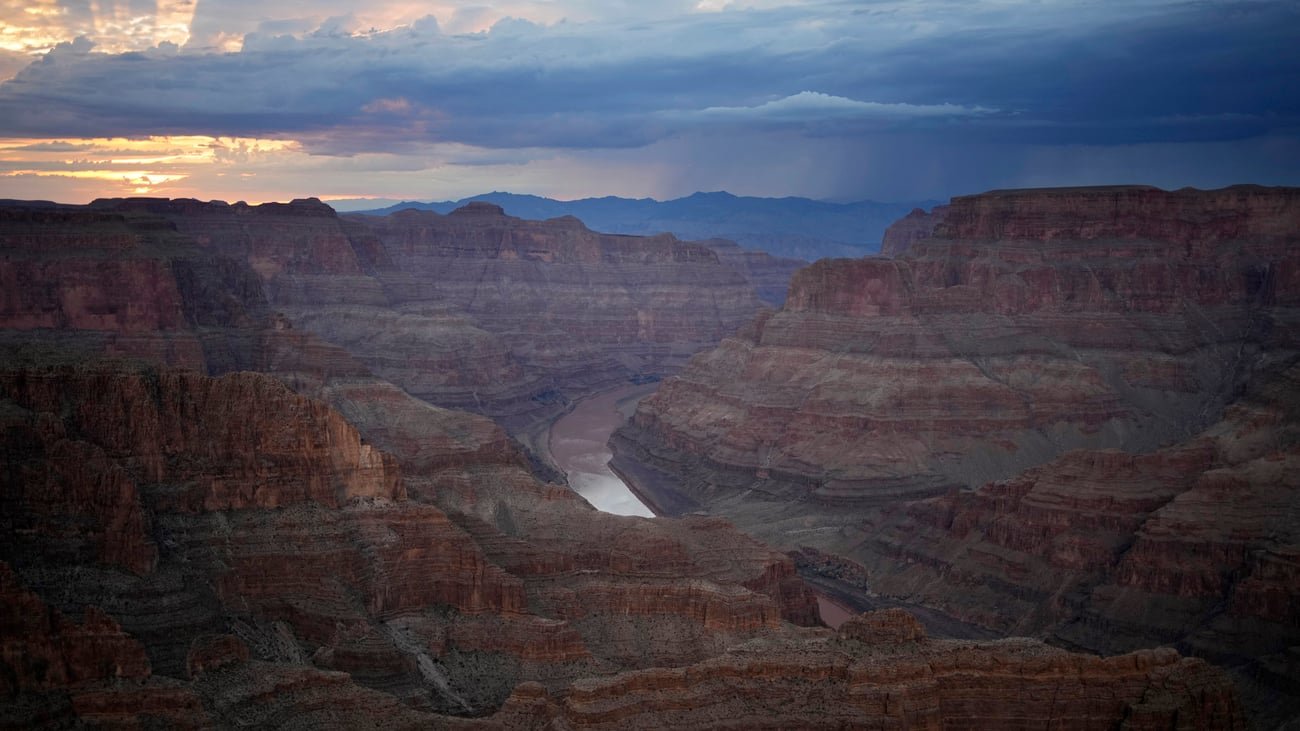

PHOENIX (CN) – The city of Phoenix is taking steps to secure its water future as federal cuts to an already declining portion of the Colorado River loom.
For decades, the city has stored extra water underground, anticipating worsening drought conditions. If the feds were to reduce Arizona’s share of Colorado, the cache might prevent immediate disaster, but it won’t be enough to keep Phoenix afloat forever.
“We can’t buy our way out of this crisis,” Phoenix Water Management Resource Advisor Max Wilson told the city council Tuesday afternoon.
The council unanimously authorized city staff to begin negotiating mutual aid and transactional agreements with municipalities, tribes and other Arizona water providers. The program, called the Arizona Safe Water Program, aims to create an emergency reserve in which water users can set aside “small, discrete amounts of water” to provide short-term emergency resources, Wilson explained.
It will also include a reduction offset program to reduce the volume of cuts in certain units based on priority and need, and a “water sharing sandbox” for water users to experiment with new ways to save water.
Phoenix and Tucson have already agreed to contribute water to the emergency reserve.
“Central and southern Arizona have very different water situations, but we are confident that by working together to develop flexible tools, we can address water issues across our state,” Wilson said.
For years, the seven states located along the Colorado River basin have tried and failed to negotiate a plan to redistribute water use after the current operating plans are completed at the end of this year. Because the states cannot agree, the federal government has proposed its own range of optionsneither of which is very Arizona friendly.
The city uses about 155,000 acre-feet of water annually, and receives 200,000 acre-feet from the Colorado. Under the Bureau of Reclamation’s proposed guidelines, the state could lose access to anywhere from 25% to 100% of its share.
Water Services Director Brandy Kelso presented a number of potentials to the council.
If the city loses access to 25% of its share of the Colorado River, it will have to use its backup supply to make ends meet. If it loses 50%, it will be forced to empty its underground storage. Just by using essentially all of its groundwater, Phoenix would be able to survive more than 10 years if 75% of its portion were cut.
“We manage groundwater as a finite resource,” Kelso said, explaining how long it takes to recharge once it’s used.
There is no viable solution if the city secedes entirely from Colorado.
Phoenix has already taken other steps to increase its non-Colorado River water supply.
Under the Pure Water Phoenix Program, the city is developing three new wastewater recovery facilities Kelso says could add up to 50,000 acre-feet to the city’s annual supply. The city council already gave its approval for the first facility and the city received one $179 million grant from the Bureau of Reclamation to build the second. The third facility will be controlled regionally, in cooperation with other water utilities throughout the valley.
“We expect all three of these facilities to be completed within the next 10 years,” Kelso said. “That’s equal to about 25% of our Colorado River allocation.”
In the Verde River, the Salt River Project is moving forward with plans for it raise the height of Bartlett Dam by 100 feet, increasing the amount of floodwater it can capture and deliver to Phoenix. How much water it adds to the total supply will depend a lot on the frequency and intensity of flood events, but Wilson said it could add up to 10,000 acre-feet a year.
“While the entire Colorado River Basin has a problem, Phoenix and its partners have a plan,” Wilson said. “By taking these steps, water users across the state can work together to solve water problems.”
Council members defended the city’s conservation achievements, namely using 16% less water today than in 1985, despite the population tripling since then. Council member Jim Waring complained that despite Phoenix’s efforts, “it’s kind of out of our hands at this point.”
Waring encouraged city staff to advocate not only for Phoenix, but also for its sister cities, and to leverage the interests of the federal government, noting the current situation. war in Iranwhere the US has launched more than 1,000 Tomahawk missiles. Tomahawk missiles are primarily manufactured by Raytheon in Tucson.
“If Tucson has no water, then I guess there are no Tomahawks,” he said. “The rest of the country will notice if this suddenly disappeared.”
The Phoenix Water Management team plans to return to the city council in the fall to discuss upgrading the city from a stage one to stage two drought declaration, by which time the Bureau of Reclamation may have already decided on its plans for the future of the Colorado River.

Subscribe to our free newsletters
Our weekly newsletter Closing arguments provides the latest on ongoing trials, major litigation and decisions in courts around the US and the world, while monthly Under the lights feeds legal dirt from Hollywood, sports, Big Tech and the arts.



