

Myanmar’s war is often described as a clash of ideologies, ethnic identities and competing visions of the state. This is true, but not complete. At its core, the Myanmar crisis is also a resource-driven conflict intensified by geography.
The generals did not cling to power just for the symbolism of the uniform and the flag. They did so because Myanmar sits on jade, gas, oil, timber, minerals, rare earths and hydropower potential, while occupying corridors linking China and India to the Indian Ocean.
Natural wealth should have helped Myanmar build a modern state. Instead, it has helped finance a perpetual war economy.
In resource-dependent states, rulers who can survive on oil, gas, mineral, or timber rents often feel less pressure to tax citizens fairly, provide services, or build accountable institutions. Wealth flows upward through monopolies, concessions, and military-linked companies. Citizens become subjects to be managed, not stakeholders to be served.
The contrast with the poorly resourced success stories is striking. Japan, South Korea and Singapore had no comparable mineral cushion. They were forced to treat human beings as their main national asset.
of The World Bank has described the rise of Singapore as a case of integrating human capital into national development planning. Myanmar, for many of the same decades, repeatedly closed universities, suppressed independent thought and drove educated citizens away.
The tragedy is not that Myanmar lacked wealth. It is that the state treated lands, minerals and border corridors as prizes to be controlled, while treating people as threats.
Military Tenant State
Since Ne Win’s 1962 coup, Myanmar’s military has behaved like a rentier elite. Instead of building legitimacy through public service, he captured revenue streams from state-owned enterprises, military conglomerates, exports of gas, jade, timber, mining and cross-border trade.
Myanmar Economic Holdings Limited and Myanmar Economic Corporation have long given the armed forces autonomy from civilian oversight. or UN fact-finding mission found extensive military business interests in gems, manufacturing, tourism, banking and natural resources and concluded that these revenues helped maintain the Tatmadaw’s independence from elected authority.
Oil and gas remain central. of US Treasury has described the Myanma Oil and Gas Enterprise as the military regime’s single largest source of foreign earnings, providing hundreds of millions of dollars each year. Human Rights Watch has estimated that MOGE’s natural gas projects generate more than $1 billion annually for the junta.
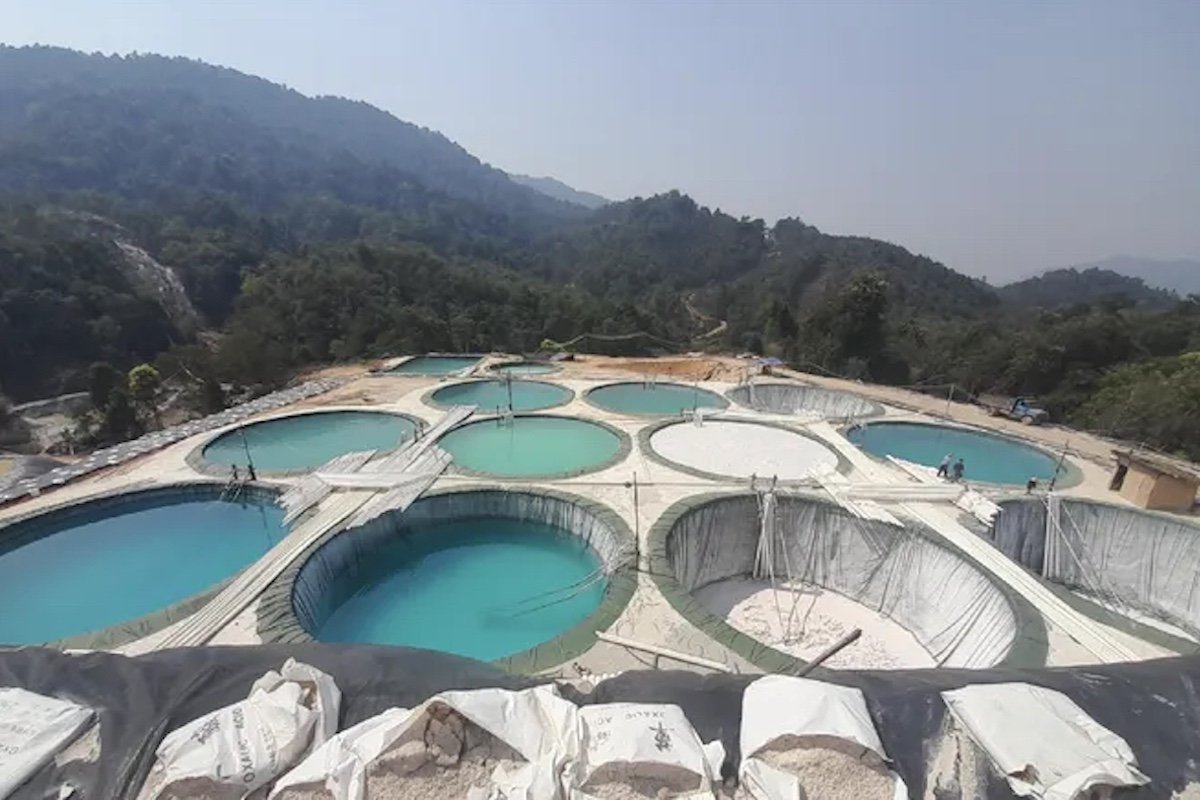
Jade and rare earths show the same border-like pattern. Hpakanti’s jade mines have enriched military-linked companies, armed groups, cronies and smugglers for decades.
Global Witness has documented how jade money has helped finance conflict and corruption, while reporting on rare earths shows Myanmar’s growing role in conflict-related supply chains for China’s clean energy and high-tech industries.
The result is not just corruption. It is a political economy in which violence protects income and income supports violence.
Corridors and fragmentation
Myanmar is rich not only in natural resources but also in strategic routes. For China, Kyaukphyu provides access to the Bay of Bengal and the Indian Ocean through Yunnan oil and gas pipelines. CSIS The think tank describes Kyaukphyu as the terminus of China’s pipelines to Kunming and a key part of Beijing’s strategy to diversify energy routes.
For India, Myanmar is the land bridge to Southeast Asia and a buffer against China. India’s Act East Policy hinges on connectivity projects such as the India-Myanmar-Thailand Trilateral Highway and the Kaladan Multi-Modal Transit Transport Project, both constrained by Myanmar’s instability, as regional analysts have noted in The Lowy Institute.
For Thailand, Myanmar is an energy source, a border security concern and a major source of migrant labor. More than two million Myanmar nationals are officially registered as migrant workers in Thailand, while many others remain undocumented, according to a IOM figure quoted by DVB. They help farm, fishery, factory, construction site and household staff.
This combination of goods and corridors gives external actors incentives to deal with anyone who can provide access, regardless of internal legitimacy. Myanmar’s crisis is also a regional economy of access, extraction and risk management.
This is why the Tatmadaw has always needed a divided Myanmar more than a united one. Ethnic diversity did not cause war. It became the raw material for a divide-and-rule strategy that helped secure resource areas and strategic routes.
Many of the country’s richest assets lie in ethnic areas: jade and rare earths in Kachin and northern Shan; ports and offshore gas near Rakhine; cross-border routes through the Karen, Mon and Shan areas; and hydropower potential in all mountainous regions.
Instead of treating these communities as partners in a federal union, successive military regimes treated them as obstacles to be appeased, dismembered or co-opted.
Ceasefire agreements allowed some armed actors to profit from timber, mining and border trade. Counterinsurgency campaigns depopulated strategic areas and opened up land for military-related businesses. Propaganda labeled ethnic demands for federalism as secessionism. From an extraction point of view, semi-governed space was not a failure – it was useful.
Post-junta risk
The post-2021 revolution has changed the military balance, but not the material incentives. As territory falls out of junta control, resistance forces and local authorities face the same difficult question: how to finance administration, welfare and war?
The simplest answers are also the most dangerous: taxing checkpoints, controlling border trade, intercepting timber or mining, seeking a share of revenue from jade or rare earths, or tolerating criminal economies. These may seem necessary in times of war. If they become permanent, the revolution risks reproducing the system it set out to destroy.
This is the danger of commander-in-chief. Once commanders, local elites, or armed organizations depend on resource rents without civilian oversight, their incentives begin to resemble those of the old order. Therefore, a post-junta order must be more than an anti-military coalition. It must become a new social contract.
If Myanmar’s war is fueled in part by resource rents, then resource governance cannot be postponed until after victory. It should be included in the political solution from the beginning.
Natural resources should be treated as a common national trust, not as spoils of war. Extraction, taxes and concessions should require civil authorization, transparent accounting, environmental safeguards and community consent. States and ethnic regions should have significant authority over local resources within a democratic federal framework. Federalism cannot be symbolic.
Armed organizations, including resistance forces, should also be removed from direct control of resource revenues. Security actors may be needed in times of war, but they cannot become permanent gatekeepers of mines, forests, checkpoints and ports.
Most importantly, Myanmar must elevate human resources from rhetoric to strategy. Even during war, opposition bodies, civil society, ethnic administrations and the diaspora can support community schools, digital education, health networks, mentoring and vocational training for displaced youth. These efforts are the foundation of a country that does not return to rentier politics.
Regional and global actors also face a choice. They can continue to treat Myanmar as a problem to be managed at the lowest possible cost, or they can stop feeding the structures that make conflict profitable.
Reducing support for junta-controlled resource sectors would weaken the regime’s capacity to wage war indefinitely. Supporting civilian-led governance in non-junta areas would shift the balance towards people and institutions.
Myanmar’s future comes down to a simple choice. Will it remain a resource state, where armed men fight over what can be mined, mined, pumped, taxed or smuggled? Or will it become a people-centered federal republic, where natural wealth serves human development rather than funding domination?
The people of Myanmar have already shown incredible courage. But courage alone cannot overcome the resource curse. The revolution must also build rules, institutions and safeguards before victory, not after. Otherwise, the old war economy may survive under new banners.
James Shwe is a Myanmar American professional engineer and Myanmar democracy advocate associated with the Los Angeles Myanmar Movement.



