

The first Hong Kong Sevens was played in front of several thousand curious spectators and some of the players wore gym shoes in the mud instead of rugby boots.

After 50 years, the event has grown into a sold-out three-day festival with a global reputation, mixing sport with socializing, incentives and big business.
The rapid success of the Hong Kong Sevens played a key role in rugby’s return to the Rio 2016 Olympics after a 92-year absence.
France’s thrilling men’s 7s gold, inspired by local hero Antoine Dupont, was one of the highlights of the Paris Games two years ago.
The Hong Kong extravaganza – where legends such as Jonah Lomu and David Campese played in the past – also played a central role in the development of rugby across Asia.
Speaking to AFP on Friday as Hong Kong’s biggest party got under way, World Rugby chairman Brett Robinson said there was nothing like it.
“It’s the pinnacle,” he said.
“Firstly, it’s one of the pinnacle events in global sports, let alone rugby.
“It’s the jewel in the crown of our Sevens series.”
‘Truly special’
The packed crowds who flew in for the weekend are a far cry from when a group of club enthusiasts started the event in 1976.
Now there are men’s and women’s teams from around the globe, but back then it was mainly teams from Asia and the Pacific in a men’s one-day tournament.

“It started as a bit of fun,” former Hong Kong Rugby Football Union president Brian Stevenson, who was involved at the start, once reflected.
Some of the Hong Kong players didn’t even have the right shoes, and one of them was a policeman.
A crowd of 3,000 packed the Hong Kong Football Club to see the New Zealand Cantabrians win the first Hong Kong Sevens.
“It was a kaleidoscope of colour, full of pace and grace, thrills and spills and the glorious uncertainty that make rugby sevens arguably the fastest and best game of the ball in sport,” local newspaper the South China Morning Post said in its report at the time.
The seed was planted and the tournament grew as a commercial and sporting success alongside the development of Hong Kong as a global financial centre.
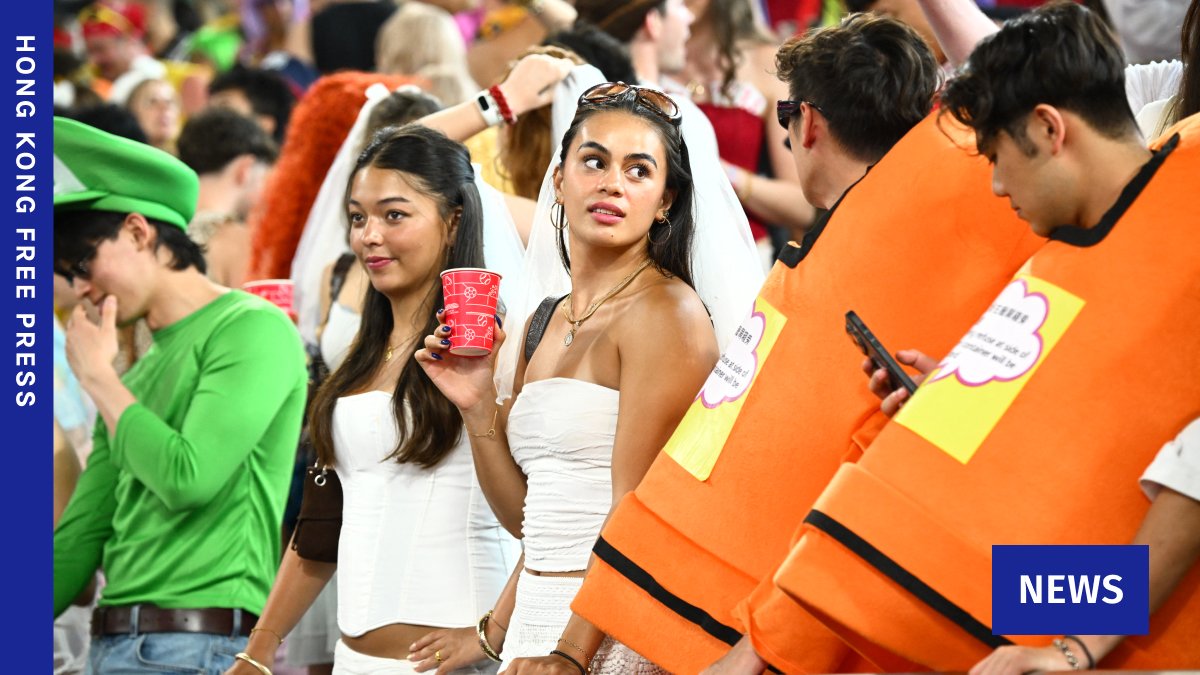
The 40,000-capacity Hong Kong Stadium became the home of the tournament, with the South Stand in particular providing an embarrassing backdrop of well-oiled seated patrons dressed in outrageously embellished dresses.

After the Covid pandemic put a temporary damper on things, the tournament last year moved to the new $3.85 billion Kai Tak Stadium.
The 50,000-seat arena, which boasts a futuristic purple facade and retractable roof, is purpose-built for rugby sevens with 24 separate dressing rooms.
It is located on the site of the old Kai Tak airport, famous for its hairpin approach over the top of nearby residential properties.
Robinson said that when rugby was applying to become an Olympic sport again, delegations were shown Hong Kong to help make its case for inclusion.
“It’s really special in terms of its scale, the level of participation, the moment and the history of the tournament,” he said.





