
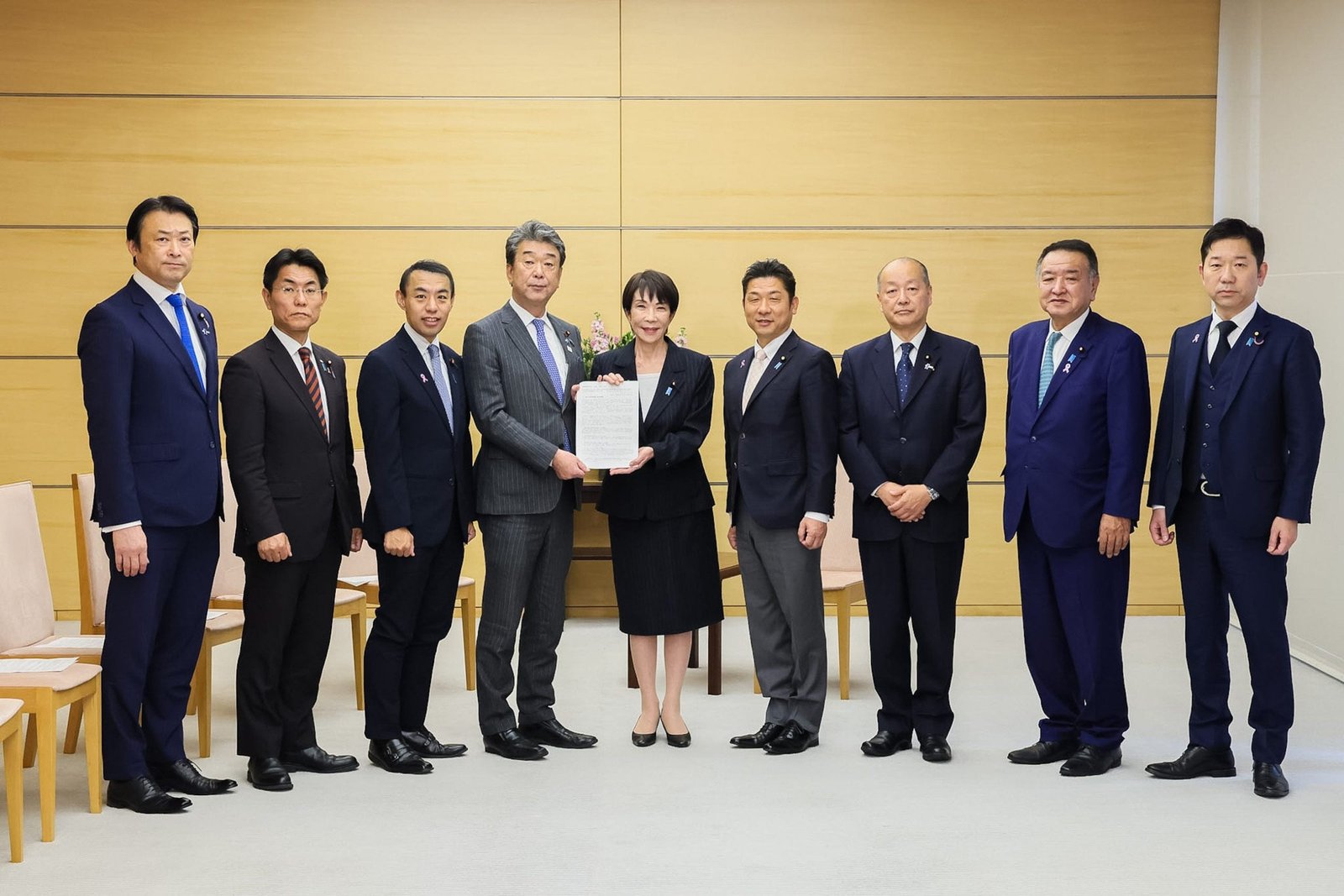

Japan’s Liberal Democratic Party (LDP) policy chief Takayuki Kobayashi met with Prime Minister Sanae Takaichi on Friday, April 24, and made a number of proposals for the government’s response to the Hormuz crisis, including a call to consider sending in minesweepers once the conflict ends.
However, most of the proposals focused on measures to curb rising prices and ensure adequate supplies as the crisis shows little sign of abating. (The full set of proposals is available here.)
Takaichi has continued to focus on assuring the public that the situation is under control, declaring for example in the Diet on Friday that the government is working to solve bottlenecks in the distribution of naphtha in Japan – even though manufacturers have warned that shortages may lead them to reduce production.
Meanwhile, at a meeting of the cabinet committee on the situation in the Middle East on Friday, the prime minister said that the government had secured oil supplies for May from alternative sources amounting to approximately 60% of Japan’s use in May 2025.
it guided its government aims to reach this figure for the month of June.
In the face of the Takaichi government’s focus on supply management rather than demand-side measures, the Center Reform Alliance (CRA) and its affiliated parties are calling out for an early additional budget to address the crisis.
However, as a columnist for Toyo Keizai Kanbee cautionsdespite the leading indicators pointing to a slowdown in demand, lessons from the oil shocks of the 1970s should caution the government against relying on fiscal stimulus to help consumers.
Meanwhile, a panel of Nikkei economists favors such as measures to encourage conservation and the reduction or phasing out of petrol subsidies.
This article is reprinted with permission from Tobias Harris’ newsletter Observing Japan.



