
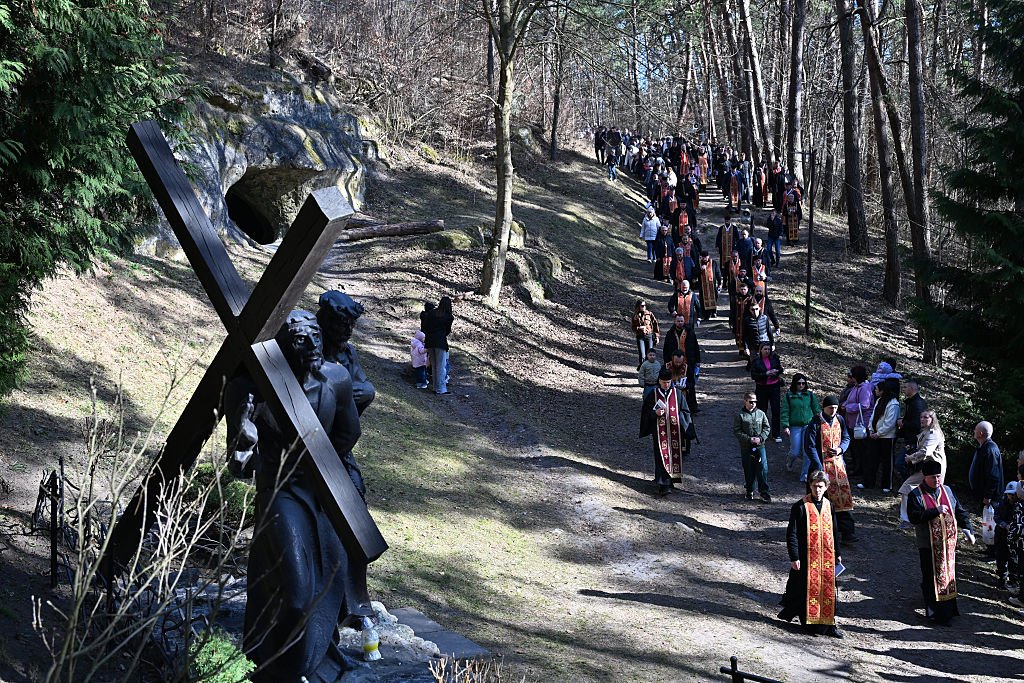

Ukraine and Russia will hold a ceasefire for the Orthodox Easter holidays, the leaders of the warring countries said on Thursday, announcing a rare 32-hour ceasefire.
The four-year war previously saw limited and brief ceasefires, but Moscow and Kiev were quick to accuse of violations.
With talks to end the four-year conflict marred by war in the Middle East, Ukrainian President Volodymyr Zelenskyy said this week that he had made a holiday truce proposal through the United States.
In a statement late on Thursday, the Kremlin said “a ceasefire has been declared from 16:00 on April 11 until the end of the day on April 12, 2026” by Russian President Vladimir Putin, “in connection with the approach of the Orthodox Easter holiday”.
The Kremlin statement did not mention Kiev’s initial proposal.
A few hours later, Zelenskyy responded that “Ukraine has repeatedly stated that we are prepared to take reciprocal measures. We proposed a ceasefire this year during the Easter holidays and we will act accordingly.”
“People need an Easter without threats and real progress towards peace and Russia has a chance to avoid a return to hostilities after Easter,” he added.
Putin has instructed the Russian General Staff “to suspend combat operations in all directions for this period”, the Kremlin said, adding that the troops were ready to “counter any possible provocation by the enemy”.
“We assume that the Ukrainian side will follow the example of the Russian Federation.”
The war has cost hundreds of thousands of lives and forced millions from their homes, making it Europe’s deadliest conflict since World War II.
Slow progress
Over the past few years, the fighting at the front has come to a near standstill. Russia has made small territorial gains at a high cost.
But Kiev recently managed to push back in the southeast and Russian advances have slowed since late 2025, according to the US-based Institute for the Study of War (ISW).
In addition to Ukraine’s counterattacks, analysts attributed the slowdown to Russia being banned from using SpaceX’s Starlink satellites and Moscow’s own efforts to block the Telegram messaging app.
The satellite and messaging app were widely used by the troops for communications, especially for coordinating the drone strikes that have come to dominate the war.
The situation is, however, unfavorable for Ukraine in the Donetsk region, towards the cities of Kramatorsk and Sloviansk, according to ISW.
Moscow wants Ukraine to withdraw troops from both cities without a fight as part of any peace deal.
Ukraine has stepped up attacks on Russian energy targets in recent days, particularly oil export ports, as prices rose in the wake of the Middle East war.
Several rounds of US-led talks have failed to bring the warring parties closer to an agreement, and US attention is now focused on Iran.
Negotiations have stalled, with Moscow demanding territorial and political concessions that Zelenskyy has ruled out as tantamount to capitulation.
Moscow occupies just over 19% of Ukraine, most of which was captured during the first weeks of the conflict.
(sma)



