
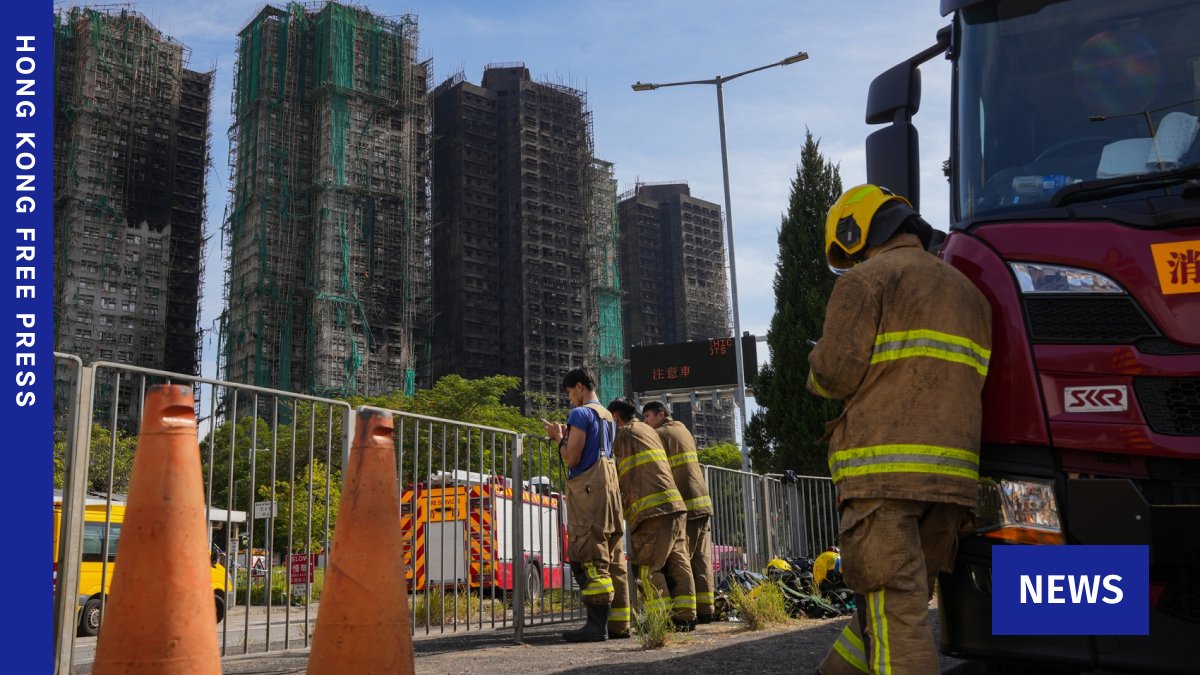

A woman trapped in the burning of the Wang Fuk court property in Tai Po died after police failed to pass her 999 emergency call to the fire service, a public inquiry has heard.

Inter-departmental communications during the fire that killed 168 people in November came under scrutiny when public hearings into the tragedy resumed on Wednesday.
Sunny Wong, deputy fire chief for operational support and professional development at the Fire Services Department (FSD), testified before an independent committee on the 12th day of hearings.
Victor Dawes, the committee’s chief adviser, drew attention to the hundreds of emergency calls during the fire, most of which were initially received by the police’s 999 call center and passed on to the FSD. However, some calls are not forwarded.
In a 999 call made at 3.06pm on November 26, a woman, who lived on the 17th floor of Wang Cheong House, the first building to catch fire, said she was taking shelter in a toilet as fumes entered her flat.
The 999 operator told her firefighters were at the scene and asked her at least five times if she needed “the fire brigade to get you out”, according to an audio recording of the call, which was played during Wednesday’s hearing.
The woman did not make such a request but said she would close all the windows. The call ended with the operator asking her to “call back if necessary.”

Dawes said the woman eventually died and raised concerns about why the police’s 999 call center did not immediately pass the call to FSD.
Wong, who is in charge of managing the FSD’s call center, said the police should have forwarded the call.
“I have not heard of such a situation in my experience. For this specific case, I think it should not be like this,” he said in Cantonese.
In another 999 call at 9.22pm, a man told police a grandfather of his student was reportedly trapped in flat 2802 in Wang Shing House. The elderly man had asthma, the man said, as the 999 operator responded saying they would pass the case on to FSD.
However, FSD case records from that day showed the department was notified of the case approximately an hour later based on information gathered “on the scene.”
Dawes said the elderly man was rescued around 4:30 a.m. the next day, but eventually died from his severe injuries.
Wong agreed that communication between the police and the FSD could be improved, but he also said that the police in general had helped the work of the FSD “significantly”.
Call support
Wong also said the fire at Wang Fuk Court was “extraordinary” and “unprecedented”, leading to a serious backlog of emergency calls and longer-than-average response times.
After the fire broke out, it took an average of 58 seconds for a 999 call to be received by an FSD officer, he said.
Dawes told the inquest that in extreme cases, some callers had to wait up to 15 minutes for their 999 calls to be answered by FSD. He also said that the FSD call center was able to handle 30 simultaneous calls.

Wong said the fire had tested the capacity of FSD’s call center, with the department having to lay off about 80 staff to set up a call support center. However, the department believed it was able to handle the volume of calls during the fire, Wong said.
He also disputed Dawes’ suggestion that FSD call operators should provide real-time updates of the fire to callers, such as an evacuation order issued around 4:10 p.m. that day.
Emergency call operators should focus on gathering information and relaying it to front-line commanders, who can assign firefighters to rescue missions, Wong said, calling it “inappropriate” for operators to evacuate callers.
The greatest lesson from the flames
The senior FSD officer also addressed several criticisms of the FSD operation, including that the department should have used drones and sought help from mainland Chinese fire services.
He said drone technology remained “immature” for firefighting and the city was “not ready” to seek help from mainland Chinese fire services because of significant differences in equipment and operational protocols.

Wong said the biggest lesson from the fire should be how to prevent such a tragedy from happening again.
“Rescue teams have very little to do against such a disaster. I think any conversation about improvement should start from prevention,” he said.
The chairman of the commission, Judge David Lok, noted public calls to elevate the inquiry to a legal body with the power to call witnesses.
He said the strategy has “pros and cons” and will be addressed in the future, but he gave no further details.





