
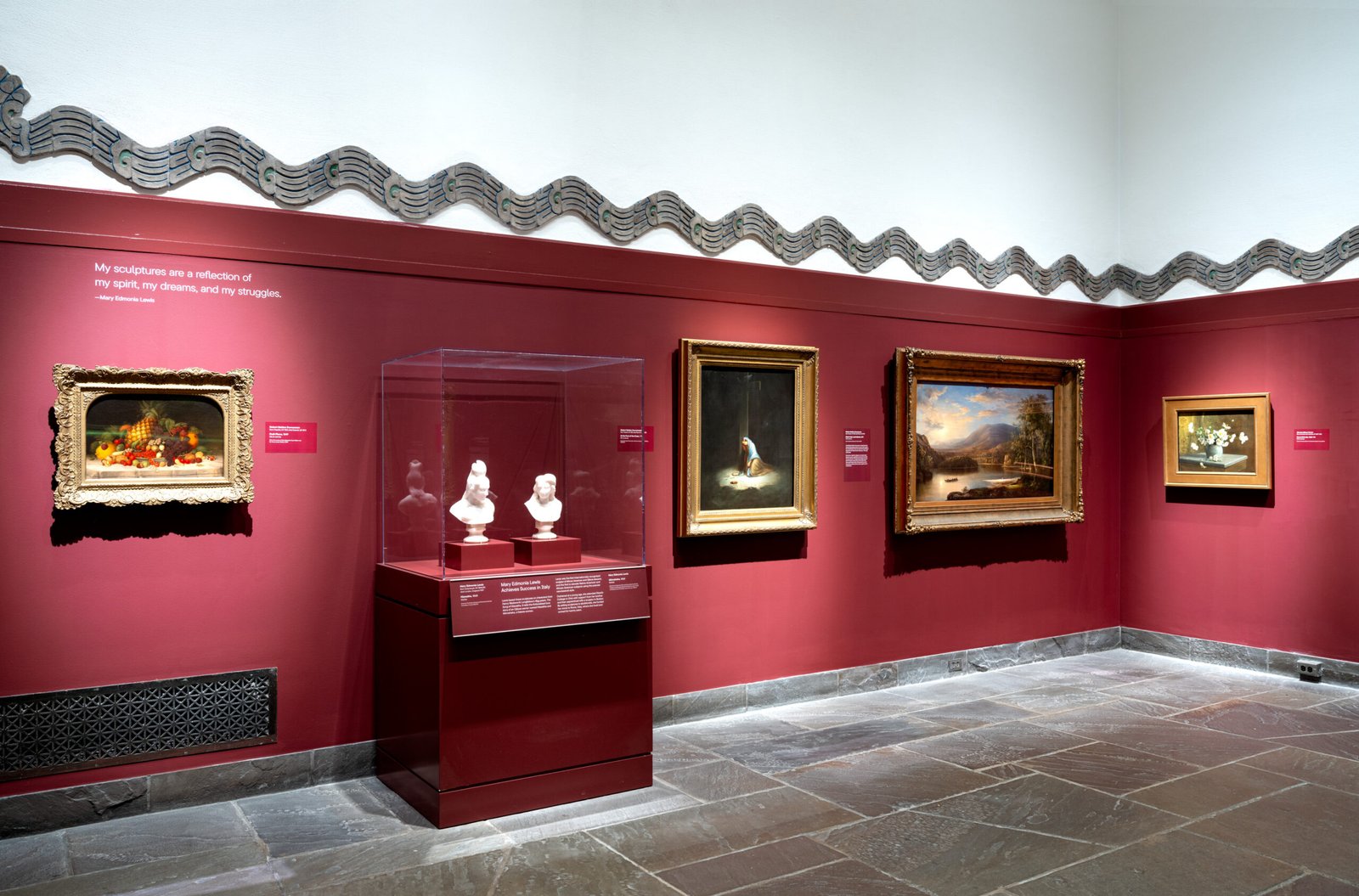


When the Detroit Institute of Arts unveiled its newly installed galleries devoted to African American art last fall, the most significant change wasn’t just curatorial—it was topographical. For decades, works by black artists had been scattered throughout the museum or relegated to quieter corners of the modern wing. Now, after a major meeting, they sit at the heart of the institution, a few steps away from Diego Rivera’s massive murals of Detroit industry, the museum’s most visited landmark, prominently placed in the narrative of the American cultural institution.
The architect of the shift is the leading curator of African American art Valerie Mercerwho joined the museum in 2001 after formative years at the Studio Museum in Harlem with a mandate to transform an underrepresented area of the collection into a defining force. At the time, the museum held only a handful of works by African-American artists, but Mercer approached the task with the pragmatism of a historian, methodically acquiring pieces that would allow the museum to tell a more complete and accurate story of American art.
in “Reimagine African American Art,” the reinstallation traces a lineage that stretches back to nineteenth-century painters such as Robert S. Duncanson– a major figure in his time who later slipped from mainstream art history – to twentieth-century innovators such as Sam Gilliam. The four galleries traverse key cultural moments, including the Harlem Renaissance and the Black Arts Movement, while presenting artists whose contributions are often overlooked in canonical surveys.
The importance of the rehang lies not only in the rise of deserving talent, but also in the culmination of a decades-long institutional recalibration. By moving African American art from the margins of the museum to its literal center, the DIA has turned Mercer’s curatorial project into a permanent structural commitment. The Observer recently sat down with her to discuss her role in the evolution of the museum’s collection, what she hoped to achieve with the reinstallation and the public’s response.
The DIA began adding works by African American artists to its historic collection in the 1940s. What can you tell me about the trajectory of the museum’s collection of African American art, which now has more than 700 works, and how it has evolved?
When I was hired, it was with the specific goal of creating a center for African American art. The previous director realized that the museum was not doing enough to engage Detroit’s large African-American community. At the time, African Americans were not being shown, and the director thought that if the museum had someone who specialized in African American art, it would attract people. He was familiar with my work at the Studio Museum in Harlem and I was brought in to help improve the collection. When I arrived, there were very few pieces of African American art in the museum’s collection, and my job was to assess the strengths and weaknesses of the collection and then begin acquiring works to fill those gaps. Over the years, I have focused on acquiring artwork that tells the story of African American art and its contribution to American art history, which I felt was a missing link.

How did you approach building the collection?
It was clear to me that there were huge gaps in the collection and that the history of African American artists had been largely overlooked. I have acquired works steadily over the years, with the goal of showcasing African American art within the larger context of American art history. I wanted to draw attention to the contributions of these artists, which have often been erased from mainstream art history. It has been a rewarding process and over the years, I have developed a collection that reflects the richness and depth of African American art. The reinstallation, specifically, is about elevating these artists to a prominent place in the museum, where they can finally get the recognition they deserve.
Let’s talk about rehang and its importance. The newly reimagined galleries opened with “Reimagine African American Art,” featuring works from the early 1800s through the 1980s and highlights major art historical moments, including the Harlem Renaissance, Social Realism, Civil Rights-era art, and the Black Arts Movement. What goals drove your choices?
We are making African American art more visible and showcasing the rich history these artists have contributed to American art. Many of the artists featured in the exhibit are not well known, but their work is essential to understanding the history of art in the U.S. This exhibit gives visitors a chance to learn about these artists and appreciate their role in shaping American art. The exhibition is also a response to the historical erasure of African American art and artists and provides a space for visitors to engage with their work in a meaningful way.

Are there particular artists front and center in the re-installation that you felt were particularly under-recognized?
All of them the artists in the exhibit deserve more recognition, but Robert Duncanson, in particular, stands out. He was one of the first African-American artists to gain national recognition during his time, but for many years, his work was overlooked and became, in a sense, unknown—disappeared or erased. I have worked to bring attention to his work and the legacy of artists like him.
There is also the example of Edmonia Lewisan African-American and Native American sculptor who was an important figure in 19th-century sculpture and depicted Native American and African-American people when, traditionally, marble sculpture was associated with white figures going back to antiquity. We have these beautiful busts she did of Minnehaha and Hiawatha. She has such an interesting history – she was among the first African Americans, and also among the first Native Americans, to work in marble. Her work is often overshadowed by that of her contemporaries, but she made an important contribution to American art. We have some of her works, and there is one retrospective of her work at the Peabody Essex Museum in Massachusetts.
But most of the artists in this show are really underrated, even now. A lot of them weren’t really famous – they got some recognition late in their lives, unfortunately. We see this all the time. Recognition often comes too late. I knew some of the living artists when I was in New York working at the Studio Museum because they all came to the museum. When I tour and talk about these artists, people are really blown away.
How was the reinstall received by visitors?
The response has been overwhelmingly positive. People have told me they’ve been back many times since the galleries opened, specifically for Reimagine African American Art, and the galleries have gotten a lot of good press. People are learning a lot, which makes me feel really good, because that’s what I want. I want people to learn this story because it is very important. The African-American community here in Detroit is a very strong presence with a strong history, and this is part of that. There is a genuine interest in learning more about African American art. Sometimes, for example, before we had these galleries, people would ask, what were African-American artists doing during slavery? And the answer is, of course, that people like Duncanson managed to carve out careers under extraordinary circumstances. Now we are able to show that artists like it and Henry Ossawa Tanner were really quite remarkable.

Did anything about the initial response from visitors surprise you?
Collectors of African American art are familiar with the names of many of the artists in this exhibit because they are in books, they are in surveys of African American art, and their work is sought after in those circles. We ran an early focus group of people who were not art historians but were very familiar with this art. There is a piece of furniture in the gallery, a sofa, nearby Thomas Dayan African-American furniture maker from North Carolina who ran his own company and had employees. He was fantastic. I showed the sofa to the focus group and what surprised me was how they responded. They were talking about it in terms of its qualities as an object, and while they liked a lot of the artwork in the show, they really loved this piece of furniture. They started talking about him almost as if he were a person. I have never experienced anything like this; they were simply drawn to it.
I have to ask, do you have a favorite piece of art in the show?
I always come out of this question joking that I’m a Gemini, so it changes all the time. But honestly, as a curator, I can’t have a favorite. If you ask me at 10 am, I’ll give you an answer and by 3 pm, it’s changed because I fall in love with every part. Art has always made me very happy and I love learning about artists. Plus, as much as I love African American art, I see a lot of related art. People would say to me, you studied German art, so how are you now doing African American art? But I don’t see it as something different. A number of African-American artists, like Vincent Smith, would talk to me about how their work was drawn from German Expressionism, and I could see that in his paintings. He was an artist of the Black Arts Movement who focused on working class people, the Civil Rights Movement and the war, and his work is very expressionistic and wonderful. And nowadays, many artists incorporate many cultures into their work. It is interconnected.
More interviews on the Arts



