
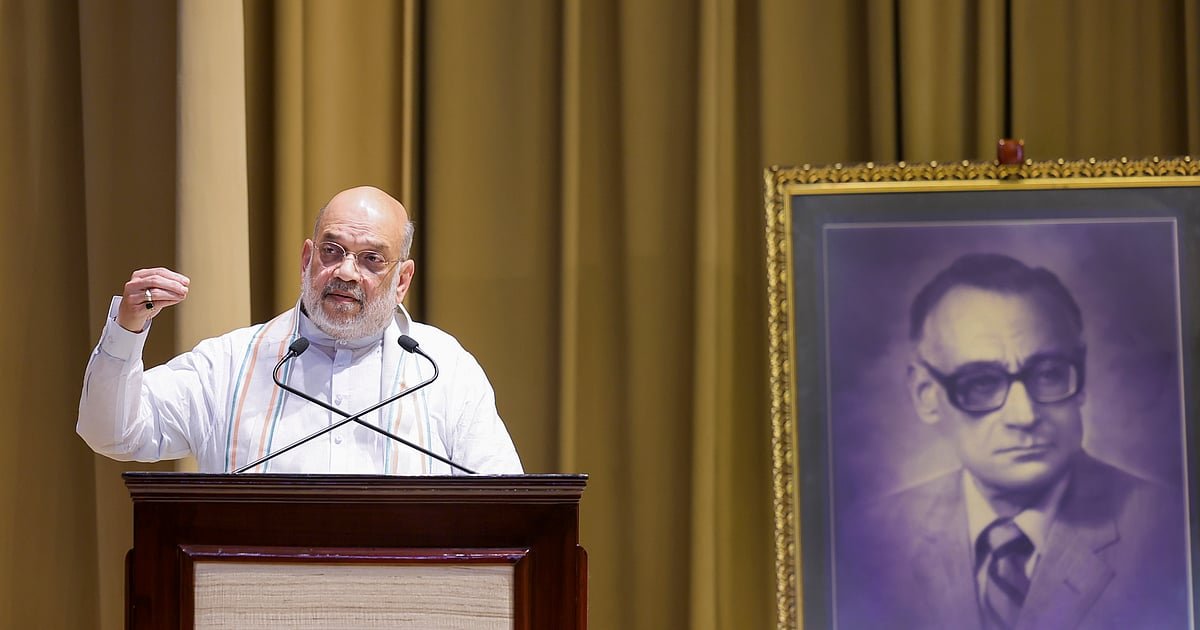

Shah reiterated the government’s commitment to Prime Minister Narendra Modi’s vision of a “drug-free India by 2047”, saying Indian agencies had prepared a roadmap to dismantle narcotics syndicates under a strict “zero tolerance” policy.
“Not a gram of narcotics will be allowed to enter India or use the country as a transit route,” he said.
The interior minister, however, focused much of his speech on the lack of global consensus on anti-drug laws, arguing that inconsistent definitions of banned substances and varying penalties across jurisdictions had weakened international enforcement efforts.
“Unless there is a high degree of global convergence on what is defined as controlled substances, as well as common standard penalties for drug trafficking, drug cartels will continue to benefit from inconsistencies in policy,” he said.
Shah proposed a four-point framework for international cooperation: a uniform global definition of prohibited narcotics, standardized penalties for trafficking offenses, simple extradition of drug kingpins, and real-time intelligence sharing between countries.
Highlighting India’s recent enforcement efforts, Shah said the country had repatriated more than 40 transnational criminals over the past two years with the support of partner countries, although he acknowledged that “much more” remained to be done.
Addressing diplomats directly, Shah urged governments to address the narcotics crisis not simply as a law and order issue, but as a broader civilizational challenge that requires coordinated political, intelligence and security responses.
“A world of 8 billion people, 195 nations and 250,000 kilometers of international borders cannot tackle the drug problem through fragmented approaches,” he said.
He concluded by calling for global collective action that transcends geopolitical divides, stressing that the fight against drug networks and narco-terrorism must be pursued simultaneously through intelligence sharing, coordinated operations and sustained international cooperation.



