

EMDAD is a UAE-based provider of integrated services to the power, petrochemical and energy sectors. The Abu Dhabi company, now part of NMDC Group LTS, works across trading, upstream services, downstream services and refinery shutdown work for clients including ADNOC.
More work for local contractors
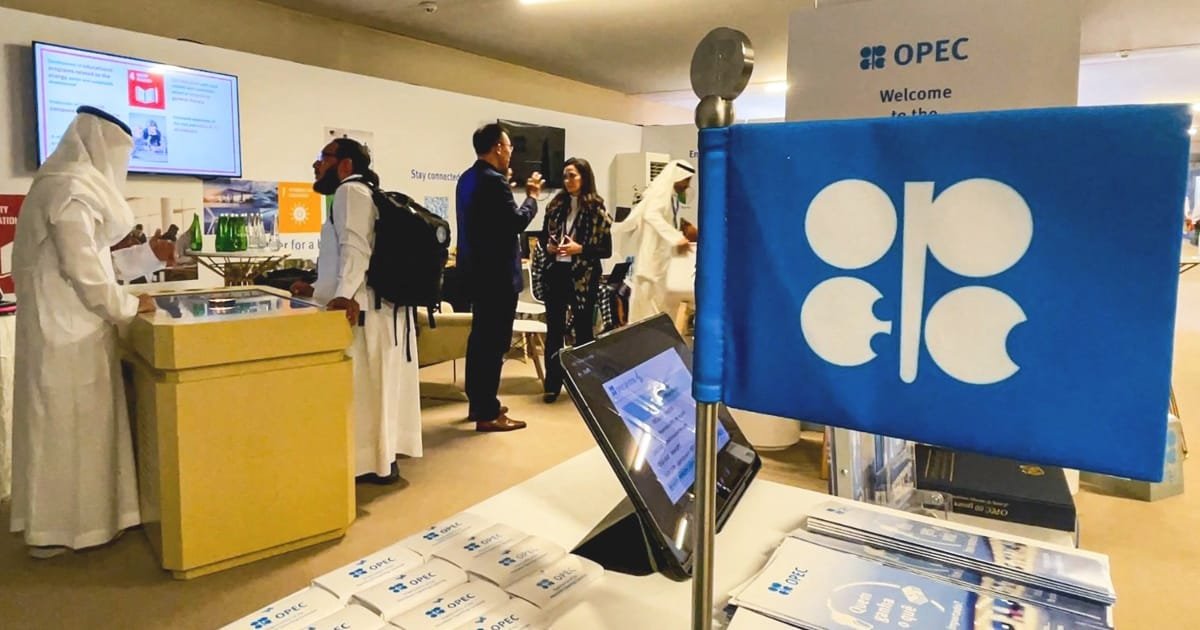
The UAE’s decision to leave OPEC gives the country more room to produce beyond quota restrictions, Al Bawardi said, creating a larger pipeline of work for companies supporting upstream and downstream energy operations.
“In the UAE we have historically made investments to accommodate that capacity,” he said. “For us, we reached the figure of 3.4 million barrels per day and we hope in the future, with the exit from OPECwe are not bound by quota restrictions from the group itself and are able to produce more, up to 5 million barrels.”
The impact on contractors is direct, he added, because higher production capacity requires more support across all field services, equipment, maintenance and technical operations.
“This is the ideal scenario for the contractor himself,” said Al Bawardi. “More work ahead within the top and bottom verticals.”
Capacity needs manpower and equipment
He said the investments needed to reach the milestone have already been made, giving the UAE a stronger foundation to increase capacity when required.
“With this one in particular, we are able to reach that milestone because the investments have already been made and the capacity is already there,” he said. “For us as a single contractor we are able to facilitate and be able to complement the country’s initiative so that we are able to push it to 5 million barrels per day.”
However, higher production brings operational demands for companies in this sector.
“Along with it comes the prerequisites of where, as a domestic company, we need to work in terms of workers, in terms of equipment, to be able to facilitate the increase in working capacity going forward,” Al Bawardi said.
Local suppliers gain importance
Al Bawardi said the UAE’s energy companies have invested in local suppliers, technology and maintenance support to handle faster decision-making and a greater workload after OPEC exit.
“For us, we’ve invested heavily in enabling localization as well as being able to have the capabilities so that we can serve our customers in a kind of turnkey solution approach,” he said.
The EMDAD model includes three verticals. The trading division works with global partners to supply products to customers in the region, while its upstream services cover multiple disciplines in the oil and gas sector. Its downstream business supports capping services and refinery facilities.
The company is also demonstrating technological capabilities, including patents for downhole tools registered in Abu Dhabi.
“We have patents available for downhole tools,” Al Bawardi said. “We have two specific patents registered in Abu Dhabi, one is the whip tool and then the other is the double section mill.”
Short to medium term opportunity
The biggest impact for companies such as EMDAD will be in the short and medium term, Al Bawardi said, as the country works towards its production capacity target.
“With that, what that means for us is looking at it from a short to medium term, there’s a lot of work ahead for us to be able to help within this national initiative,” he said. “There is a lot of work to be done to achieve that capacity and we are ready and able to do that.”
Tested supply chain resilience
Energy operations in the UAE have also faced pressure around the Strait of Hormuz, but Al Bawardi said the latest outage showed the strength of the country’s industrial base.
“With the blockade within the Strait of Hormuz, it showed the resilience within the industrial sector in the United Arab Emirates,” he said.
He pointed to petrochemicals, fertilizers and aluminum as examples of sectors where the UAE’s manufacturing and export capacity remains significant.
“You saw a lot of commodities within the petrochemical industry as well as the fertilizer industry, even aluminum, where we are a major exporter of aluminum,” Al Bawardi said. “The UAE’s manufacturing and industrialization capability is very strong.”
Areeba Hashmi contributed to this report.
Nivetha Dayanand is Assistant Business Editor at Gulf News, where she spends her days unpacking money, markets, aviation and the big changes shaping life in the Gulf. Before returning to Gulf News, she launched Finance Middle East, complete with a podcast and video series. Her reporting has taken her from breaking news to feature-length shows and high-profile interviews. Nivetha has interviewed Prince Khaled bin Alwaleed Al Saud, Indian ministers Hardeep Singh Puri and N. Chandrababu Naidu, the IMF’s Jihad Azour, and a long list of CEOs, regulators and founders who are reshaping the region’s economy. An Erasmus Mundus journalism alum, Nivetha has shared classrooms and newsrooms with journalists from more than 40 countries, which perhaps explains her weakness for data, context and a good follow-up question. When she’s away from her keyboard (AFK), you’ll most likely find her at the gym with an Eminem playlist, enjoying One Piece, or exploring games on her PS5.



