
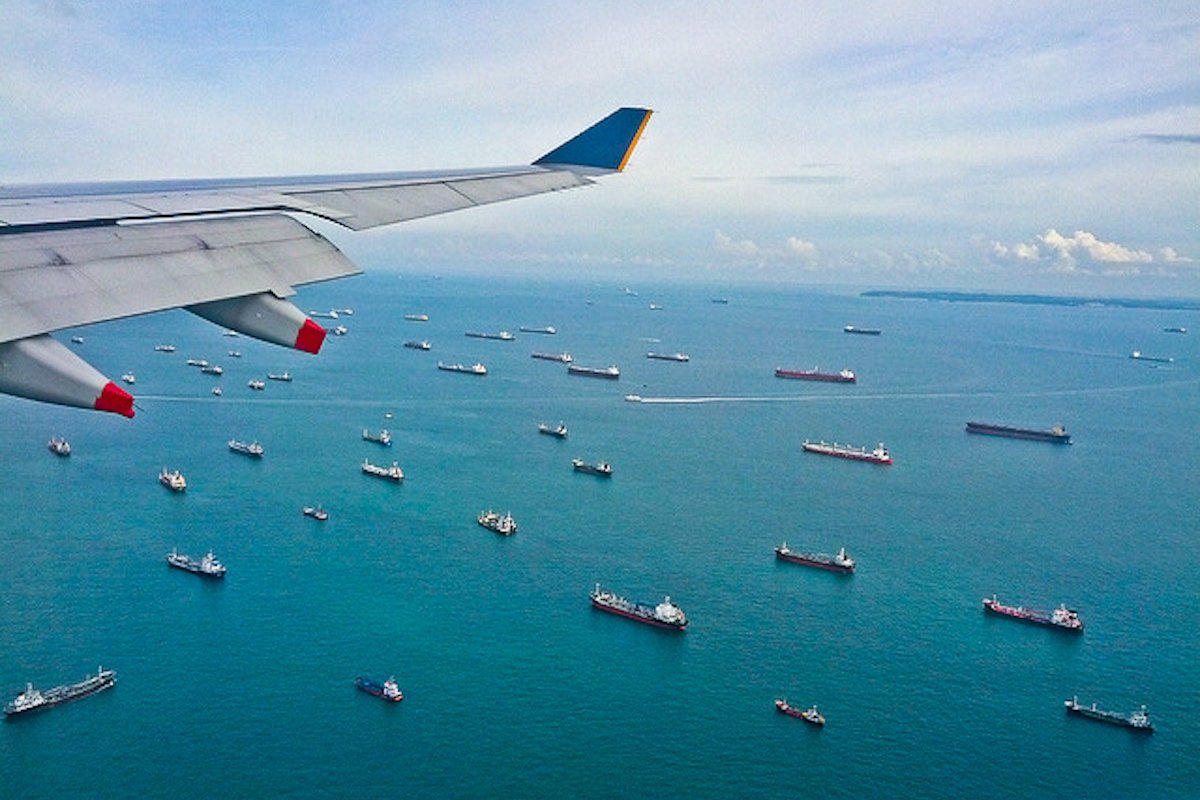

This weekend, two very large Iranian crude oil carriers – HUGE and DERYA – successfully navigated the US Navy blockade of the Strait of Hormuz and passed through Indonesia’s Lombok Strait, carrying 3.8 million barrels of oil destined for desperate Asian markets.
Opponents of US President Donald Trump’s war on Iran celebrated the VLCC’s achievement on social media, although it’s worth noting that the news broke at the end of a leaked plan to give the US military unrestricted overflight access to Indonesian airspace.
This weekend’s events are likely to draw Indonesia further into the escalating great power struggle between the US and China, putting enormous pressure on President Prabowo Subianto, who is trying to craft a “with many linesForeign policy between the two.
In addition to cutting off trade through the Strait of Hormuz, the US Navy’s policy of interdicting ships associated with the so-called shadow fleet is increasing fear that the Straits of Malacca – jointly administered by Indonesia, Malaysia and Singapore – could be next.
Maritime capital is like the water in which it floats. When a channel is blocked by military posturing or political interference, capital will seek the path of least resistance. The Lombok Strait is deeper, wider and less monitored than the Malacca Strait, adding only a few days of travel time.
VLCCs carrying millions of barrels of crude in the middle of a supply crisis can trade their cargo at a premium, easily recouping any losses. And the longer Trump maintains his blockade, the more attractive and ultimately more sustainable this steady path to sanctions will become.
The destination of HUGE and DERYA – the Riau Archipelago – also reveals the limits of Washington’s strategy. During the years of American sanctions, these islands have become one CLEARING for Iranian crude, coordinating transfers to smaller, newly flagged vessels destined primarily for China.
This market exposes the fundamental contradiction of America’s much-vaunted maritime hegemony: it is omnipotent but not omnipresent. Identifying a dozen ships flying as many flags is different from actually stopping them and dealing with the resulting political consequences.
Conducting a military operation in crowded waters near Indonesia’s exclusive economic zone would be with diplomatic risk. And even if the US Navy succeeded, the ship-to-ship market would simply pull stock and move to another archipelago (there are literally thousands).
That’s why the Pentagon wants one blank check to operate in Indonesia. Trump needs to salvage his failed blockade by replacing air superiority with local sea control. If President Prabowo allows it, the resulting airstrikes could cause a humanitarian and environmental disaster.
While Indonesia technically controls its straits, it lacks naval capacity to check these markets ship by ship. America intends to use this inability in tight diplomatic negotiations: let the US operate in your airspace, or face the threat of sanctions.
China should do everything in its power to support Prabowo in resisting these demands – offering economic guarantees to offset the threat of US sanctions, as well as direct investment in Indonesia’s maritime industrial sector to strengthen its navy and coast guard.
The passage of Iranian VLCCs through the Lombok Strait heralds a new era of American aggression in Indonesia. Trump has put a lot of political capital into this war, so any market that exposes the failures of his blockade will be treated as an existential threat.
China must recognize this changing paradigm and act decisively to protect its energy security. This means not only protecting Indonesia from American coercion, but also ratifying the Code of Conduct and establishing a new regional maritime order – even if it means receiving tolls in the Straits of Malacca.
Logan McMillen writes foreign policy analysis through the lenses of economics and critical political geography, focusing on Latin America. His work has recently appeared in The New Republic, Responsible state work, North American Congress on Latin AmericaAND Foreign policy in focus.



