
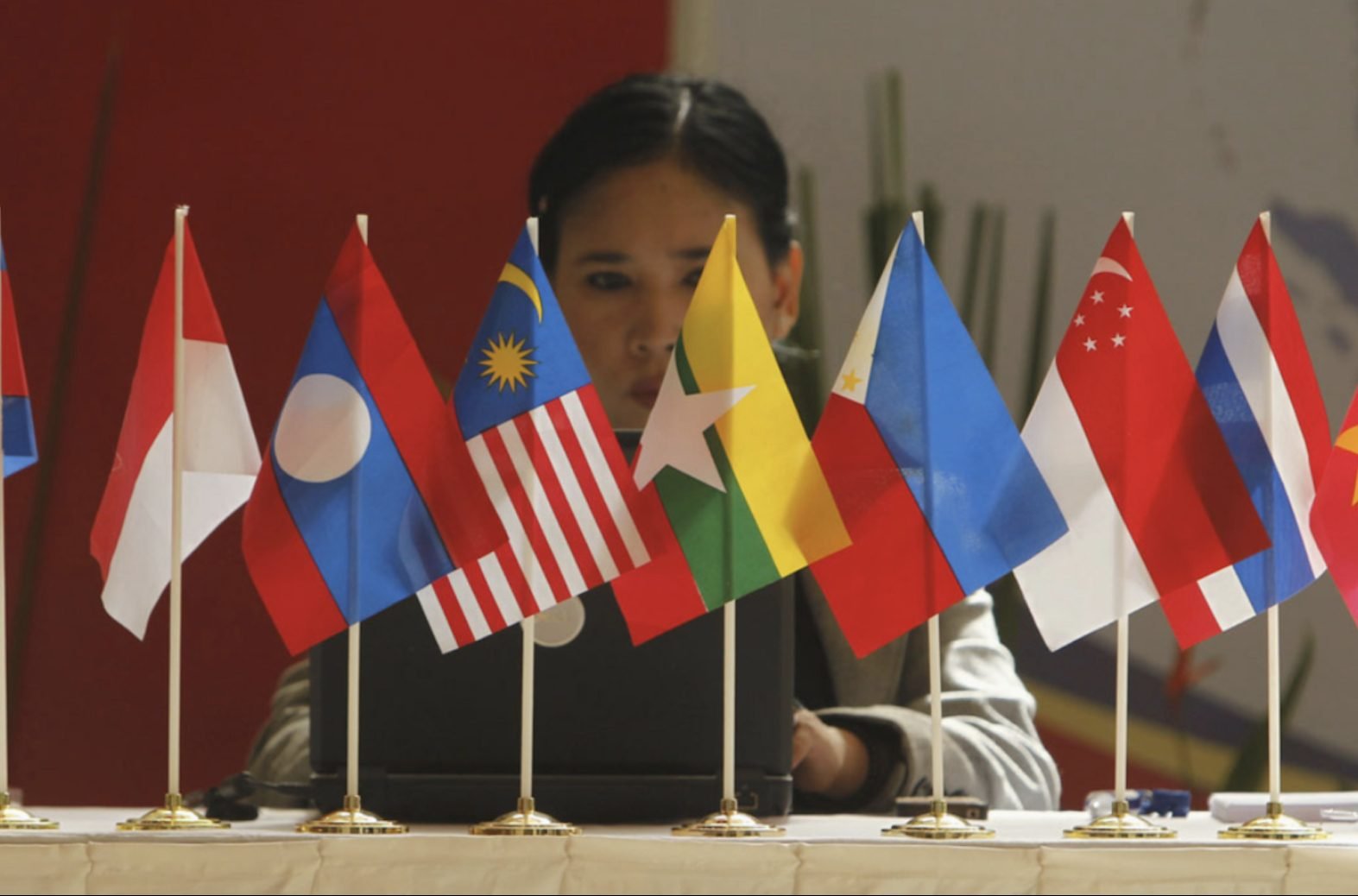

Southeast Asia is watching US-Israel conflict with Iran – and tacitly drawing conclusions. Most countries have adopted a policy of non-intervention, but after cautious and neutral positions, they are accelerating efforts to reduce their defense dependence on Washington.
The latest US-Indonesia defense deal, followed by an obvious one rive between the Indonesian defense and foreign ministries over the granting of US overflight rights over the Straits of Malacca, resulting in an entry ban, clearly illustrates this tension.
President Trump’s unpredictable and transactional foreign policy has widened the divide between Washington and many Southeast Asian capitals. Declining trust and diminishing reach are increasingly evident, while the US’s disengagement from the multilateralism of the Association of Southeast Asian Nations (ASEAN) signals a declining role in the region.
Although suggestions of a diminished US role in the region have circulated for some time, they have not always been supported by concrete evidence or results. Successive administrations managed to restore engagement after periods of drift. They were seen in the “Pivot to Asia” under Barack Obama, the Indo-Pacific strategy during the first Trump administration and its continuation under Joe Biden.
Currently, however, US influence appears to be in a more marked decline. A key and visible indicator is the lack of clear support from allies and partners during the ongoing crisis in the Middle East. Even traditionally friendly countries have expressed criticism of the US war against Iran.
For example, the Foreign Minister of Singapore, Vivian Balakrishnan DECLARING at the end of March: “I was surprised by the start of hostilities. I didn’t think it was necessary. I don’t think it’s helpful. Even now, there are doubts about the legality. For 80 years, the US subscribed to a system of globalization based on the principles of the UN Charter, multilateralism, territorial integrity and sovereign equality. It led to a period of integrity and global peace.”
Another important indicator is the state of Southeast Asia of the ISEAS-Yusof Ishak Institute 2026 survey. Surprisingly, regional attitudes towards China and the US have changed in recent years.
According to the poll, 52% of respondents now favor rapprochement with China, compared to 48% who still prefer the US. While the overall margin is narrow, the finding is nonetheless significant: China is now perceived as more aligned with the interests of ASEAN member states than the US.
More striking, however, are the changes in individual countries. In Indonesia (80%), Malaysia (68%) and Singapore (66%), respondents show a clear preference for alignment with China over the US. In contrast, only 23% of Filipino respondents express a similar disposition toward China.
Two main factors support this change. Immediately, the conflict and disruption of the Strait of Hormuz have severely affected ASEAN economies.
ASEAN Center for Energy reported that Middle Eastern crude accounted for 56% of ASEAN’s total crude imports last year. The resulting energy shock is the most visible consequence, with effects already felt in regional markets. Foreign investors, for example, are sale of Thai assets amid concerns about energy price volatility stemming from the US-Iran conflict.
Second, the rapid decline in confidence in the US is a critical factor. Perceptions of unpredictability – from the imposition of tariffs to a lack of sustained economic and security focus in the Indo-Pacific – have reinforced doubts about Washington’s credibility.
Trump’s transactional, temperamental and often eccentric approach to foreign policy has prompted a serious recalibration among allies and partners in the region.
With US attention and resources stretched across multiple conflicts from Europe to the Middle East, and with an America-first focus at home and abroad, such a regional recalibration is both justified and understandable.
The apparent failure of the US to protect its partners in the Persian Gulf Iranian attacks it is a stark reminder that self-reliance, supplemented by reliable strategic support from great powers, remains the ultimate guarantor of security.
For many medium and small regional powers, the choice is no longer limited to the US or China. While trust in Washington is clearly on the wane, it does not automatically translate into alignment with Beijing.
Instead, most Southeast Asian countries are prioritizing flexibility and diversifying their strategic partnerships. Japan, Australia, India, Turkey, the United Kingdom and the EU are seen as partners with untapped potential.
The US-China dynamic is often cast as one that benefits China, but this view is overly simplistic. Divisions within ASEAN persist, particularly over the South China Sea.
While China has often exploited differences among ASEAN members, this fragmentation also creates challenges for Beijing. The more assertive posture of the Philippines, for example, has complicated China’s efforts to maintain a stable regional strategy.
The US-Israel-Iran conflict has made it clear that ASEAN member states do not see it as their conflict, prompting a reassessment of their global positions and creating space for more autonomous foreign policies.
Crises can present opportunities. For many ASEAN states, this may be the moment to address internal divisions and pursue a more coherent, collective approach—one that strengthens the bloc and reduces vulnerability to external shocks.
Dr. Rahul Mishra is an Associate Professor at the Center for Indo-Pacific Studies, School of International Studies, Jawaharlal Nehru University, New Delhi, India, and a Senior Fellow at the German-Southeast Asian Center of Excellence for Public Policy and Good Governance, Thammasat University, Thailand. He is also series editor for Palgrave Series in Indo-Pacific Studies. He can be reached at rahul.seas@gmail.com and tweets at @rahulmishr_



