


PARIS (CN) – France’s National Assembly approved a controversial bill Wednesday that would ease restrictions on assisted dying for people living with a terminal illness — under certain conditions.
“This text is strong – it does not pit freedoms against each other, it holds them together,” said Camille Galliard-Minier, Minister of Health, Families, Autonomy and People with Disabilities, before the vote on Wednesday. “This new right does not preclude support and palliative care.”
The approval paves the way for France to join other countries – such as the Netherlands, Belgium, Canada and Australia – that have legalized some form of euthanasia.
Under the bill, French adults living with an incurable, life-threatening illness – and experiencing significant physical or psychological pain because of it – can ask a doctor to administer a lethal medication. The person must be able to make this request themselves, excluding the possibility of family members making the request in the event of a coma, for example.
The doctor will have 15 days to review the request and ultimately has the power to decide whether or not a patient meets the criteria for euthanasia. This is a major sticking point for critics who argue that the individual should be able to make the final call.
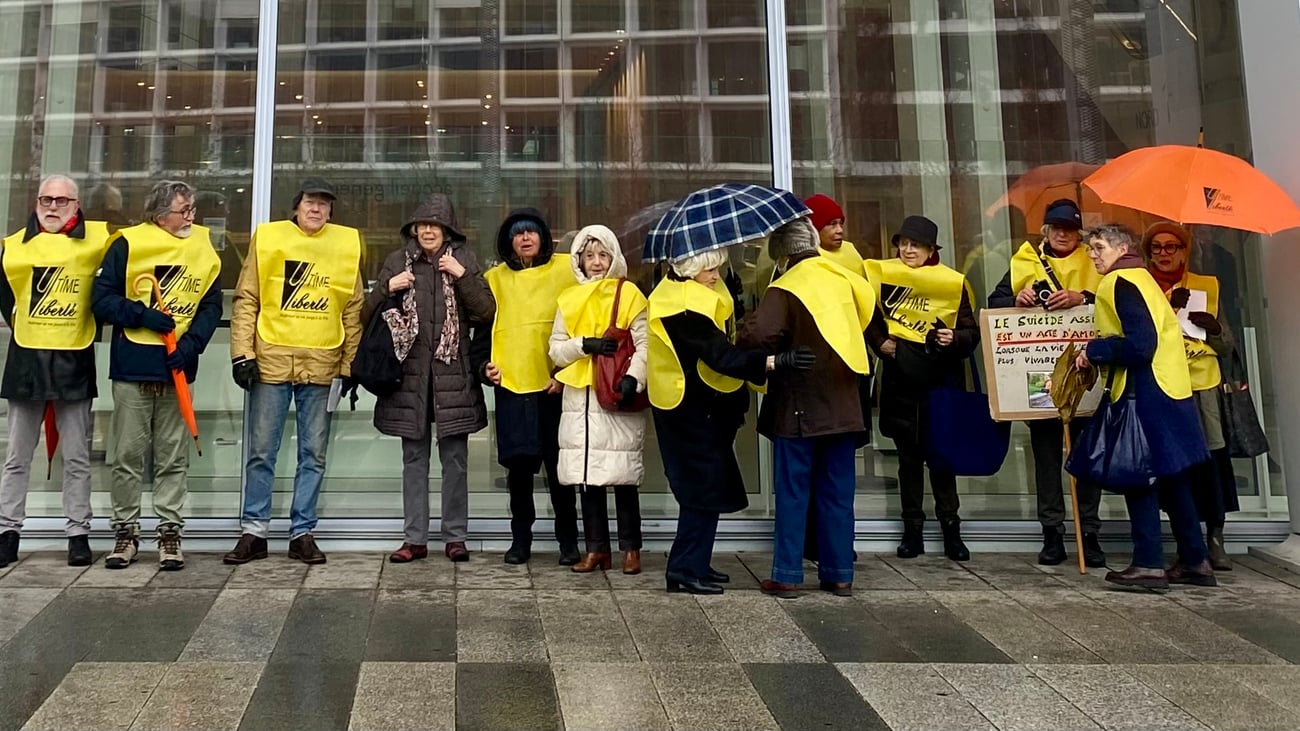
“To access this end-of-life assistance, the individual must meet a set of particularly restrictive medical criteria — their wishes alone will not suffice,” the Ultimate Liberty group wrote in a statement ahead of the vote. “For Ultimate Freedom, this logic is fundamentally backward. In a democracy, it is up to the individual, acting freely and with full awareness, to decide whether their life has come to an end.”
The group added that a doctor’s role should be to provide information, offer support and ensure the safety of whatever decision an individual makes, rather than to authorize it. Ultimate Liberty also criticized how the law excluded people suffering from diseases such as Alzheimer’s or simply old age.
“For all of these individuals, the law’s answer remains: ‘You are not sick enough yet,'” the group said.
Philippe Lohéac, delegate general of the Association for the Right to Die with Dignity – a group that falls somewhere in the middle of the debate – said he hoped the law would pass. The association was happy that the conditions for euthanasia were strict, but it still advocates that people have the right to administer the lethal substance themselves.
The association also condemned that people living with cognitive disorders will not be able to access euthanasia.
“Another obstacle to the proper implementation of the law is that it is not possible to request active assistance in dying through advance directives,” he said. “So this is not satisfactory at all, because we understand that it will cause real problems for anyone with cognitive impairment, either because they have a neurodegenerative disease, or simply because many incurable diseases involve an altered state of consciousness due to the stress associated with this stage of life.”
Palliative care is at the center of the debate. Critics of the law often argue that resources should be poured into end-of-life care, rather than euthanasia, to avoid putting pressure on seniors who feel their illness has become an emotional or financial burden.
“Let us be fully aware that at the end of life, there is a great risk of leaving because of a lack of attention, consideration and support,” Tugdual Derville, a spokesman for Alliance VITA, said in a statement. “Therefore, the law in question would have a particularly unfair impact: stigmatizing, discriminatory and dissuasive. It would define a category of people whose lives are deemed unworthy of protection.”
The vote came after a long debate and countless back and forth between France’s National Assembly – its lower house of Parliament – and the Senate. It has also divided the political spectrum, with right-wing lawmakers tending to oppose the bill against their liberal counterparts in favor.
French President Emmanuel Macronwho is widely seen as centre-right, first declared his support for “moving forward” on euthanasia reforms in 2017 when he bluntly said: “I want to choose how I die”.
The nationwide debate over assisted dying has raged for more than two decades. Vincent Humbert, a firefighter who became a quadriplegic, blind and mute after a car accident in 2000, wrote to former president Jacques Chirac expressing his desire to end his life. After his mother and a doctor granted his wish, they were charged with “premeditated poisoning” and “administration of toxic substances.” A judge eventually dismissed the case.
Prime Minister Sébastien Lecornu was also in favor of the new law, with one caveat – he will refer the bill to France’s Constitutional Council for final approval.
“Extensive debates took place in the National Assembly on this proposal; however, the debate in the Senate did not allow for sufficient thorough consideration to produce a bill that meets both the aspirations of its supporters and the concerns of those concerned about its implementation,” his office said in a statement on Tuesday. “This reference should provide all the necessary clarifications on these issues, so that the implementation of the law, if it passes, is done in full respect of the principles guaranteed by our Constitution and in particular of human dignity.

Subscribe to our free newsletters
Our weekly newsletter Closing arguments provides the latest on ongoing trials, major litigation and decisions in courts around the US and the world, while monthly Under the lights feeds legal dirt from Hollywood, sports, Big Tech and the arts.



