

Pakistan’s instability is no longer a localized security concern—it is emerging as a structural constraint on US strategy in Asia.
For Washington, three priorities are converging: reducing dependence on China for critical minerals, expanding access in Central Asia and managing the security dynamics that stretch from the Gulf to Afghanistan. All three depend, directly or indirectly, on a region where stability remains uncertain.
Pakistan is located at the crossroads of South Asia, Central Asia and the Middle East. that geography has moved from passive importance to active strategic contestation. For China, it has already turned into a long-term advantage. For the United States, it remains a risk-limited option.
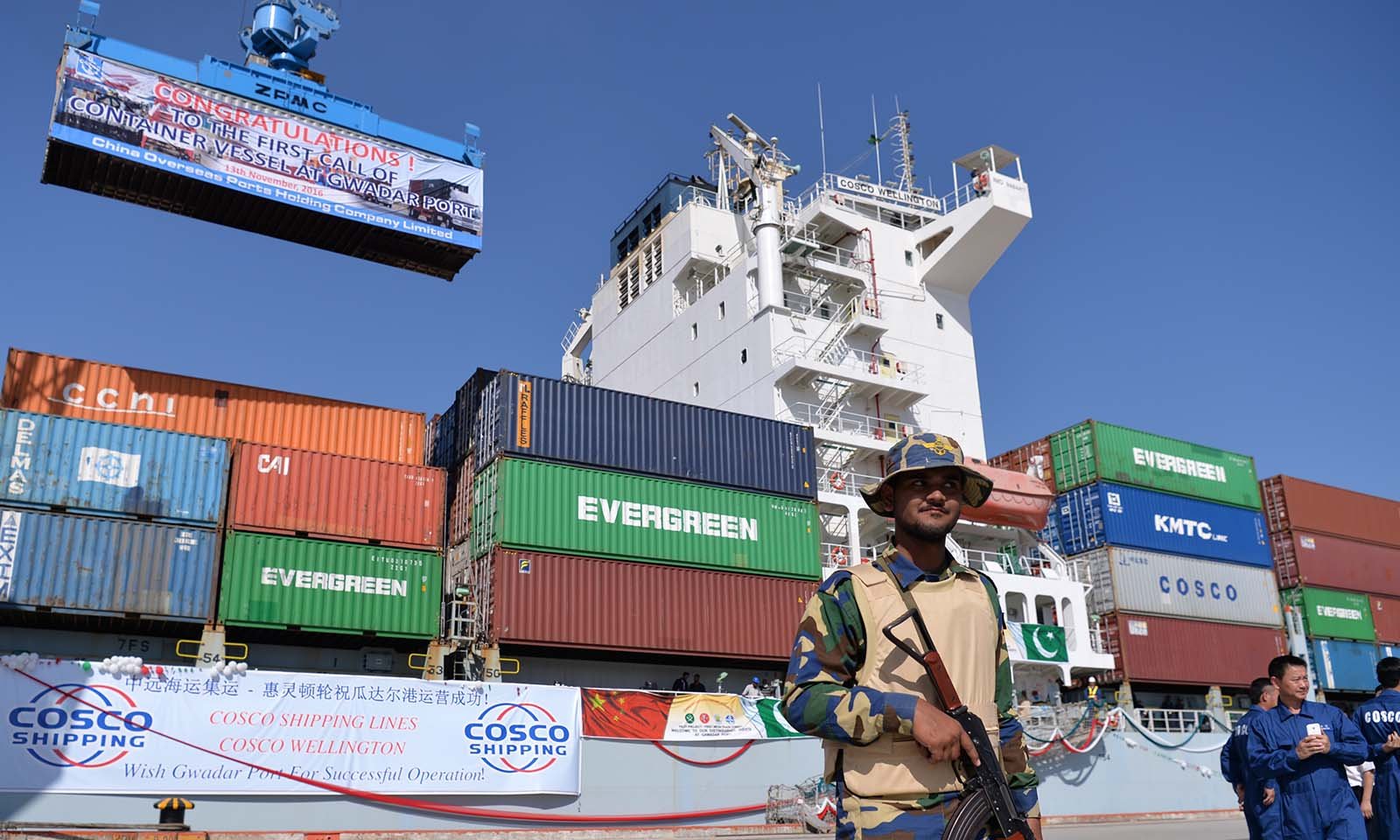
China has moved early and with purpose. via China-Pakistan Economic Corridor (KPK), it has performed more than $65 billion in all infrastructureenergy and industrial projects, connecting western China to the Arabian Sea. Gwadar Port anchors this effort not just as a trade exit, but as part of a broader push to secure long-term access and presence in a strategically sensitive region.
This is not a tentative engagement. Chinese firms continue to expand into mining, technology and industrial ventures, supported by stable political alignment. Beijing is not exploring Pakistan as an option – it has already made it part of its strategic landscape.
The risk of investing in minerals
For Washington, the same geography presents a more difficult reality.
Efforts to diversify supply chains away from China’s dominance in rare earth processing depend on alternative locations that can support long-term investment. The western regions of Pakistan, especially Balochistan, offer this potential. of Reko Diq copper and the gold project alone ranks among the largest undeveloped resources of its kind.
But potential alone does not build supply chains. Instability throughout Western border of Pakistan continues to shape investor decisions. This is not about isolated incidents – it reflects a mix of internal pressures and cross-border dynamics linked to Afghanistan. The result is an environment where long-term planning becomes difficult and risk is difficult to assess.
This exposes a structural asymmetry in US strategy: Washington depends on stability in regions where it has increasingly limited influence over the security environment.
For Western firms operating under tight financial and regulatory constraints, this risk quickly translates into hesitation. Investments slow down, projects are reduced and in some cases abandoned. China operates differently. She has shown a greater tolerance for political complexity and has already secured her position.
When conditions deteriorate, it is not China’s presence that recedes – it is Western engagement.
The restriction does not stop at Pakistan’s borders. US interest in Central Asia, whether for trade, energy diversification or strategic access, it depends on the land routes that run through Afghanistan to Pakistan and on to the Arabian Sea.
Without stability, these avenues remain more theoretical than practical. Infrastructure alone is not enough; it requires conditions that allow it to function consistently.
at the same time, Russia continues to shape the external orientation of Central Asia through established northern transit networks. As long as volatility continues in the south, those routes retain their advantage.
Afghanistan steps up the pressure. As of 2021, cross-border militant activity has increased, placing a constant strain on Pakistan’s internal security and diverting attention from economic priorities.
But the regional picture is expanding. Continuous crisis around Iran it is no longer limited to the Middle East. It is becoming another variable shaping the broader US-China relationship and, indirectly, the environment in which Pakistan operates.
For Washington, Iran remains a security challenge: nuclear ambitions, regional proxies and the ability to cut off key sea routes such as Strait of Hormuz. For China, the same country represents something different – a long-term energy partner embedded in its broader economic strategy.
This divergence matters. Any escalation involving Iran risks disrupting global energy flows, raising costs and increasing uncertainty across supply chains. For China, this creates pressure but also reinforces the importance of alternative routes and corridors, including those connected through Pakistan.
For the US, the effect is perhaps more complicated. Instability in the Persian Gulf could divert attention and resources, stretching the strategic focus to many regions at once. In that environment, constraints in Pakistan become harder, not easier, to manage.
In a region already under strain, Pakistan’s role becomes more, not less, important. As instability spreads throughout the Gulf and Afghanistan, the need for a stable partner at the crossroads of these regions becomes more pronounced.
For Washington, this reinforces a fundamental reality: Pakistan is not a peripheral actor in this landscape, but an indispensable actor.
In the maritime domain, the implications are becoming more apparent. Gwadar Port has raised Pakistan’s geostrategic profile, offering economic opportunities by placing the country more directly in the dynamic of US-China competition.
Its importance lies not only in trade, but also in presence. It represents a foothold in a region where the United States has no comparable position and limited ability to create one.
For Pakistan, this creates a balancing challenge. For Washington, it is a structural reality that must be included in any regional strategy.
Strategic miscalculation
There is a persistent assumption in some policy circles that instability in Pakistan could limit China’s position. In practice, the opposite is more likely.
China’s presence it is already included through long-term investments and strategic alignment. Volatility does not displace it. Increases the cost of entry for others. As conditions become more uncertain, existing partnerships tend to deepen rather than diversify.
It also challenges a deeper assumption within US strategic thinking that instability in Pakistan can be tolerated, or even indirectly used, to contain China. In reality, such conditions are more likely to produce the opposite effect.
As the risks increase, Pakistan’s support from China deepens, while alternative partnerships become harder to sustain. Allowing regional rivalries or proximate dynamics to destabilize the environment does not create strategic space for Washington—it narrows it. For the United States, this narrows the scope of engagement.
A wider controversy follows. Washington aims to reduce its dependence on China for critical minerals, expand access to Central Asia and limit the re-emergence of transnational threats. However, the three objectives converge in a region where instability remains unresolved.
Treating this instability as secondary or assuming that it can be managed indirectly undermines each of these goals. What seems localized is, in fact, systemic. A more coherent approach would begin by acknowledging these connections.
Engagement with Afghanistan cannot be separated from results on the ground. At the same time, there is a case for more structured economic engagement with Pakistan’s mining sector, underpinned by frameworks that reduce investor risk and improve predictability.
Without such alignment, strategic objectives will continue to outstrip operational realities.
Basically, it’s a matter of perspective. If the region is viewed primarily through the lens of great power competition, instability may seem manageable. But if the objective is supply chain resilience and functional connectivity, stability becomes a prerequisite.
For Washington, the implication is straightforward. Access to critical minerals, diversification away from China and meaningful engagement with Central Asia all depend on one condition: a stable Pakistan.
Without it, US strategy in Asia will be constrained less by China’s rise than by its inability to act where it matters most.
Saima Afzal is a scholar specializing in South Asian security, counter-terrorism and broader geopolitical dynamics in the Middle East, Afghanistan and the Indo-Pacific. She is currently a PhD candidate at Justus Liebig University, Germany.



