
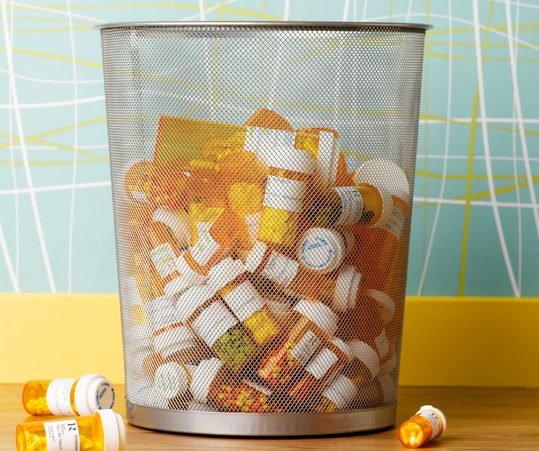

Nearly three million kilograms of medicines were properly sorted for safe disposal in the Czech Republic between 2021 and 2024. However, a new study suggests that this figure could be significantly higher if Czechs avoid throwing them in household waste.
According to research commissioned by the Association of the Innovative Pharmaceutical Industry (AIFP) and carried out by research agency NMS, almost one in five Czechs (19.5%) still throw away expired or unused medicines in regular household waste, while another 13.8% hoard medicines that may no longer be safe or effective.
The new findings coincide with the launch of a new campaign, Don’t Throw Your Medicines, a joint initiative of the AIFP and the Association of Pharmacy Network Operators (APLEKS) designed to shift public habits around pharmaceutical waste.
“Medicines are not ordinary waste. Their improper disposal can pose a risk to both the environment and public health,” said Tomáš Boráň, director of the Czech State Institute for Drug Control (SÚKL).
The Czech system for dealing with unused drugs is, on paper, straightforward. Every pharmacy across the country will accept expired or unwanted medicines free of charge, regardless of where they were originally purchased.
“Pharmacies are a natural and easily accessible place for the public to safely return unused or expired medicines. This system has been in operation for a long time and is fully available throughout the Czech Republic,” said Irena Storová, director of APLEKS.
From pharmacies, drugs are passed on to specialized licensed companies for safe and environmentally compatible disposal.
Keeping medicines “just in case”
The survey provides a clear overview of why people skip the pharmacy route. The most common reason, cited by 40% of respondents, is simply to keep drugs “just in case”. Nearly a third (29.3%) say they can’t be bothered to bring them to a pharmacy, and 15% aren’t even aware that a return option exists.
Age is an important variable. Younger Czechs under 34 are disproportionately likely to dispose of medicines improperly or hoard them unnecessarily. Meanwhile, routine medicine cabinet checks are far from universal: 32.9% of respondents say they check their supplies only occasionally, rarely or not at all, unless they need a specific medication.
There is also a striking blind spot about elderly relatives. Seniors are among the highest consumers of prescription drugs, yet 68.8% of people say they never check their elderly family members’ drug supplies, let alone help them sort or return unused products.
An EU-wide problem
The Czech Republic is not the only EU country that misuses the disposal of unused or expired medicines. In many European countries, the process is poorly organized, shaped by a mixture of inscriptions, low adherence to treatment, limited public awareness and inadequate systems. As a result, an estimate 10% to 45% of drugs purchased by households are ultimately wasted.
Preliminary findings of the DISPOSAL study, a Europe-wide investigation into how pharmaceutical waste is handled in practice, show significant gaps in six areas assessed, including legal frameworks, collection systems, current disposal practices, awareness campaigns, economic considerations and environmental impact.
According to RESEARCHERSpublic understanding remains low, while policies and systems vary widely between countries, often without coordination or clarity. For many citizens, the instructions are either unclear or completely absent, leaving people unsure of how to safely dispose of their medications. Most countries still lack coherent policies, effective public education and simple and accessible systems for returning unused or expired medicines.
(VA, BM)



