

Over the past few years, I’ve been talking about the consequences of a world in which anger trumps humanity—where fear and division are amplified faster than truth, and where people are too easily reduced to categories, identities, or opposing sides. What worries me now is how dangerously the same moral turpitude is spreading in parts of Britain.
There are moments when the values we hold are tested, not in principle, but in practice. Moments when silence is easier, but speaking is necessary. I have always believed that we have a responsibility to stand up against injustice wherever we see it and to do so in defense of our common humanity. This belief does not change with geography, nor is it subject to disturbance. This is exactly what I feel compelled to speak about now.
At times like these, silence is not neutrality. Silence is absence. Too often, it is that instinct to stand aside that allows hatred and extremism to flourish unchecked. Britain has long prided itself on valuing reason over anger, dialogue over division and civility over noise. In times like these, these values matter more than ever.
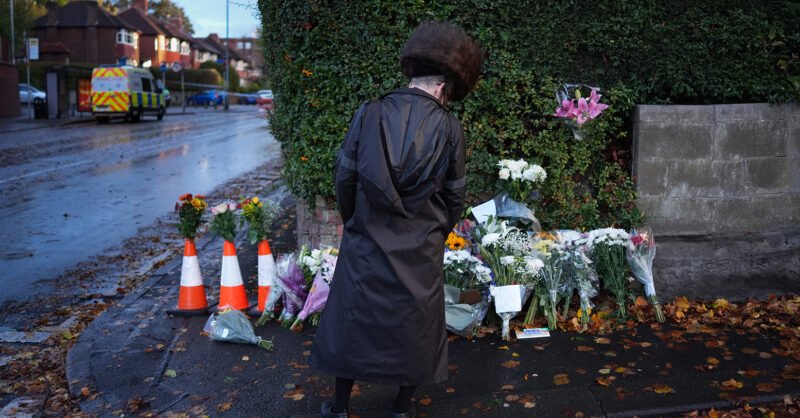
Across the country, we are seeing a deeply disturbing rise in anti-Semitism. Jewish communities – families, children, ordinary people – are being made to feel unsafe in the very places they call home. This should alarm us, but also unite us. Because hating people for who they are, or what they believe, is not protest. It’s prejudice. Recent incidents, including deadly violence in London and Manchester, have brought this into sharp and deeply disturbing focus.
Across the globe, there is deep and justified alarm at the scale of the loss in the Middle East. Images from Gaza, Lebanon and the wider region – of devastated communities and entire neighborhoods flattened and in ruins – have shaken people to their core. For many, the instinct to speak out, to march, to demand accountability, to call for an end to suffering—is human and necessary.
But these two realities are getting dangerously confused. We’ve seen how legitimate protests against state actions in the Middle East coexist with hostility toward Jewish communities at home—just as we’ve also seen how criticism of those actions can be dismissed or mischaracterized all too easily.
Nothing, whether criticism of a government or the reality of violence and destruction, can ever justify hostility to an entire people or faith.
Public debate has sometimes become so polarized that positions are reduced to absolutes. There has been little room for nuance, deepening the confusion that fuels division. That debate has also ignored the diversity of views within Jewish communities, including many who are openly and publicly critical of certain state actions.
We cannot ignore a hard truth: when states act irresponsibly, and in ways that raise serious questions under international humanitarian law – criticism is both legitimate, necessary and essential in any democracy.
The consequences do not remain contained within the boundaries. They echo from the outside, shaping perception, igniting tensions. Ceasefire after ceasefire has repeatedly failed, with devastating consequences for civilians.
The scale of human suffering continues to rise and requires continued consideration and action by the international community. We have also seen the devastating loss of life among journalists in Gaza, undermining transparency and accountability at a time when both are essential. The burden falls entirely on the state – not an entire people. Such actions have nothing to do with Judaism.
If we’re serious about dealing with it, we need to be honest about the conditions in which it grows—and clear about where anger is directed and where it should never be allowed to fall. When anger is directed at communities – whether Jewish, Muslim or otherwise – it ceases to be a call for justice and becomes something much more corrosive.
I am very aware of my past mistakes – thoughtless actions that I have apologized for, taken responsibility for, and learned from. This experience informs my belief that clarity matters now more than ever, at a time when confusion and distortion of the truth are doing real harm—even when speaking clearly is not without consequences. It requires responsibility from all of us.
We cannot respond to injustice with more injustice. If we do, we don’t end the cycle, we prolong it. The only way to break it is to refuse to go through it. This means being clear: standing against anti-Semitism wherever it appears, while recognizing that anti-Muslim hatred and all forms of racism stem from the same source of division. They must face it with the same determination. It also means speaking out against the great loss of innocent life without fear, but with care and responsibility.
(Further reading: Endless chaos)



