
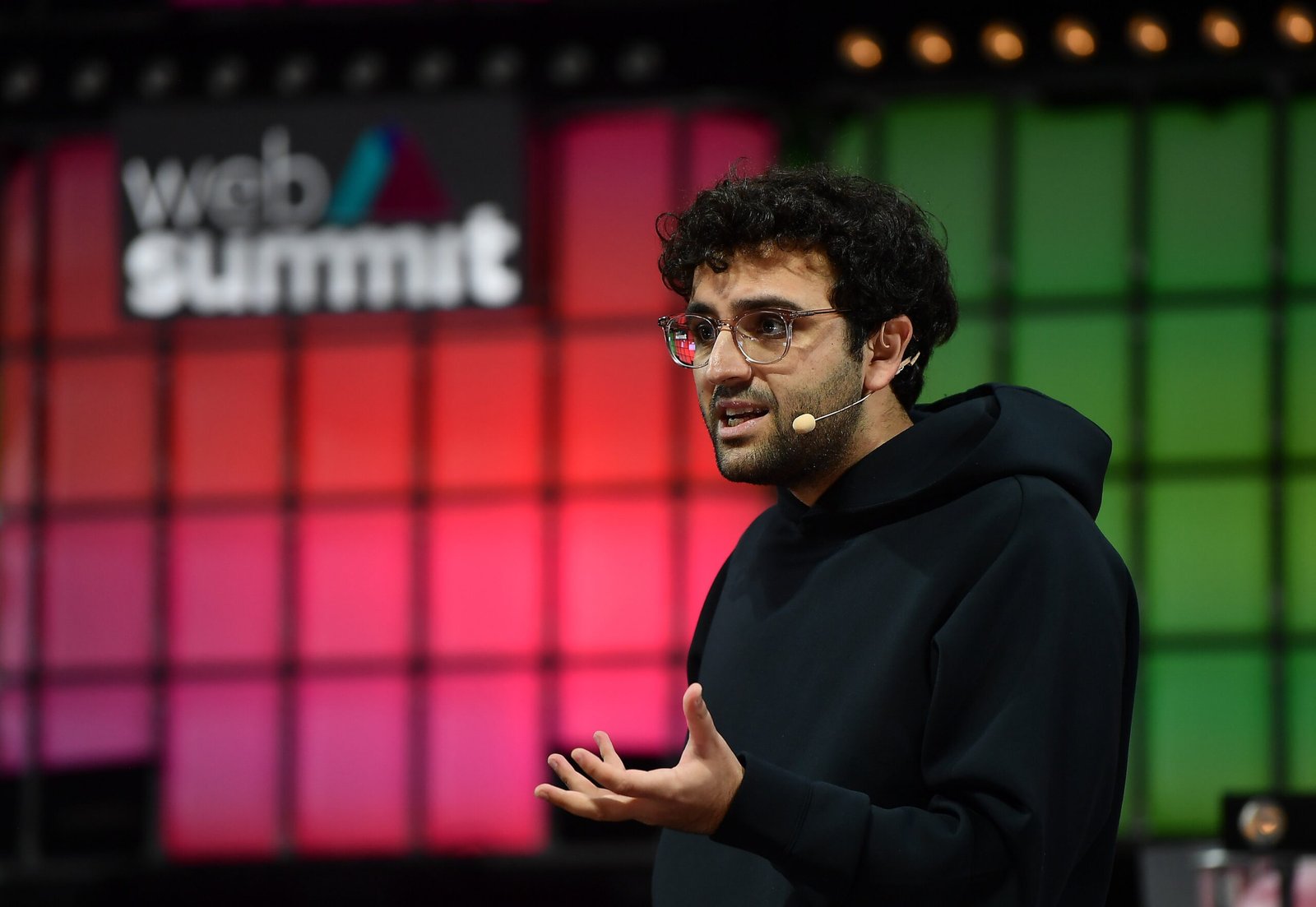


The emergence of bad actors such as insider traders is inevitable in prediction markets, according to Tarek Mansour, co-founder and CEO of Kalshi. But the executive is not worried about such behavior hampering his business. “There will always be bad actors. The goal is just to crush them,” Mansour said during an on-stage interview at Semafor World Economy in Washington, DC yesterday (April 15). He believes that the cases will be eliminated Kalshiinternal investigations and, eventually, by federal prosecutors.
Mansour, 29, co-founded Kalshi in New York in 2018 together Luana Lopes Lara, whom he met while studying at MIT. The pair, both from Wall Street, used their backgrounds in finance to build a regulated platform for trading “event contracts”. Users can bet on results across politics, culture and sports.
Kalshi – and his main rival, Polymarket– entered the mainstream during the 2024 US presidential election and have grown rapidly since then. Last month, Kalshi more than doubled its valuation to $22 billion after raising a $1 billion round led by Coatue Management and reportedly reached a annual operating rate of $1.5 billion. “We are definitely the fastest growing company outside of AI in America,” Mansour said. The annual operating rate is a projection of future revenue.
Growing concern about insider trading
The boom in prediction markets has also brought scrutiny. Unusual trades, including one that correctly predicted the capture of the President of Venezuela by the US Nicolas Maduro before it was known to the public, have fueled suspicions of insider activity. Earlier this year, Kalshi suspended a content editor associated with the YouTuber MrBeast after he placed a series of extremely accurate bets on the influencer.
Such users “should absolutely be banned,” Mansour said. “No one wants to participate in a system that is not inherently fair.”
Kalshi has opened about 200 investigations into insider trading during the past year. Mansour warned that such cases could soon bring serious consequences. “If you conduct insider trading in Kalshi, it can be — and will be at some point — a federal crime,” he said. “I actually expect the DOJ to prosecute some of these cases.”
He added that insider trading is not unique to prediction markets, noting its long history in traditional financial markets. Regulatory oversight, Mansour argued, is a natural evolution: “The existence of bad actors in a system should not invalidate the system—it should validate the regulation.”
How are prediction markets regulated?
Who ultimately runs the prediction markets remains unresolved. Kalshi received approval from the Commodity Futures Trading Commission (CFTC) in 2020 to operate as a federally regulated exchange for event contracts – distinct from a gambling platform. Mansour said federal oversight provides consistency compared to what he described as a “patchy” of state laws. For example, among the more than 30 states that allow sports betting, only one prohibits advertising to problem gamblers, he noted.
The issue has drawn attention from the Trump administration, which recently filed lawsuits against Illinois, Connecticut and Arizona seeking to impose federal authority over the prediction markets. The administration argues that these platforms operate as financial markets and therefore should fall under CFTC regulation, while some states contend that they are a form of gambling subject to state law.
Arizona escalated the conflict last month by becoming the first state to file criminal charges against Kalshi, accusing the company of operating an illegal gambling operation.



