

As geopolitical competition intensifies in many regions, countries able to maintain working relationships with rival powers are becoming increasingly valuable.
While global attention remains focused on great power rivalry, another category of states is quietly gaining strategic importance: middle powers able to engage competing actors without becoming fully dependent on any single bloc.
Pakistan is gradually re-emerging within this category.
For years, Pakistan was seen internationally mainly through the lens of terrorism, political instability and economic fragility. However, recent developments suggest that Islamabad is repositioning itself as an important diplomatic actor capable of influencing regional dynamics beyond what its economic size alone would traditionally suggest.
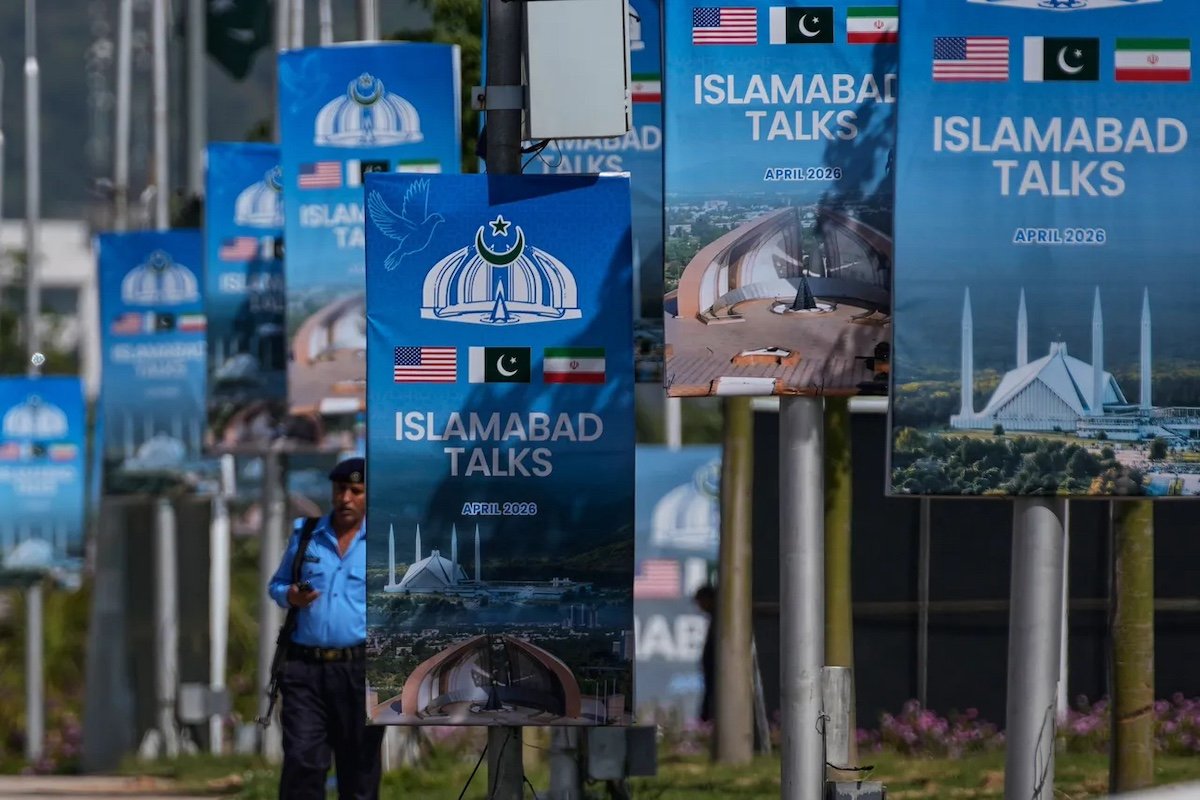
This change has become particularly evident in the midst of the US-Iran war. Despite the deep acrimony between Washington and Tehran, Pakistan has been helping it facilitate communication between the warring parties.
Islamabad also secured broad international support for its mediation efforts, reinforcing perceptions that it remains one of the few states able to maintain reliable working relationships and trust between the US and Iran.
In the increasingly polarized international environment, that diplomatic flexibility is becoming one of Pakistan’s most important strategic assets.
Traditionally, a country’s status has been measured through indicators such as economic output, military spending, geography and technological capacity. These factors remain important, but they no longer fully explain the impact on the changing and increasingly multipolar international order.
political scientist Joseph Nye has argued that states also derive influence from intangible sources, including diplomatic credibility, political legitimacy, and soft power. Similarly, Robert A. Dahl has defined power as the ability to influence the behavior of others.
Seen through this broader lens, Pakistan’s recent diplomatic role reflects a growing capacity to influence regional developments despite its economic limitations.
Multi-align value
A major source of Pakistan’s growing importance is its capacity for multiple alignments. Unlike states confined within rigid alliance systems, Islamabad has maintained solid relations at the same time with the United States, China, Iran and the Gulf monarchies.
This flexibility enables Pakistan to function as a reliable broker during periods of regional instability.
ABOUT Iran, Pakistan represented a practical mediator because, despite periodic tensions, the two countries maintained relatively stable relations shaped by geography, history, and long-term regional interaction. Geographical proximity and historical ties also helped maintain communication channels between Tehran and Islamabad.
For the US, Pakistan remained useful because decades of military and intelligence cooperation created established channels of communication and institutional familiarity. at the same time, Washington saw Islamabad as able to engage Tehran without open ideological hostility, allowing communication to occur reliably and without immediate escalation.
As competition between great powers intensifies, countries capable of communicating across geopolitical divides are becoming increasingly important. At the same time, Pakistan’s recent diplomatic activism reflects a broader effort to reshape its international image.
A brief but intense military confrontation with India raised new questions about conventional assumptions military asymmetry in South Asia and reinforced Pakistan’s reputation as a capable security actor with credible deterrence and escalation management capabilities.
This shift strengthened Islamabad’s position among several regional partners, particularly in the Persian Gulf, where Pakistan continues to be seen as an important security provider.
Pakistan has long possessed certain characteristics associated with middle powers, but inconsistent policymaking and a lack of consistent strategic direction often limit its wider influence. More recently, stronger civil-military coordination and a more coherent external posture have allowed Islamabad to use its diplomatic and military power more effectively.
Pakistan has also increasingly tried to project itself as an upholder of international law and regional stability. Its condemnation of attacks on Iran and the Gulf states under Article 2(4) of the UN Charter reflected an effort to present itself as a state committed to sovereignty, restraint and regional stability, regardless of the potential political costs.
Geography also matters. Positioned at the crossroads of South Asia, Central Asia, the Middle East and the Indian Ocean, Pakistan occupies one of the most important strategic locations in the world.
The growing importance of Port of Karachi and the ongoing development of Gwadar Port positions the country as a potential hub of the future linking Asia, the Gulf and Africa through emerging trade and connectivity corridors.
However, geography alone does not create middle power influence. Strategic importance increasingly depends on diplomatic autonomy and the ability to maneuver between competing centers of power.
Pakistan is balanced foreign policymaintaining ties with Washington and Beijing while maintaining relations across the Muslim world shows a degree of flexibility increasingly rare in the polarized global environment.
Internal limitations
Despite its growing importance, Pakistan’s emergence still faces limitations.
Political instability, governance uncertainty and economic inconsistency continue to undermine long-term planning and investor confidence. Diplomatic visibility may raise international standing for a while, but lasting influence requires institutional continuity and economic modernization.
Ongoing militancy, Afghanistan-related instability and the insurgency in Balochistan continue to limit Pakistan’s wider economic potential and undermine its international image as a stable actor. Without internal stability, Pakistan risks remaining geopolitically important but economically constrained.
The international system is entering a period in which influence will increasingly belong not only to the great powers, but also to states able to navigate between them.
Pakistan’s growing importance reflects that broader geopolitical shift. Its importance no longer derives solely from geography or military prowess, but from its ability to simultaneously maintain engagement with competing actors.
As the international order becomes less centralized and more fragmented, the strategic value of states able to operate across geopolitical divides is likely to increase. Pakistan’s challenge is whether it can convert its renewed geopolitical prominence into lasting diplomatic strength.
Saima Afzal is a scholar specializing in South Asian security, counter-terrorism and wider geopolitical dynamics in the Middle East, Afghanistan and the Indo-Pacific. She is currently a PhD student at Justus Liebig University, Germany.



