

The United States has threatened to impose sanctions on Chinese banks if they are found to be involved in handling money from Iran’s oil trade payments, marking a sharp escalation in efforts to tighten financial pressure on Tehran.
The warning came after the US military began blocking ships linked to Iranian trade from docking in the country’s ports on Monday, in an operation that was initially perceived as a wider blockade of the Strait of Hormuz.
In addition, the President of the USA, Donald Trump, as well violated increases diplomatic pressure on Beijing to ensure that China does not supply Iran with weapons. He said on social media that Chinese President Xi Jinping agreed not to send weapons to Iran.
Taken together, Washington’s threats of financial sanctions, maritime restrictions and political pressure are expected to increase significantly stem Iran’s ability to access Chinese financing and supplies. Trump said it was likely the US and Iran would strike a long-term ceasefire deal next week.
On Wednesday, US Treasury Secretary Scott Bessent said in a press conference that the US has warned a number of banks in various jurisdictions about the possible imposition of secondary sanctions for handling transactions related to Iran.
“Two Chinese banks received letters from the US Treasury,” he said. “I will not identify the banks, but we told them if we can prove that Iranian money is flowing through your accounts, then we are ready to impose secondary sanctions.”
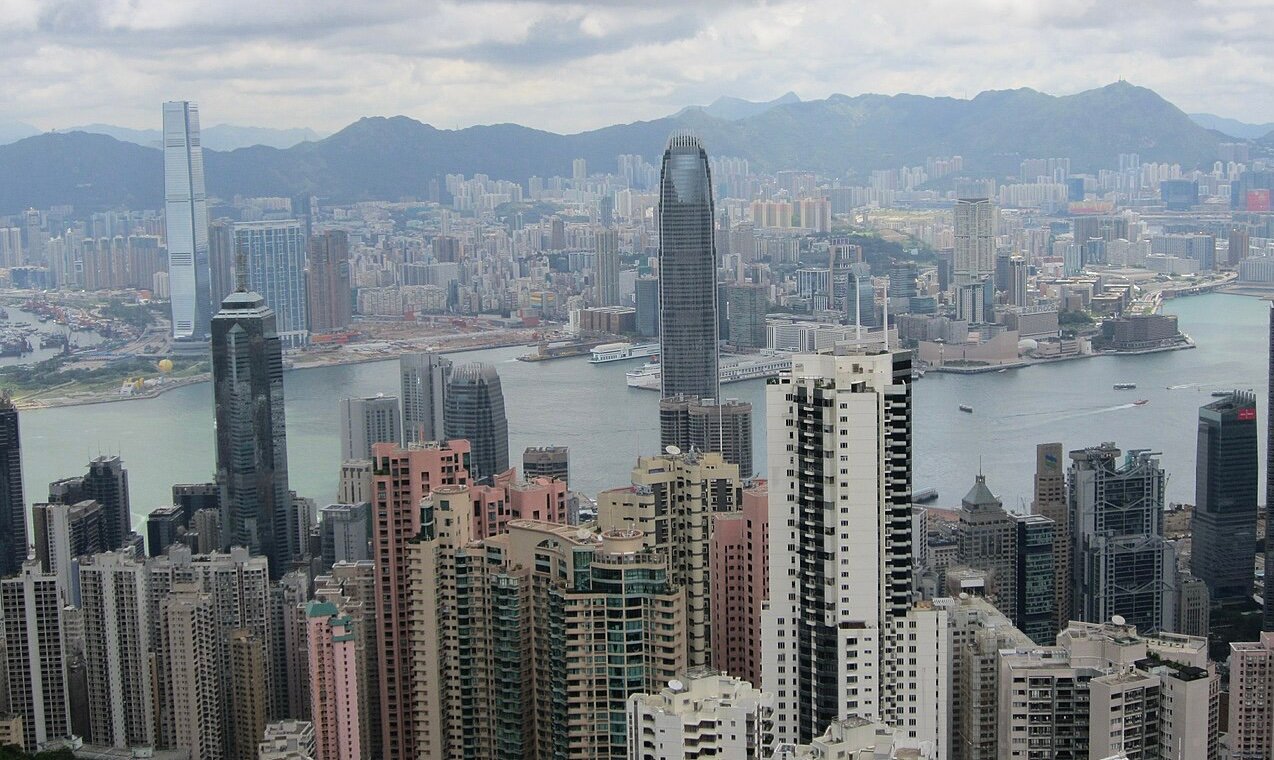
American media reported that the letters cited Treasury Department evidence that Iran moved approximately $9 billion in 2024 through US correspondent accounts using networks of front companies, with activity centered in Hong Kong, Oman and the United Arab Emirates (UAE).
“I am writing to inform you that Treasury believes that a portion of these transactions, as well as additional transactions after 2024, were processed by the banks you supervise through their U.S. correspondents on behalf of clients directly linked to Iran,” the letter said.
The Treasury Department called on jurisdictions’ monetary regulators to work with banks under their supervision to identify and stop any financial activity linked to Iran, including transactions conducted through front companies or other evasive structures, citing significant illicit financial risks.
He added that the information had also been shared with US banks that provide correspondent services so that they could implement enhanced scrutiny of such transactions.
New rules against sanctions
In June 2021, China enacted the Anti-Foreign Sanctions Law to prohibit individuals and companies from complying with US and other foreign sanctions within its jurisdiction. At the time, Chinese media said the framework could be extended to Hong Kong by adding it to Schedule III of the Basic Law.
However, Beijing did not implement after some Hong Kong banks said the law would put them in a difficult position between Chinese and US regulatory requirements.
In October 2022, chief executive John Lee said Hong Kong would not implement the sanctions imposed by the US, adding that such measures against him and other officials had been rejected. He said Hong Kong would continue to treat overseas capital in accordance with its own laws.
In practice, the big banks in Hong Kong have complied with US sanctions because they must maintain access to the SWIFT (Society for Worldwide Interbank Financial Telecommunications) network for international settlements. They have closed accounts linked to US-sanctioned individuals, including Lee and Homeland Security Secretary Chris Tang, without disclosing any reasons.
On April 13 this year, Chinese Premier Li Qiang signed a State Council decree introducing new rules to counter what Beijing calls illegal extraterritorial jurisdiction by foreign states. With immediate effect, the regulations:
- allow Chinese authorities to claim jurisdiction over relevant activities where a sufficient nexus with China is established;
- create a “malicious entity” list targeting foreign organizations and individuals involved in the implementation of such measures;
- prohibit any organization or individual from complying with or assisting in the implementation of these measures;
- allow affected Chinese citizens and companies to file lawsuits, with government agencies providing guidance and support.
Wen Wei Po, a pro-Beijing newspaper in Hong Kong, said the new rules would extend protection to Chinese enterprises based in Hong Kong.
“While the regulations are designed for the mainland, it would be unreasonable to exclude Hong Kong companies. In practice, authorities should apply the rules based on the overall legislative intent rather than narrow technical boundaries,” the article said, citing an unnamed legal expert. “There is no need to focus too much on the technical limits in how the provisions are implemented.”
“If businesses choose to seek state protection, the government has the means to provide it. As long as they are Chinese enterprises, they fall within the scope of protection and the new rules provide clearer and stronger legal support,” the expert said.
Zhou Mi, a senior researcher at the Chinese Academy of International Trade and Economic Cooperation, said the new regulations mark a more coordinated and institutionalized stage in Beijing’s efforts to counter what it sees as long-arm foreign jurisdiction.
“The framework has direct implications for Chinese companies seeking to protect their interests overseas,” he saidciting cases such as forced management changes at Nexperia, a semiconductor firm based in the Netherlands, and US pressure on TikTok to divest assets and hand over data as examples of such measures.
“The launch of the new rules comes at an opportune time, as US actions in the Strait of Hormuz have crossed into what China defines as illegal extraterritorial jurisdiction,” says a Shandong-based columnist. “Interference with third-country ships, including Chinese ships, and disruption of legitimate commercial interests fall within the scope of China’s countermeasures under the regulations.”
He said that since energy security is essential to the Chinese economy, it is legitimate for China to use both legal means and maritime capabilities to protect its national development interests.
Some observers say Hong Kong banks could face penalties from Chinese or US authorities if they do not take sides in geopolitical conflicts.
Underground supply chain
Over the past two years, the US has sanctioned a number of Chinese firms supplying electronic components and technologies to Iran that support its military, drone and missile programs. In 2023 and 2024, there are also sanctioned many individuals and companies based in Hong Kong and Shenzhen to supply Russia’s military industrial base with electronic parts.
The media reports with a tip for secret payment channels using Hong Kong as a hub to settle China’s underground trade with heavily sanctioned countries such as Russia and Iran. These transactions are said to have relied on alternative financial mechanisms, including Chinese currency, cryptocurrencies, precious metals and gems.
April 11, Wall Street Journal that Hong Kong has for years served as a key financial hub helping Iran cope with US sanctions, with authorities in Washington struggling to shut down a network that has facilitated billions of dollars in trade.
The report said Hong Kong’s fast and low-cost company registration system has enabled dense networks of shell companies to process payments and obscure the origin of funds, with billions linked to Iran’s shadow banking system flowing through the city, making it a major offshore hub after the United Arab Emirates.
Read: US Hormuz blockade, tariffs shock China
Follow Jeff Pao at X at @jeffpao3



