

By Tenzin Woeden
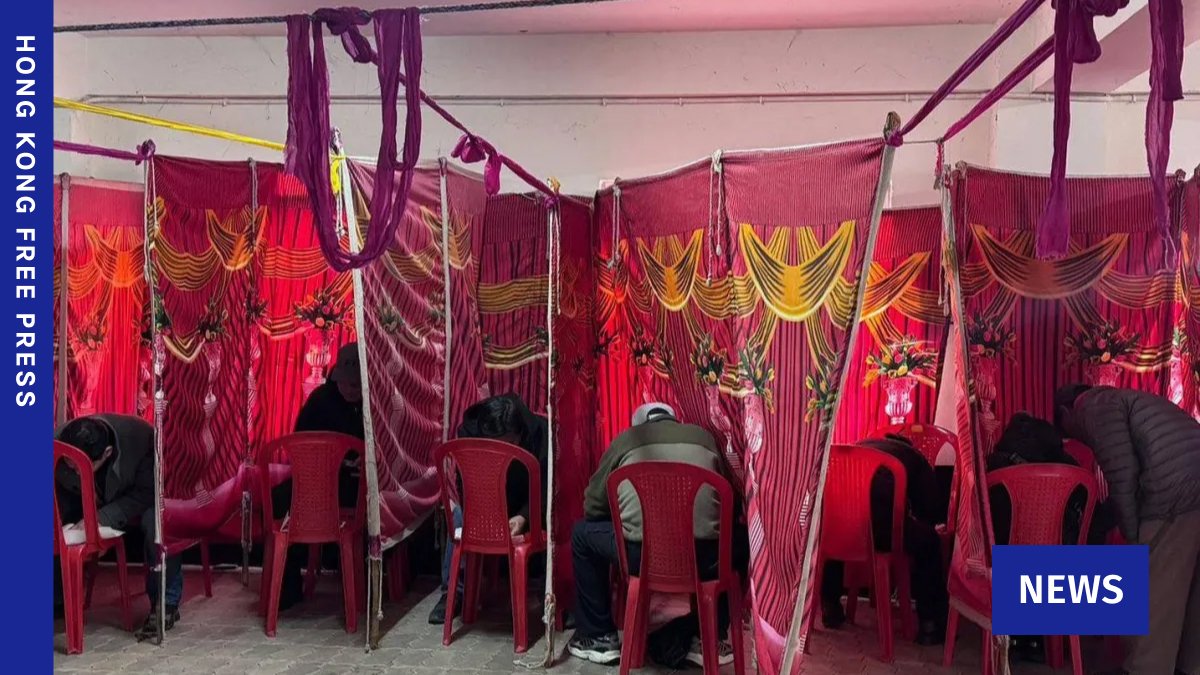
Tibetans outside Chinese control vote on Sunday for a government-in-exile, an election of great significance as they prepare for an inevitable, eventual future without their revered spiritual leader, the Dalai Lama.

The India-based Central Tibetan Administration (CTA) – condemned by China as “nothing but a separatist political group” – is a key institution for exiles, especially after the Dalai Lama handed over political power in 2011.
“Our votes matter,” said Tenzin Tsering, 19, a first-time voter waiting to cast his ballot to push for greater youth representation.
“We need voices that reflect where our community is going, not just where it has been,” he said, speaking in Bylakuppe in the southern Indian state of Karnataka, one of the largest Tibetan communities outside the Himalayan plateau.
Voting will take place in 27 countries – but not in China.
The 91,000 registered voters include Buddhist monks in the high Himalayas, political exiles in South Asian megacities and refugees in Australia, Europe and North America.
The 90-year-old Dalai Lamabased in India since fleeing the Tibetan capital Lhasa after Chinese troops crushed an uprising in 1959, insists it has many years to live.

But supporters of the Nobel Peace Prize laureate are well aware that self-proclaimed atheist and communist China said last year it must approve the Buddhist leader’s potential successor.
The Dalai Lama says that only his office based in India has this right.
Tibetan Buddhists believe he is the 14th reincarnation of a spiritual leader first born in 1391.
“Potential of Young Tibetans”
The five-year parliament, which meets twice a year, has 45 members from around the world: 30 represent three traditional provinces, 10 represent five religious traditions, and five represent the diaspora.
Based in Dharamsala in northern India, it functions as a representative body for the approximately 150,000 Tibetans living in exile worldwide.
Lines of red-robed monks and nuns lined up to vote in the Indian hill town on Sunday.
“Sikyong”, or government leader Penpa Tsering, was elected to a second term on February 1 after receiving 61 percent in the preliminary round – a threshold high enough to win outright.

Tsering, like the government, does not seek full independence for Tibet, in line with the Dalai Lama’s longstanding “Middle Way” policy of seeking autonomy.
Exile voters represent only a fraction of ethnic Tibetans — whom the CTA estimates at six million worldwide, compared with the more than seven million China counted in its 2020 census.
Beijing, which in 1950 sent troops to the huge high-altitude plateau it calls an integral part of China, has condemned the election as a “farce”.
Its foreign ministry calls the government-in-exile an “illegal organization that completely violates the Chinese constitution and laws.”
Among young voters, some were concerned about the perceived under-representation of the next generation of Tibetans in the corridors of the government-in-exile.
“I want to see fresh faces, leaders who represent the potential of young Tibetans,” said 25-year-old Tenzin Pema, expressing her weariness at the sometimes divisive arguments between older political leaders.
More than half of the voters, about 56,000, live in India, Nepal and Bhutan.
The remaining 34,000 are spread around the world, including approximately 12,000 in North America – including New York and Toronto – and 8,000 in Europe, including Paris, Geneva, Zurich and London.
The results are expected on May 13.





