
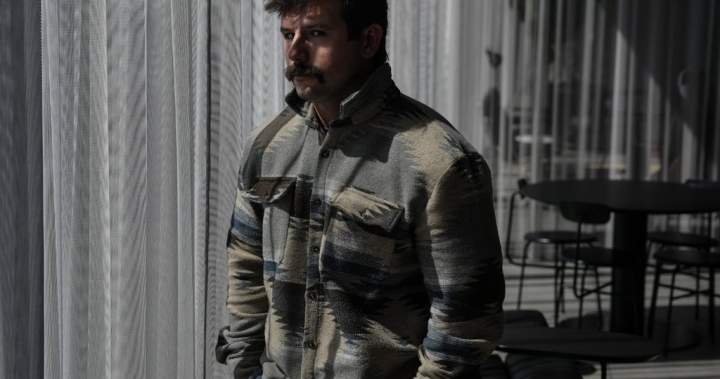

For Davis Schneider, his older brother Steven was “like a Superman.”

“He worked as a nurse until he died. He worked every day to help people in need,” the Toronto Blue Jays player said in an interview with The Canadian Press.
“He was kind of like the big popular guy who played a lot of sports and everybody loved him and I watched him every day. I still do.”
But in November 2020, his brother died of an opioid overdose at a relative’s home in New Jersey, where Schneider is from.
Steven was 26 years old and alone in a room at home.
“During COVID, everybody was dealing with some stuff. It was just (an) abnormal time,” Schneider said.
“Mentally, he just wasn’t in a real good place. And I didn’t know that. He never really showed me that he was struggling… And, you know, he got into some drugs,” he said.
Schneider didn’t know about naloxone — the drug that can reverse opioid overdoses and save lives if administered in time.
“Maybe the most devastating thing is that he was alone, he wasn’t with anyone,” he said.
Schneider now thinks that if someone had been with his brother and had naloxone, his life could have been saved.
So when Emergent BioSolutions — the maker of Narcan brand naloxone nasal spray — invited Schneider to become a paid spokesperson to raise awareness, the 27-year-old accepted, hoping to prevent other people from dying.

Get weekly health news
Get the latest medical news and health information delivered to you every Sunday.
The company publicly announced the partnership on Wednesday.
More than 55,000 Canadians died in the opioid poisoning crisis between January 2016 and September 2025, according to data from the Public Health Agency of Canada.
The Canadian Center on Substance Use and Addiction says about 20 people die from opioid overdoses every day in the country — and many of those deaths could have been prevented by naloxone.
But even though naloxone kits are available for free across the country, including at many pharmacies and health centers, most of the general public doesn’t get them, health experts say.
“Sometimes there’s a denial of how close home opioid overdose can be, and people find themselves in scenarios or situations they didn’t expect to be in,” said Dr. Taryn Lloyd, an emergency department physician and addiction medicine specialist at St. Michael in Toronto.
“Sometimes there’s this idea that ‘it doesn’t happen to me or the people around me.’ And we know that’s not true. Unfortunately, opioid overdoses affect all people from all walks of life and all ages.”
When someone has an opioid overdose, they stop breathing, and that’s what leads to death, Lloyd said.
Naloxone reverses that effect, she said, noting that she sees many people brought to the ER who wouldn’t have survived if someone they knew or a bystander hadn’t given them the drug.
In the hospital, patients receive naloxone intravenously or through an intramuscular injection, Lloyd said.
Although intramuscular injectors are available in the community, many people find the nasal spray less intimidating to use and can be just as effective, she said.
If someone is drowsy or unconscious and their breathing is irregular, it’s time to give naloxone if there’s a chance it could be an opioid overdose, Lloyd said.
If the overdose is from a non-opioid drug, naloxone won’t work, but it also won’t do any harm, she said.
Lloyd, who is not involved in the Emergent BioSolutions partnership with Schneider, said the baseball player’s story can help reduce stigma — and she hopes people get a naloxone kit as a result.
“I encourage people to have one in their car, have one in their backpack or purse that they use every day just to have it handy,” she said.
Schneider said he packs a bag of naloxone when he goes on the road with the Jays.
But he also wants to see naloxone kits available “in every public place, like a fire extinguisher (or) first aid kit.”
That would be ideal, said Tim Deloughery, a substance use health specialist at the Canadian Center on Substance Use and Addiction.
“The bottom line is that naloxone saves lives, but it only works if it’s available when someone needs it,” he said.
“It’s fast acting. It’s forcing the opioids to detach from the receptors in the body.”
Schneider misses his brother every day, remembering how he pushed him to be better as he pitched through the minor league gridiron in his quest to reach Major League Baseball.
&copies 2026 The Canadian Press



