


In less than eight minutes, roughly the length of a casual smoke break, the microdrama My Arabpati Mechanic BF delivers a secret legacy, a blossoming romance and a family plot. From episode 12, the protagonist, Reyansh, a mechanic, is revealed to be the heir to a massive fortune. His college friend Anika, an NGO worker, has already stepped into the role of his love interest, while elsewhere, his adoptive uncle is looking for him, hoping to capture the fortune before the truth comes out. A popular title on JioHotstar’s recently launched Tadka, the show currently spans 47 episodes, its interface designed like Instagram Scrolls: vertical, engaging and comprised of 1-2 minute episodes.
Often following the exaggerated acting and storytelling styles of Indian soap operas, micro-dramas are rapidly gaining popularity in India, especially in tier 2 and tier 3 cities, with major OTT platforms such as JioHotstar starting to tap into the format’s potential. The industry in India is currently valued at $300 million and is projected to reach $4.5 billion by 2030, according to investment firm Lumikai, making it the country’s “fastest-growing entertainment format.” Seen as “tasty” content, these dramas thrive on platforms such as Kuku TV, Moj, QuickTV and Reelies.
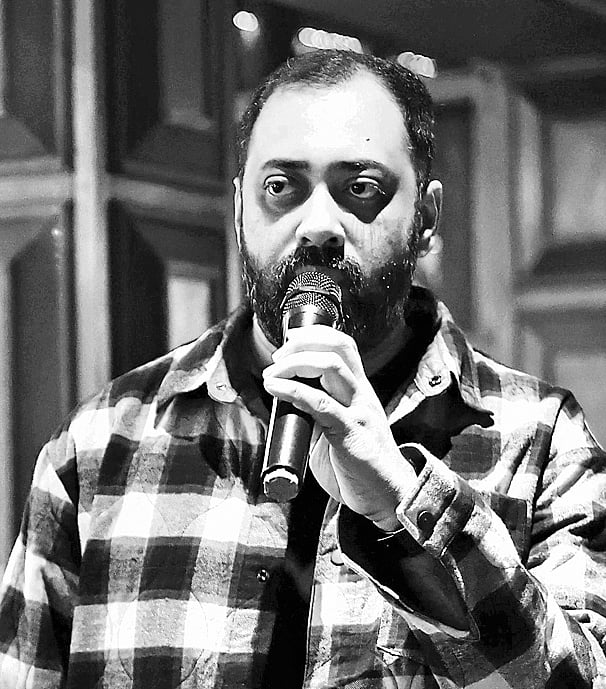
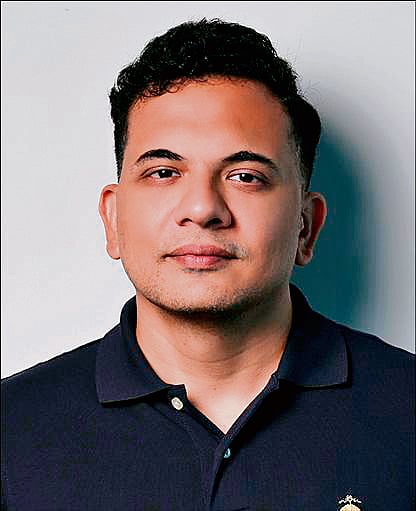
Bharath Ram, Head of Product, JioHotstar, says Tadka was launched because OTT consumption is becoming increasingly fragmented. “Consumption is happening during travel, on vacation and between daily routines, and this is changing both story formats and product models,” he says. The same viewer who watches micro-dramas during the week, he adds, often returns to long-form content on the weekend.
If long plays build worlds and characters over time, microdramas aim for emotion. Revenge, romance, ambition and sports are among the format’s most popular genres, often unfolding through predictable but emotionally charged plotlines. “The medium is not genre-specific. It works as long as it caters to an emotion that feels personal to the audience,” says director Abir Sengupta, who created the drama Speed Breaker. “Emotions like greed, passion, humiliation, and aspirational characters that have cultural roots always work best,” he says. For Vandana Khatri, a content writer from Jaisalmer, the appeal lies in the excess. She started watching the dramas out of curiosity, but now finds herself going back to them all day long. “They become addictive once you develop a taste,” she says.
Before reaching India, microdramas were already popular in China, South Korea and the US. Many platforms look at the trend in other countries and ‘localize’ the content, tailoring stories and emotions for the Indian audience. “It’s a creative process,” says Akira Rajeev Agarwal, Creative Producer, Kuku TV, “We study what exactly made that show work: emotional traits, audience behavior, storytelling, genre and engagement points.” The content is created in a way that the Indian audience can emotionally connect with it. “Localization is extremely important. The end product should be familiar to the audience from tier 2 and tier 3 cities,” adds Agarwal.
Platforms are also experimenting with how these dramas are sourced and produced. Amit Z, Head of Product, QuickTV, says the company follows a hybrid model that combines on-demand production with creator-driven content. “This dual strategy allows studios and independent creators to participate in the ecosystem,” he says. The platform, he adds, is also increasingly investing in AI-led production tools.
Subscriptions range from one rupee for the first month for apps like QuickTV to Rs 399 on a quarterly basis for Kuku TV. JioHotstar does not have a separate subscription for Tadka. In an age of endless motion, microdramas are proving that sometimes all it takes are two minutes, a cliffhanger and a rush of emotion to keep millions coming back for more.



