
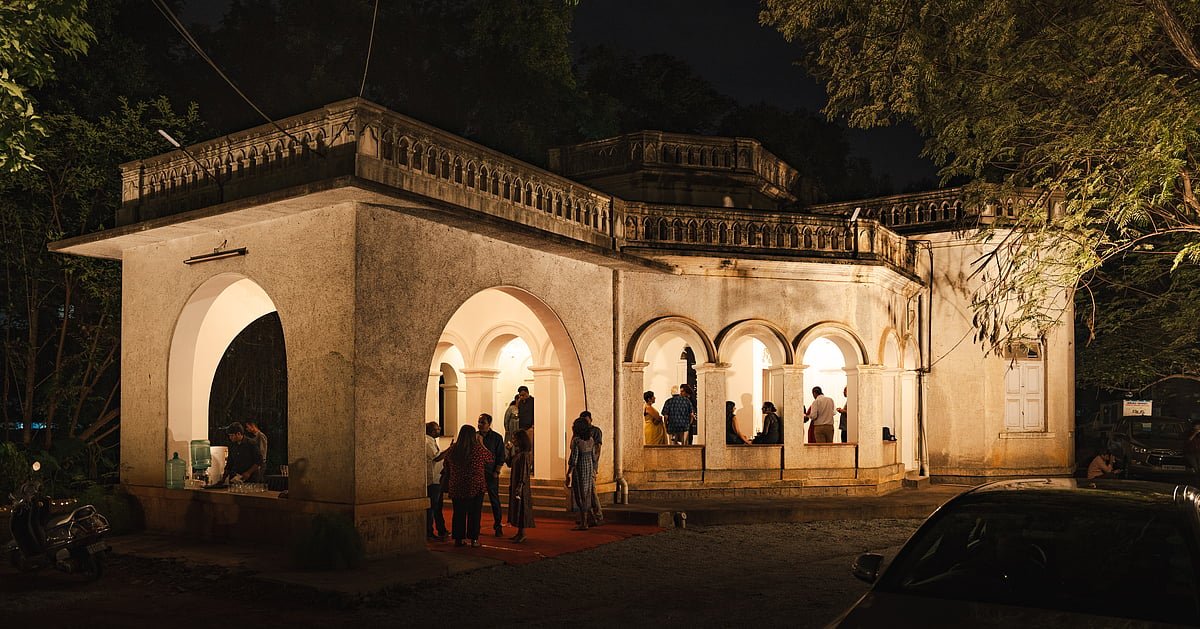

Aesthetic appeal often grabs attention online, but while it attracts people, the stories keep people coming back, explains Aarush Jhunjhunwala, owner of Cafe Stone, located on the Cinnamon premises. “When people come here, I can show them how it went from an orphanage built during the famine to a cafe in the middle of the city – that’s something completely unique to us.”
Conservation architect and co-founder of EZHA Heritage Swathy V Subramanian explains these as examples of ‘adaptive reuse’ that India has seen more of in palaces turned into star hotels. “In Bengaluru, we see this example in some older venues as well, like the Samsung Opera House and the Hard Rock Cafe – they retain the historic elements like walls, windows, Mangalore tile roofs, floors, but put it to a new use.”
Often, the venue’s offerings are closely tied to the architecture, as Poddar notes, “Since we work with indigenous crafts, which are heritage forms, it felt important that the architecture reflect that ethos—the breathing space, proportion and scale that feel ideal for a gallery.” Jhunjhunwala adds that the cafe has drawn creative inspiration from the space, saying, “It dictates a lot of the menu choices. Our guests resonate with the space having a Goa or Pondicherry vibe that Bengaluru was back then.” Being built to survive hot summers without technology, they also have practical benefits. “The temperature inside is always low because of the lime-plastered walls, high ceilings, sloping roof and terracotta tiles. You will never need AC,” says Subramanian.



