
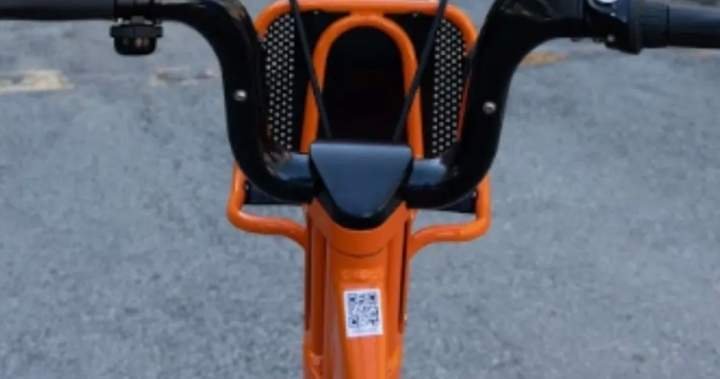

As the weather gets warmer, Bike Share Toronto riders are being warned to be vigilant as fraudulent QR codes are being placed on some of its bikes.

In a post on social media, the program said the fraudsters have set up fakes QR code stickers over official ones, redirecting users to malicious websites.
“We have become aware of fraudulent QR codes being superimposed over the official QR codes on some of our bikes,” they said in a statement.
Although the program uses QR codes to unlock bikes, it does not accept any form of payment through QR codes.

Get the latest national news
Get the latest Canadian news in your inbox as it happens, so you never miss a trending story.
BikeShare said they are urging all riders to unlock bikes only using its official app and in-app scanner.
of Toronto Police Service told Global News that it is not aware of any reports involving shared bikes, but says it has seen similar scams involving parking in recent weeks.
At least three recent cases involved fake QR codes placed on parking meters.
The victims believed they were paying for parking but were instead charged nearly $2,000, Toronto police said.
Investigators warn that the same tactic could be used in other public spaces.
Police advise people to inspect QR codes for signs of tampering, avoid scanning codes in public places when possible and never enter payment information if the source is not trusted.
They also recommend using official apps or websites instead of scanning QR codes.
“If you’re not going to click it, don’t scan it,” the police said.
BikeShare Toronto asks users to report any suspicious QR codes to customer service.
Since the start of 2026, the bike share has added 25 new stations and three station extensions, bringing 463 new docking points and nearly 500 new places to park and pick up bikes.
© 2026 Global News, a division of Corus Entertainment Inc.



