
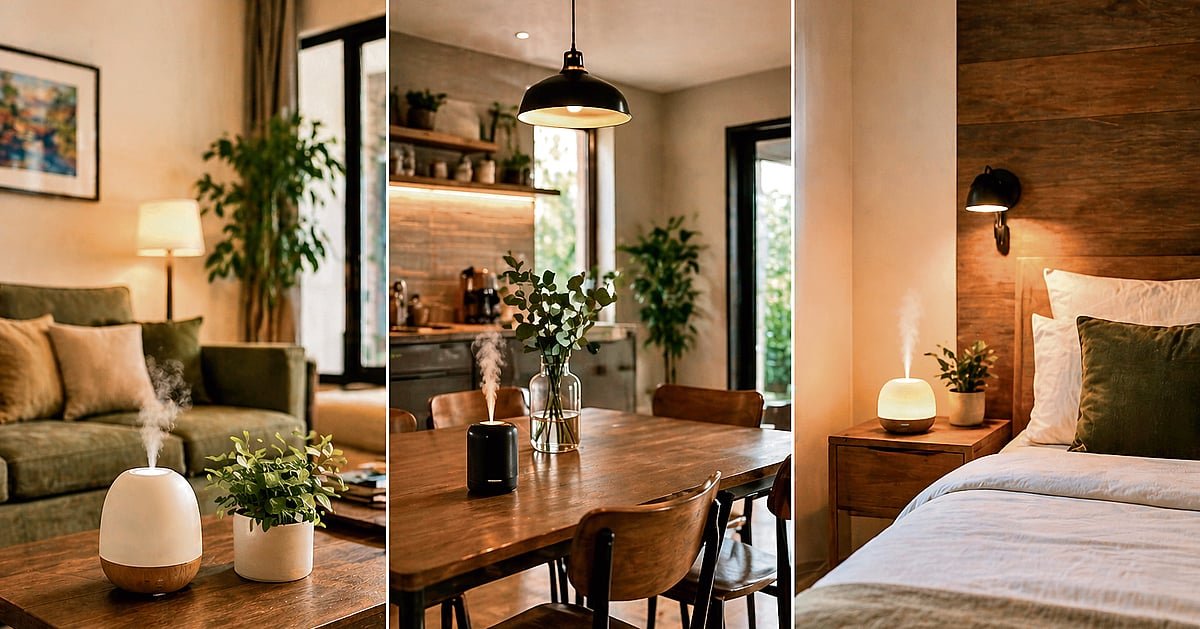

On a more considered level, scent zoning introduces a nuanced choreography of atmosphere throughout the home. When executed with restraint, it gives each space a distinct emotional tendency without disrupting the overall harmony. “The process must be done correctly because it generates distinct atmospheres for living areas, dining areas and sleeping areas through its application. The warm and welcoming notes of amber and vanilla, along with soft floral scents, create an inviting atmosphere that suits social spaces in residential areas,” says Kunwar Gaurav Giri, Chairman of Annapurna.
Perfumery, in this sense, becomes a blueprint for spatial narrative—layered, intentional, and deeply sensual. “Something bright and energetic for the living room, something soft and earthy for the bedroom, something clean and subtle for the dining room. A few spritzes go a long way. You want the scent to greet you, not announce it,” advises Divyata Patil, founder of Decoaura. The effect is less about statement and more about suggestion.
“Material also plays a role; wood and fabrics absorb and hold the scent longer, creating a lingering effect, while stone and metal reflect it, making it feel sharper yet more fleeting,” adds Komal Seth, Creative Director at Aarna Candles. Content, after all, defines true olfactory luxury. It’s not about saturation, it’s about subtlety. Ankit Agrawal, Director, Mysore Deep Perfumery House (MDPH) & Zed Black, says, “Instead of overtaking a space, fragrance should exist in the background, visible but never intrusive.” At its best, a home’s scent becomes an extension of itself—familiar, enveloping, and quietly evocative. Not something immediately announced, but something deeply known, especially in its absence.



