


The United States has started a series of strikes on Iran in response to Iranian ship attacks in the Strait of Hormuz.
These are the most serious violations so far of the Memorandum of Understanding that entered into force on June 17 and may signal the end of the ceasefire.
For the first time since the initial ceasefire on April 8, US President Donald Trump has done so finally stated the ceasefire is over.
These rising tensions suggest that the ceasefire will not turn into a permanent peace. The US is being dragged into a long war with Iran against its will.
Fighting for control
The main sticking point that has prompted the latest round of attacks is Iran’s determination to establish control over the Strait of Hormuz.
The Memorandum of Understanding stated that Iran would use “best efforts” to ensure the safe passage of merchant ships through the strait free of charge for 60 days.
However, tensions immediately rose over ships using the “Oman route” through the strait. This is a US-approved maritime corridor that hugs the coast of Oman and includes international coordination.
Iran wants ships to use a second route that runs along the Iranian coast and is closely monitored and controlled by Iran.
The strait is very wide that Iran maintain control over both routes without the use or threatened use of force.
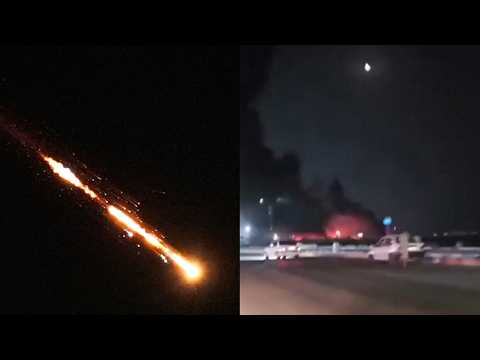
Iran has shown that it is ready use live fire to prevent ships from plying the Omani Strait.
A battle with different forces
One reason it has been so difficult to maintain the ceasefire is that the US and Iran have different strengths. Neither sees themselves as surrendered.
The United States is militarily strong, with overwhelming military capabilities.
But there is weak political will. He doesn’t want to stay in this fight or put boots on the ground in Iran. The US does not want to spend its military arsenal on a protracted war, or focus its global military efforts on the Iranian regime.
So while the US has the military capability, it is highly unlikely to force regime change in Iran or force open the Strait of Hormuz.
The greatest strength of the Iranian regime is its political resolve. It is determined to survive.
Since the main political leaders were killed at the beginning of this war, the regime has become even more harsh and militaristic. The current regime is ideological, clever and ruthless.
Iran is determined to show the US and the region that it is in control and will not back down. It is willing to bear staggering economic and security costs to achieve this goal.
Iran’s resolve is shown in its willingness to threaten civilian shipping in the strait lightweight, cost effective drones and attack boats.
Of the Iranian regime the main weakness is economic. Iran has suffered massive economic and military damage as a result of this war. He could not afford another long US blockade of the Strait of Hormuz and sustained airstrikes against infrastructure and military targets.
The power of domestic politics
The very different domestic landscapes in the US and Iran are pushing both sides closer to a ceasefire breakdown.
In Iran, as noted, the war has led to a hardened regime with the Islamic Revolutionary Guard Corps (IRGC) more firmly in control of political power. Iranian leaders who even talk to American counterparts, let alone make concessions, risk being labeled political traitors by some elements of the IRGC.
As history has shown with the murders of President Anwar Sadat in Egypt in 1981 and Prime Minister Yitzhak Rabin in Israel in 1995leaders can risk their lives if they make deals with counterparts considered sworn enemies by hardliners in their country.
This prompts Iran to focus on controlling the Strait of Hormuz and appear uncompromising, rather than capitulating to enjoy the economic benefits of sanctions relief and the promised $300 billion. reconstruction fund.
Trump, on the other hand, does not want to return to full-scale war because of a lack of internal support.
However, Trump is also influenced by those in the US who they don’t want to see the US get out of the war with Iran no deal on nuclear issues and Iran in full control of the Strait of Hormuz.
Trump expects Iran to cooperate with the Memorandum of Understanding because of the promised economic benefits. But he has greatly underestimated Iran’s determination to assert dominance over the strait and control in the region.
What will happen next?
Trump’s investigation into full escalation means we are unlikely to return to the February 28 war.
Iran’s determination to show control means we are unlikely to see a ceasefire or substantive peace agreement in the future.
The most likely scenario is that from the first ceasefire of April 8 to June 17 we return to the status quo. This was a precarious truce, on the brink of all-out war, but not a substantial peace.
The head-to-head strikes will continue over the coming months. The Strait of Hormuz will remain partially closed with uncertain security. This is more like a frozen conflict rather than a complete ceasefire or a return to full-scale war.
Jessica More is the academic director, School of Public Policy and Government, UNSW Sydney
This article was reprinted from Conversation under a Creative Commons license. Read on original article.



