
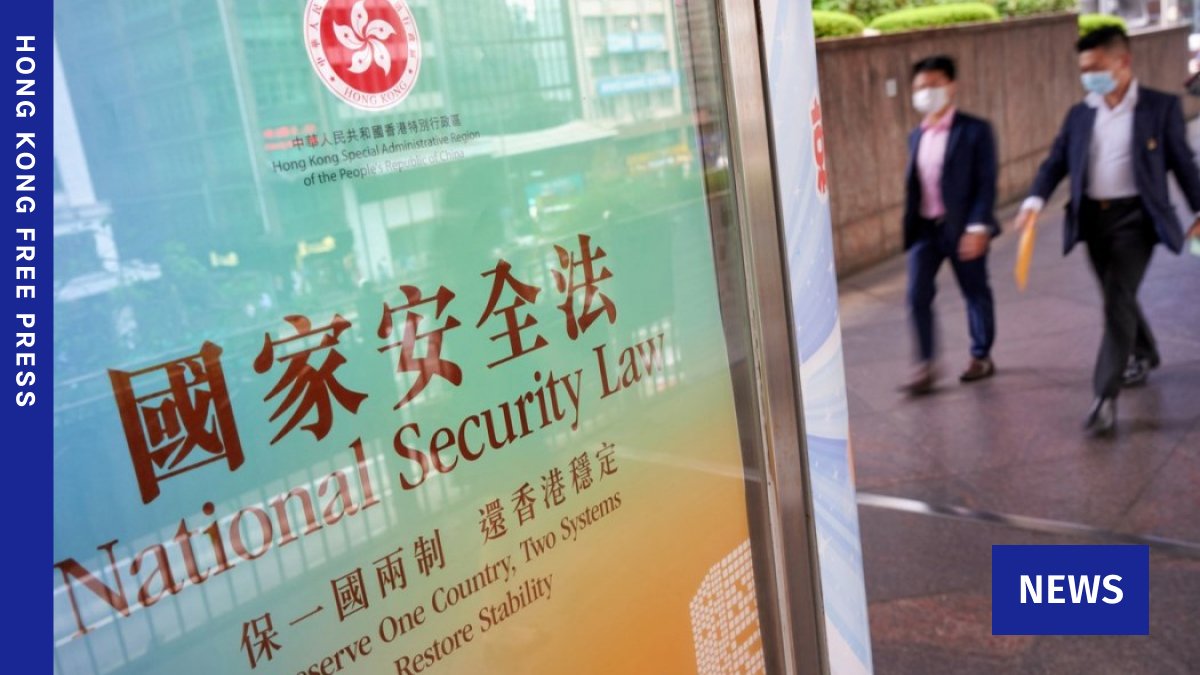

Hong Kong has introduced a new offense requiring suspects in national security investigations to hand over their passwords – or face up to a year in jail.

The government on Monday approved changes to the “implementation rules” of the Beijing-imposed national security law, introducing the password requirement along with giving some new powers to the authorities. Officials will brief lawmakers on the amendment on Tuesday.
Under the new rules, police can ask people under national security investigation to provide passwords or help decrypt their electronic devices. Failure to do so could be punishable by up to a year behind bars and a HK$100,000 fine.
Making a false or misleading statement is punishable by up to three years in prison and a fine of HK$500,000.
The police can also compel anyone who is believed to know the password or decryption method of a device under investigation to disclose such information. Similarly, those who own, possess, control or have authorized access to a device, as well as current or former users, may be subject to such an order.
New Customs Power
The new rules have also empowered customs officers to freeze or confiscate assets related to national security crimes or to confiscate “articles of seditious intent”.
Such powers were previously limited to the justice secretary, the security secretary and the police force.
The changes also increased the maximum sentence for a “foreign agent” in Hong Kong who fails to disclose information requested by the authorities – from six months to a year in prison.
A foreign agent is defined as someone acting for a foreign government, political party or designated international organization in Hong Kong.
Meanwhile, the changes include a new mechanism that allows those deemed foreign agents to apply to court to revoke or amend a data request.
This follows a decision by the Court of Final Appeal last year that abolished the penalties of three Tiananmen vigilante activists for disobeying a national data security police order.
In 2021, authorities accused the Hong Kong Alliance in Support of China’s Patriotic Democratic Movements of being a foreign agent and demanded its records. The activists denied the charge and disobeyed the order. They were convicted and was sentenced to four and a half months in prison in 2023.
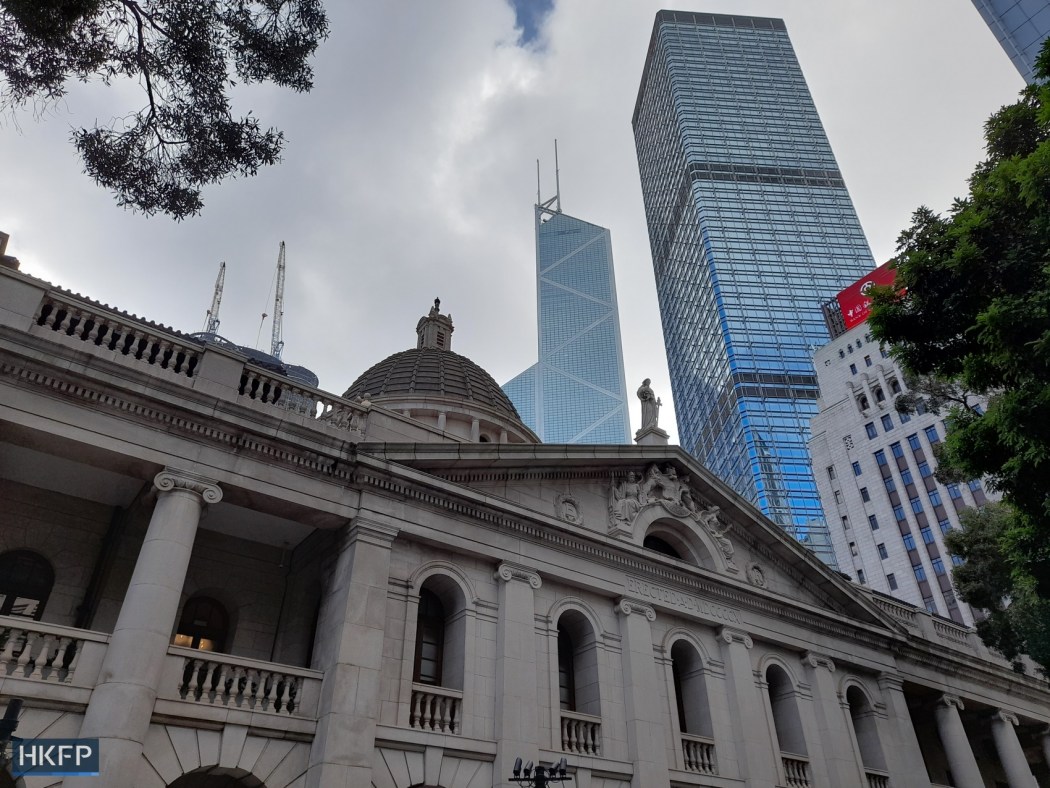
But the high court ruled that the authorities failed to prove that the Alliance was a foreign agent and that the trio were denied a fair trial because of heavily edited evidence.
In one STATEMENT on Monday, a government spokesman said the amendments only increased authorities’ powers in handling national security cases, adding that they are in line with the city’s mini-constitution, the Basic Law, as well as the protection of human rights.
“Law-abiding persons will not violate the law unwittingly. The Amendment Rules will not affect the life of the general public and the normal functioning of institutions and organizations,” the spokesperson said.
Beijing introduced national security legislation directly into Hong Kong’s mini-constitution in June 2020 after a year of pro-democracy protests and riots. He criminalized it subversion, secession, cooperation with foreign forces and acts of terrorism – broadly defined to include disruption of transportation and other infrastructure. This move gave the police sweeping new powers and led to hundreds ARRESTS BETWEEN new legal precedentswhile dozens civil society groups disappeared. The authorities say so restore stability and peace in the city, rejecting criticism from trading partners, AND AND NGO.





