

Russia’s inability to invade Ukraine is fueling extremely bitter public complaints about both the lack of military progress and the rising economic costs of the war, a pair of failures blamed on the leadership of President Vladimir Putin.
The damage caused by bombing by low-flying armed drones striking targets deep inside Russian territory has brought the reality of the conflict to places that seemed beyond the immediate effects of the war. Attacks on oil infrastructure and other industrial facilities forced the government to look for ways to protect areas that were thought to be safe.
A war that was supposed to end in a matter of days but has instead lasted longer than Russia’s four-year involvement in World War II is fueling a flurry of accusations among government officials.
Close Russian observers of military affairs blame the country’s woes on arrogance and contempt for the enemy. “The main mistake was that the intelligence services believed that Ukraine’s state institutions were weak and corrupt,” suggested Russian military journalist Andrei Soldatov. “They didn’t even anticipate the reaction of Ukrainian society in general.”
Yuri Kotenok, a prominent Russian war correspondent, added that overconfidence led the leadership to ignore the obvious shortcomings of Russia’s armed forces: “Our level of planning, intelligence and coordination is still far below par, and something needs to be done about it,” he wrote.
Discontent has moved from expertise to general public opinion. Victoria Bonya, a former reality TV star in exile, created a sensation when she released a detailed complaint about the situation in Russia in an online podcast. Her 18-minute Instagram video garnered 30 million views.
Directly addressing Putin himself, she said: “People are afraid of you, artists are afraid, governors are afraid.” She then listed a number of problems that needed to be fixed, some of which had been directly caused by the war, while others had simply been ignored by an uncaring government:
- internet outages,
- squeezing small businesses out of high prices and wartime taxes,
- floods in western Russia,
- oil pollution in the Black Sea,
- illegal slaughter of cattle in Siberia.
Shortly after her video aired, a pair of businesswomen took to the Internet to complain about the decline of their retail outlets, both due to a lack of merchandise and customers being unable to purchase whatever happened to be available.
Putin responded with compassion – which was unusual for him – but he blamed others. He admitted that officials are putting obstacles in the way of business and told the authorities to communicate better.
“His reaction was unprecedented, both in terms of high-level reactions to a grassroots initiative and in his careful criticism of the security services, which Putin usually shields from any blame,” noted a report from the Carnegie Russia Eurasia Center, a Berlin-based think tank.
“Finding himself losing his balance, Putin is trying to get back on a level playing field,” the analysis surmised.
These stirrings of internal discord have given rise to rumors that Putin’s seemingly undisputed position in power is under threat, possibly through a coup.
Expressions of discontent do not yet appear likely to result in political change, observers inside and outside Russia say. They attribute the relative stability or mythical passivity of the Russian population in the face of official incompetence or fear of retribution from a state that routinely provides dissidents with one-way tickets to Siberian prison camps.
That said, the authorities have seemed quite anxious to quell any activity that might enliven public opposition to the war. This month, an independent Russian online publication reported how authorities last year quickly shut down news of an anti-war activist in the city of Kaliningrad who set himself on fire in protest.
He had spray-painted a message on the snow at the foot of a World War II monument that read “No to war,” according to Important Stories, a Russian online magazine.
Police learned of the suicide and rushed to retrieve his cremated remains and deliver the frozen message. The only record of the event was a brief intelligence report that someone had left a security office.
The possibility that the country’s stifling security system could fail to stave off political unrest has fueled a kind of paranoia within the Kremlin. Last month, Putin ordered the installation of electronic surveillance systems in the homes of close associates, according to sources in Moscow. Visitors to Kremlin offices must be double-screened upon entry, and those tasked with working close to Putin are prohibited from using phones with Internet access for fear of hacking.
Even members of Putin’s household staff, including official photographers, cooks and housekeepers, have been told to avoid traveling on public transport for fear of being attacked or kidnapped.
Such concerns may reflect emerging rivalries among some of Putin’s closest associates. Putin chaired a recent Kremlin meeting during which Valery Gerasimov, chief of the army’s general staff, accused the country’s top intelligence agencies of failing to provide the information and manpower needed to thwart assassination attempts on senior army officers. A string of murders had occurred last year.
Alexander Bortnikov, who heads the Federal Security Service, the post-USSR version of the KGB, responded that it was up to the Ministry of Defense to organize protection for key personnel. He was supported in the same line by the director of the National Guard Viktor Zolotov.
Russian reports say Putin and his family have stopped staying at their usual residences near Moscow and in Valdai, a lakeside summer resort located between St. Petersburg and the capital. However, it is not clear whether this reflects Putin’s concerns about domestic unrest or some sort of Ukrainian attack – or perhaps both
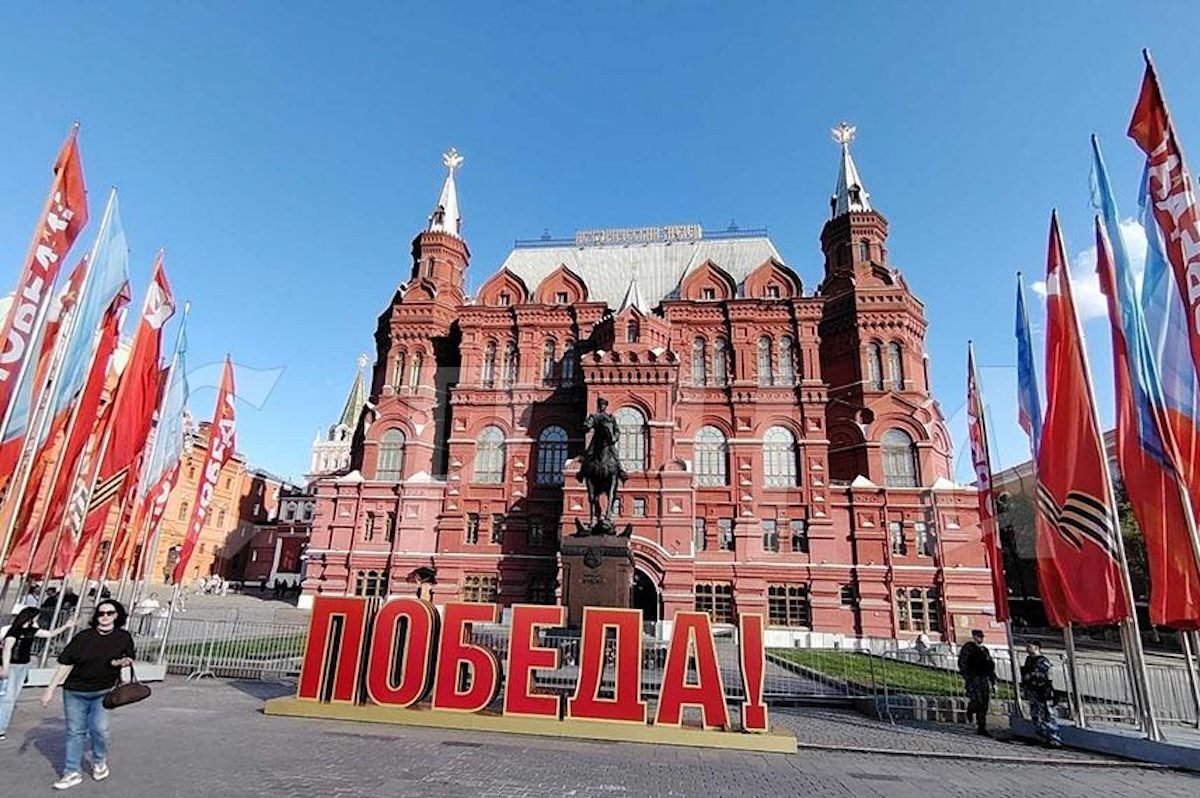
As this weekend approached, Ukraine’s growing drone threat hung over Moscow’s annual celebration of the Soviet victory over Nazi Germany. The centerpiece of the May 9 Victory Day affair is usually a parade of goose soldiers marching through Red Square in the company of tanks, armored vehicles and lots of rockets.
But not this year: Putin himself, other government officials, foreign dignitaries and thousands of spectators will take part, but the parade itself was scaled back to include only military cadets marching under a flypast of fighter jets.
Dmitry Medvedev, a former Russian president, warned Ukraine against sending drones to attack the Victory Day holiday. He said that, “In the case of a real provocation on Victory Day, no one guarantees that May 10 will come to Kiev.”
On Friday afternoon in Washington, US President Donald Trump moved to avoid such an outcome by declaring a three-day ceasefire, starting May 9, between Russia and Ukraine.
The last two places confirmed the news.



