
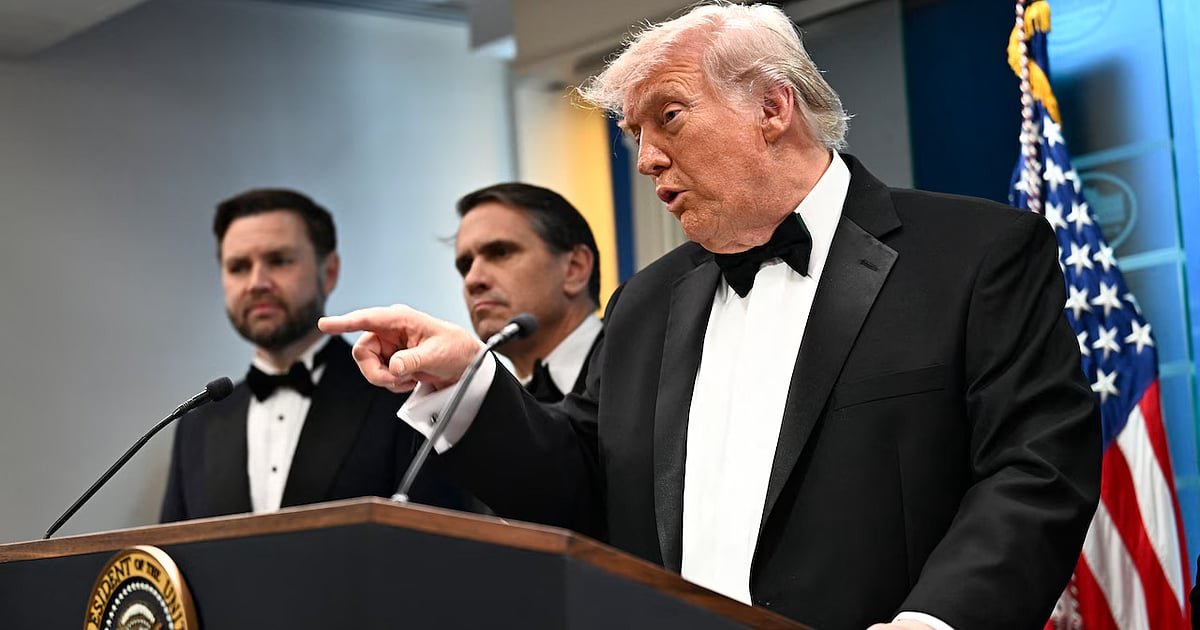

A dramatic attempt to assassinate US President Donald Trump at the crowded White House Correspondents’ Dinner turned what is usually a platform for good humor into a moment of alarm, again shining a spotlight on the weaknesses in his security cover. The attacker breached an outer layer of security and opened fire at a checkpoint before being subdued, prompting the evacuation of the president and other senior officials. This is the third attempt to assassinate Trump in two years, underscoring the persistence of threats even within highly protected environments and raising new questions about preparedness at high-profile public events.
The incident could bring a brief political dividend for Trump at a time when his approval ratings have been under pressure — amid criticism of the attack on Iran, resulting global economic uncertainty and inflationary worries at home. His presidency has already disrupted the rules-based global order, complicating foreign policy for both allies and adversaries. His unilateral tariff regime, for example, encountered legal resistance domestically, reflecting institutional pushback.
Meanwhile, Iran has shown through asymmetric responses that it is not an easy opponent, despite suffering significant losses. Key US allies such as the UK, Italy, France and Spain have stayed away from direct military involvement, signaling concern with Washington’s approach. Trump’s shifting positions—on NATO, on the Strait of Hormuz and on the development of the conflict—have added to the uncertainty, even as diplomatic efforts continue to find a path to de-escalation.



