
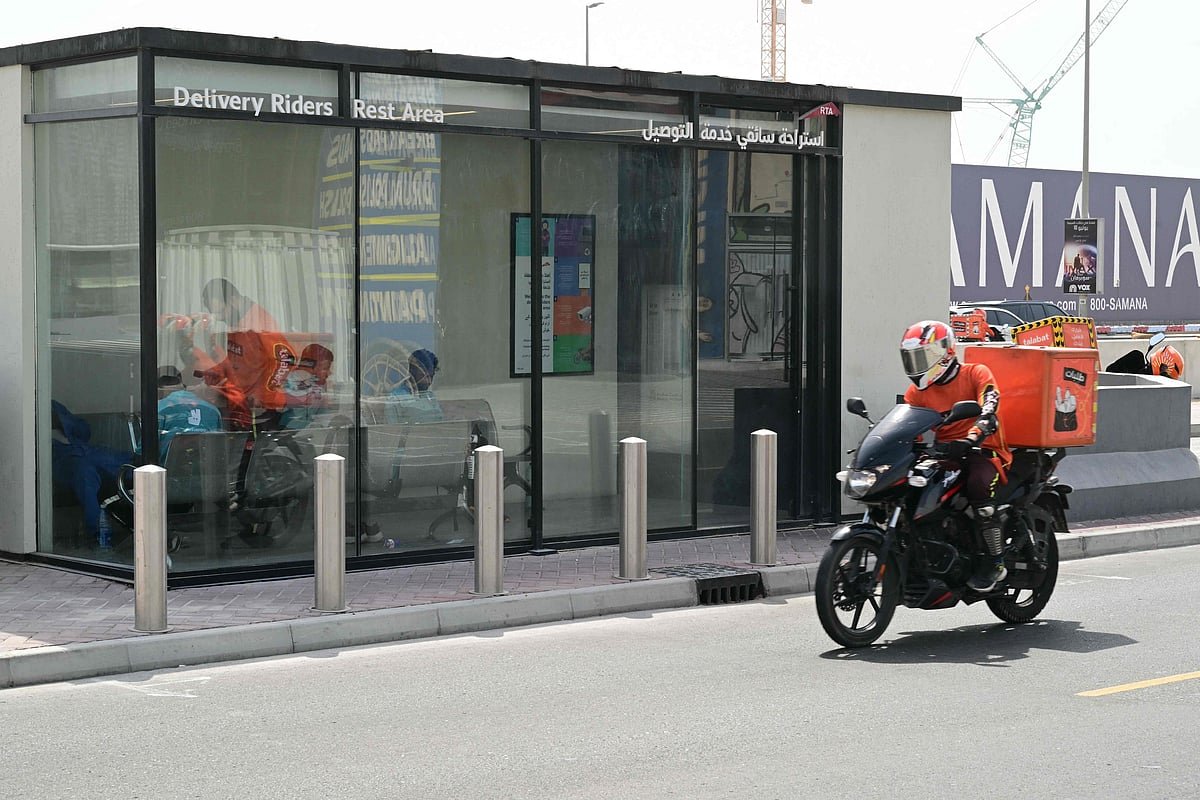

Dubai: Dubai’s last-mile distribution and logistics sector has demonstrated strong operational resilience, maintaining uninterrupted services despite global disruptions, according to industry leaders within the emirate’s business community.
Get Updated Faster & FREE: Download the Gulf News app now – just click here.
Members of the Dubai Delivery Business Group, which operates under the Dubai Chamber of Commerce, said the sector continues to meet growing demand from consumers and businesses while maintaining efficient and scalable operations. They attributed this performance to a combination of government support, advanced infrastructure and coordination between public and private stakeholders.
The group said Dubai has built an enabling environment for logistics providers through agile regulation, technology investment and long-term strategic planning. This has allowed delivery operators not only to maintain services, but also to expand capacity and introduce innovation, reinforcing the emirate’s position as a global logistics hub.
Mehreen Inderyas, Chairman of the Dubai Delivery Business Group, said that diverse supply chains and forward-looking policies have been central to the sector’s sustainability. She noted that digital capabilities and regulatory flexibility have enabled rapid responses to external shocks while maintaining operational efficiency.
Sign up for our daily business newsletter, Checks and Balances.
Sufficient capacity
Inderyas added that current capacity levels remain sufficient, supported by continued investment in fleet expansion, warehousing and logistics technology. She said the sector is well positioned to scale further as demand grows in both the consumer and enterprise segments.
Leaders across the sector echoed similar views on the importance of long-term planning and system design. Shahid Nadeem, managing director of Zone Delivery Services, said Dubai’s logistics network is built with flexibility and redundancy, allowing it to absorb disruptions while maintaining service continuity.
Nadeem said efficiency gains driven by artificial intelligence, micro-fulfillment and multi-modal logistics have strengthened the sector’s ability to operate under stress. He also praised government-led digitization and coordinated responses for reducing operational friction and supporting continuity.
Industry participants emphasized the role of technology adoption and competitive market dynamics in sustaining performance. Manoj Tiwari, founder and chief executive of Express Vulcan Delivery Services, said Dubai’s last-mile ecosystem is operating at high efficiency, supported by strong infrastructure and data-driven planning.
Tiwari said the sector’s ability to scale through optimized routing and micro-fulfillment positions it to meet growing demand without compromising speed or reliability of delivery. He added that regulatory clarity has enabled companies to focus on execution while maintaining service standards.
Other executives noted the adaptability of distribution operators in managing fluctuating demand. Ahmed Mahmoud Ahmed Youssef, chief executive of RAM Delivery Services, said companies have been able to quickly scale operations while maintaining service continuity due to strong infrastructure and flexible regulatory frameworks.
Youssef said continued investment in logistics technology and fleet capacity will support future growth as order volumes increase. He added that the sector remains well prepared to handle expansion in both e-commerce and business logistics.
Workforce resistance
Market participants also highlighted labor and political factors supporting resilience. Suhail Pirani, managing partner of Bolt Delivery Services, said that recognizing delivery as an essential service has played a key role in maintaining continuity, especially during periods of disruption.
Pirani said the government’s preparedness and quick response measures ensured stability and uninterrupted supply flows, bolstering confidence among operators and consumers.
Foreign investors also cited operational sustainability as a key factor. Lloyd Andrew Hayes, owner and chief executive of Speedy Delivery Services, said structured licensing, compliance frameworks and real-time coordination have supported seamless operations and encouraged continued investment in the Emirate.
Shaival Shah, director of contracting at Adecco, said a flexible workforce model combined with infrastructure and government support has ensured consistent availability of riders to meet changing demand patterns.
Industry leaders said the combination of infrastructure, policy support and private sector innovation continues to underpin Dubai’s delivery ecosystem, positioning it for sustained growth despite ongoing global uncertainties.



