
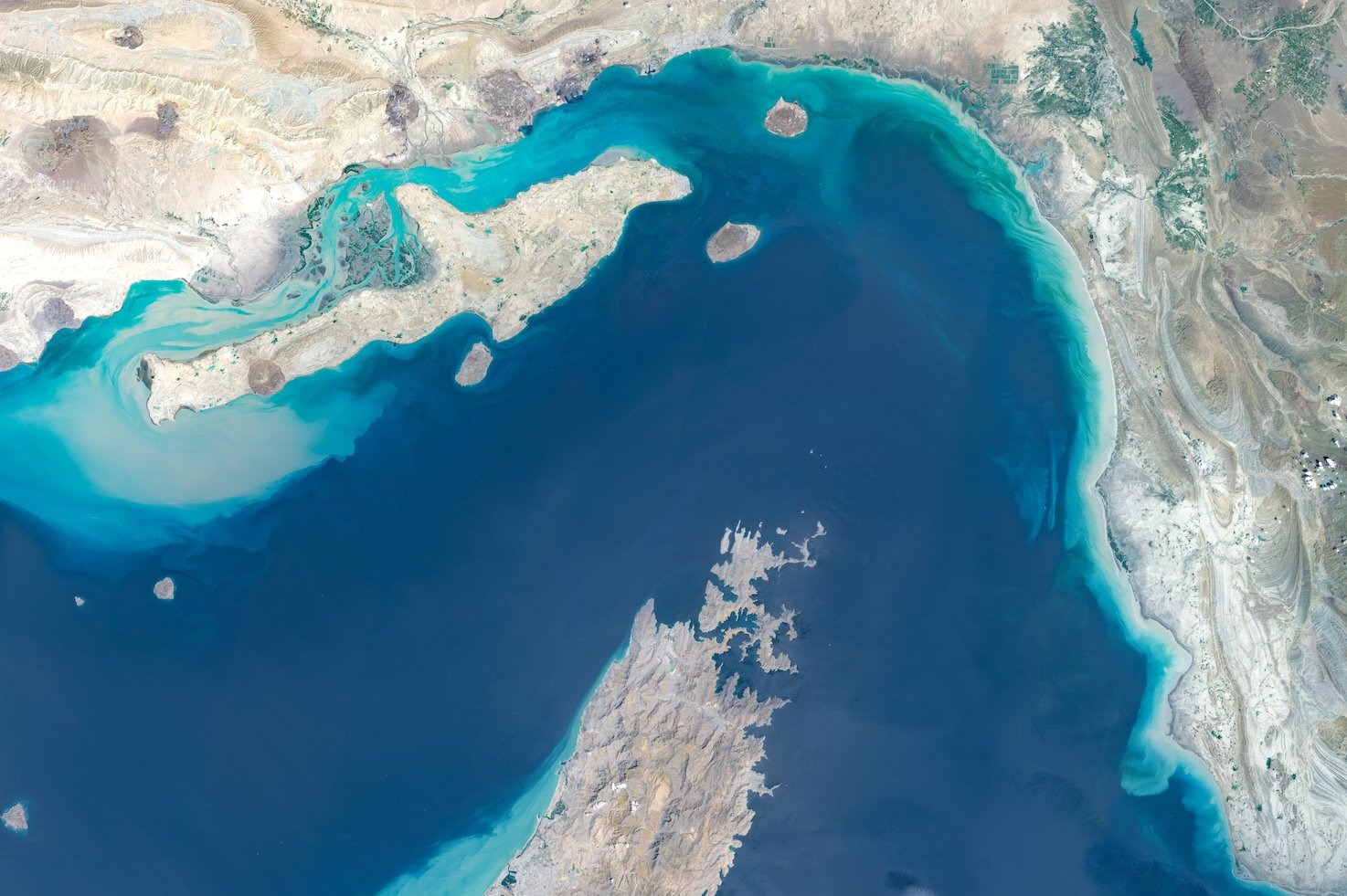

Iran’s vow not to reopen the Strait of Hormuz – as long as a US naval blockade remained in place – was kept on Thursday despite an extension of the ceasefire, after the Gulf country announced the seizure of two ships trying to pass through the strategic waterway.
The US Central Command (CENTCOM) said late on Wednesday that it had also “directed 31 ships to turn back or return to port” as part of its “blockade against Iran”.
As the clock ticked for a return to the war that has engulfed the region, US President Donald Trump had said on Tuesday that he would maintain the ceasefire to allow more time for peace talks brokered by Pakistan.
Iran said it welcomed Pakistan’s efforts but had no further comment on Trump’s announcement.
“A full ceasefire makes sense only if it is not violated through a naval blockade,” said Iranian parliament speaker Mohammad Bagher Ghalibaf, who led Tehran’s delegation to the first round of talks in Islamabad.
“Reopening the Strait of Hormuz is not possible in the midst of a flagrant ceasefire violation.”
Oil prices rose 4% before settling on Thursday after Iran vowed not to reopen the Strait of Hormuz as long as a US blockade remains in place.
As of 1:25 a.m., the benchmark U.S. West Texas Intermediate (WTI) oil contract was up 4.06% at $96.73 a barrel. International benchmark Brent North Sea crude rose 3.62% to $105.63. Both were relieved in the following minutes.
Trump had said he wanted to give Iran’s “fractured” leadership time to come up with a proposal, in what many observers saw as a face-saving move to avoid renewed war.
Trump told the New York Post that talks could resume in Pakistan within two to three days, although Iran has not confirmed participation and Vice President JD Vance postponed his trip to Islamabad.
Trump also claimed that Iran at his request had halted alleged plans to execute eight women arrested for mass anti-government protests in the weeks before the attack.
But Iran’s judiciary described his comments as “fake news”, saying the women had never faced the death penalty.
Seized ships
Iran’s elite Revolutionary Guards said they forced two ships off the Iranian coast from the Strait of Hormuz, the narrow gateway for about a fifth of the world’s oil.
“Marine forces of the Islamic Revolutionary Guard Corps identified and detained two trespassing vessels in the Strait of Hormuz,” the Guard said in a statement.
They identified the ships as the Panamanian-flagged container ship MSC Francesca and the Liberian-flagged Epaminondas.
Panama’s Foreign Ministry confirmed the seizure of the MSC Francesca, calling it a “serious attack on maritime security” and an “unnecessary escalation”.
UK-based maritime security monitors confirmed that three merchant ships had reported incidents involving gunboats in the strait.
Among them, a container ship reported being fired upon by a Revolutionary Guard boat 15 nautical miles northeast of Oman, causing damage to the bridge but no casualties, the UKMTO monitor said.
Under Trump’s orders, the US Navy is trying to block ships going to or from Iranian ports, seeking to increase pressure on the Iranian economy even without an all-out war.
Amid the blockade, the Pentagon announced Wednesday that Navy Secretary John Phelan would be leaving “immediately.”
It gave no reason for his sudden departure, the latest departure of a senior officer under Trump’s Pentagon chief of staff, Pete Hegseth.
Iran, in retaliation for the attack, has said ships must seek permission to leave or enter the Gulf through the strait. It had previously promised free passage during the ceasefire, but backtracked after Trump announced the blockade.
The US Defense Department said on Tuesday that US forces had intercepted and boarded a “stateless sanctioned” ship. AFP has identified the vessel as one linked to Iranian activity. Both sides accuse the other of violating the ceasefire.
More violence in Lebanon ahead of talks
After the cease-fire with Iran, the United States helped broker a cease-fire between Israel and Lebanon, including Hezbollah, the Iranian-backed Shiite Muslim movement that had fired rockets into Israel in retaliation for attacks on its protege.
Despite the announced ceasefire, Israeli strikes killed five more people on Wednesday, Lebanese media said.
Amal Khalil, a reporter for Al-Akhbar newspaper, was killed and her fellow reporter Zeinab Faraj was wounded in an Israeli attack near the border, the newspaper said.
French President Emmanuel Macron announced that a second French soldier who was wounded in a weekend ambush against UN peacekeepers in Lebanon blamed on Hezbollah had died.
A first soldier was shot dead in Saturday’s ambush, for which Hezbollah has denied responsibility.
Israel and Lebanon, which do not have diplomatic relations, will hold a second round of talks on Thursday in Washington.
Lebanon will request a one-month extension of the ceasefire during the meeting, a Lebanese official said AFP.
Lebanon will also demand “an end to Israel’s bombing and destruction in areas where it is present and a commitment to a ceasefire,” the official said, speaking on condition of anonymity given the sensitive nature of the talks.
Israeli attacks in Lebanon have killed more than 2,450 people since the start of the war, according to Lebanese authorities.
(sma)



