

Iran is considering participation another round of peace talks with the Trump administration in Islamabad this week, even after Iran’s top diplomat accused the US delegation of sabotaging the previous round with maximalist demands and “shifting goalposts”.
The spokesman of the Foreign Ministry of Iran, Esmail Baghaei, said at a press conference on Monday that “no decision has been made” regarding Iranian participation in another round of talks. Earlier talks in the Pakistani capital failed to produce an agreement to end the conflict The Trump administration and its Israeli counterparts launched in late February.
“While claiming diplomacy and willingness to negotiate, the U.S. is engaging in behavior that in no way shows seriousness in pursuing a diplomatic process,” Baghaei told reporters, referring to the attack and seizure of an Iranian-flagged cargo ship in the Gulf of Oman over the weekend by the U.S. military.
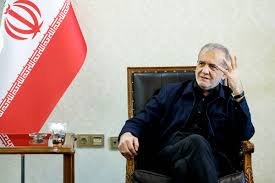
Iranian President Masoud Pezeshkian on Monday criticized what he called “unconstructive and contradictory signals” from US officials.
“Honoring commitments is the basis of meaningful dialogue,” wrote Pezeshkian in a post on social networksadding that Iranians harbor “deep historical distrust” of the US government given its record of aggression against the Middle Eastern country.
“They demand the surrender of Iran,” Pezeshkian wrote of Trump administration officials. “Iranians do not submit to force.”
The Iranian president’s comments came as his American counterpart, Pres Donald Trumpthreatened to continue the bombing campaign that has so far killed more than 3,300 Iranians — and displaced millions – if the current two-week ceasefire ends on Wednesday evening without an agreement to end the war.
“A lot of bombs start going off,” Trump said PBS News when asked what happens if the ceasefire ends without a deal.
Trump’s remarks came after he warned that if Iranian leaders do not accept his administration’s terms for ending the war, ” United States will take down every single power plant and every single bridge in Iran.”
Experts have said Trump’s threats are themselves war crimes even if he does not continue to attack civilians infrastructurewhich is protected under international law.
The Trump administration is divided over gasoline prices
Also on Monday, Trump said his energy secretary, former fracking executive Chris Wright, was incorrect when he said gas prices may not fall below $3 a gallon until next year.
On a Sunday interview with CNN’s Jake Tapper, Wright was asked when Americans could expect gas prices to drop sharply after they rose to over $4 a gallon on average nationwide because of Trump’s war with Iran.
“I don’t know,” Wright replied. “That might happen later this year. That might not happen until next year.”
In one interview with The Hill on Monday, Trump said Wright was “absolutely wrong” about the projection and insisted that gas prices will drop “once” the war is over.
Despite Trump’s claims that gas prices will drop rapidly after the war ends, The New York Times reported on Monday that the negative effects of Iran’s closure of the Strait of Hormuz, which has choked off roughly 20% of global oil shipments, are just beginning to be felt.
The impact of the closure of the strait is being felt most acutely in East Asia, where oil The lack of supply has a ripple effect that is likely to spread around the world if the strait remains closed much longer.
“Even if there is a peace deal soon,” the Times reported, “the future … is likely to include months of canceled flights, food price hikes, factory shutdowns, delayed shipments and empty shelves for products long considered quick and easy to buy around the world: plastic bags, instant noodles. vaccinesyringes, lipstick, microchips and sportswear.”
The Times added that “even if the Strait of Hormuz stabilizes tomorrow, it could take years for oil and gas production and shipping to reach their fat pre-war levels.”
Bob McNally, founder and president of consulting firm Rapidan Energy Group, echoed the Times’ analysis in a interview with Newsweek published Monday.
“It is likely that we will feel the effects of the power outages until the end of the year,” McNally explained. “Even if the conflict and disruptions ended today, the ripple effects would be felt for many months. Just resuming production and Gulf flows would take three to four months. Repairing damage to facilities could take longer.”
Mark Zandi, chief economist at Moody’s Analytics, too designed more financial pain for American consumers in the coming months.
“It doesn’t look like gasoline prices will return to pre-war levels anytime soon,” Zandi has written on a sunday social media post. “That’s even if the war ends soon, which looks bleak, to say the least. And that’s abstract from what Americans will need shell for higher prices on everything from groceries to airline tickets in the coming weeks and months. The financial pain caused by the war and its consequences on consumer spending and the economy will intensify.”



