
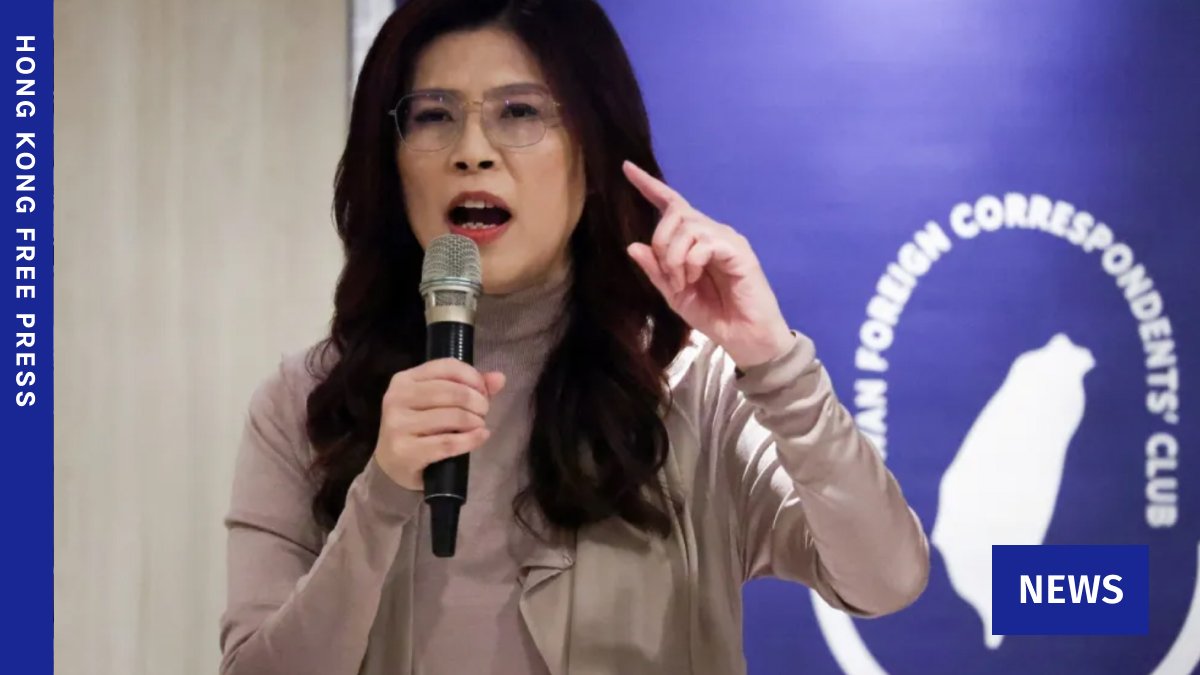

Cheng Li-wun was once a fierce activist for Taiwanese independence, but these days the fiery leader of the island’s largest opposition party sees herself as a peacemaker with China.

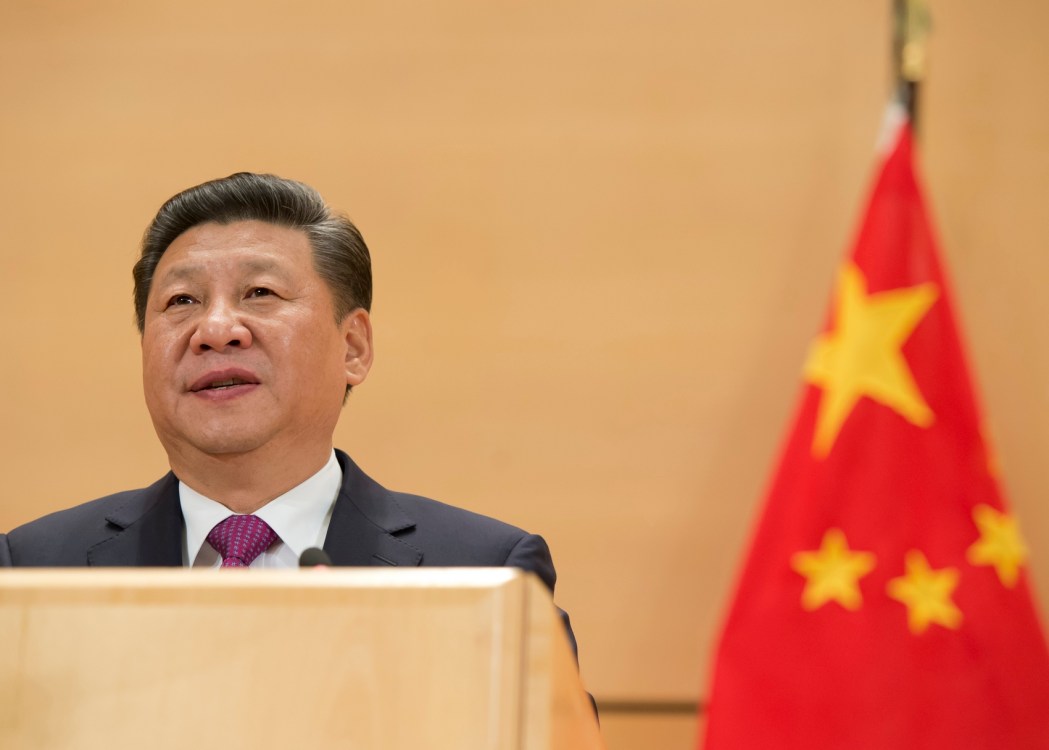
Cheng, 56, will lead a Kuomintang (KMT) delegation to China on Tuesday – the first by a female party leader since 2016 – where she hopes to meet Chinese President Xi Jinping.
The former talk show host and lawmaker has shaken up Taiwanese politics since her surprise elevation in November to head the KMT, which has long advocated closer economic ties and cultural exchanges with Beijing.
Cheng has been accused by critics, including within the KMT, of being too pro-China, which claims Taiwan as part of its territory and has threatened to use force to annex it.
Some in the KMT fear her blustering rhetoric, which often echoes Beijing, could scare off moderate voters in this year’s local elections and the 2028 presidential race and erode relations with the United States — Taiwan’s most important security supporter.
Speaking to foreign media recently, Cheng said talks with Xi would have “significant symbolic meaning” and could be a “foundation” for peaceful relations across the Taiwan Strait.
“I don’t believe that a single meeting can solve all the issues that have accumulated for nearly a century,” Cheng said.
“But… I hope I can successfully build such a bridge.”
‘Make our home stronger’
Cheng grew up in a “village of military subordinates” for members of the KMT forces and their families, many of whom had fled to Taiwan after the KMT was defeated by communist fighters in China in 1949.
Despite her family background, Cheng was a fierce critic of the KMT in her youth. She was a student activist and member of the Democratic Progressive Party (DPP) and campaigned vigorously for Taiwan independence.
She later abandoned the idea and left the DPP after becoming disillusioned with infighting and “discovering that Taiwan’s independence is a lie”.
In 2005, she joined the KMT.

“Taiwan independence is an absolutely impossible dead end, so why should we pay such an unreasonable price for it,” Cheng said recently, apparently referring to the risk of triggering a conflict with China.
Widely considered a dark horse candidate in last year’s KMT presidential election because of her positions on China, which go beyond the comfort zone of many members, Cheng stunned the party establishment by defeating her male rivals.
Cheng immediately vowed to unite the party and “make our home better and stronger.”
“For the security, well-being and future of 23 million people, we must together show sincerity and goodwill to resolve cross-strait differences and keep both sides away from war and conflict,” she said.
Cheng has sparked controversy with her outspoken views, declaring that Taiwanese people should be proud of their Chinese heritage and insisting that Russian President Vladimir Putin is not a dictator.
Taiwan and China have linguistic, cultural and historical ties. But recent polls from National Chengchi University show that most people in Taiwan identify as Taiwanese and do not support unification with China.

A fierce critic of President Lai Ching-te, who belongs to the DPP, Cheng has also railed against the government’s plan to increase defense spending, mainly on US arms purchases, previously telling AFP that “Taiwan is not an ATM”.
Cheng has accused Lai of pushing Taiwan towards a possible war in which the island would be the “biggest loser”, but the DPP has said she is doing Beijing’s bidding by stalling its plans.
“If cross-strait relations are peaceful and stable, we don’t need a pointless arms race,” Cheng told AFP, insisting that dialogue with Beijing was the best option.





