
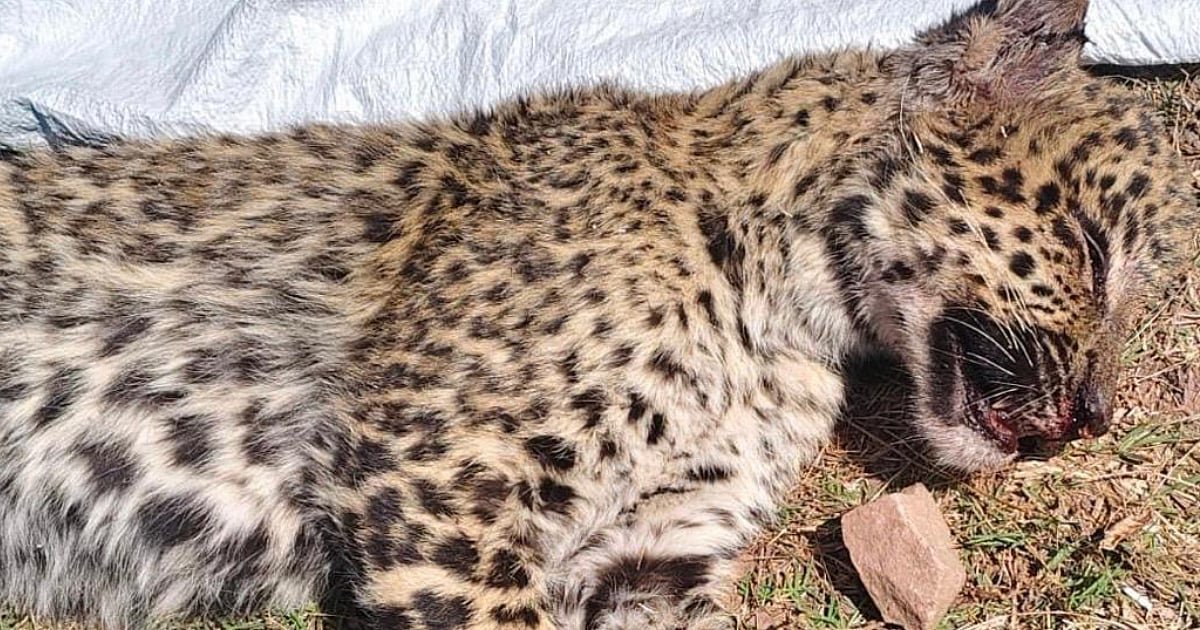

Forest officials said the destruction of natural habitats is forcing wild animals to move closer to human settlements. The department regularly conducts awareness campaigns to guide villagers on how to deal with wild animals.
“It is mostly during the late evening or night that leopards attack human beings and domestic animals, but this incident happened in the early morning, which reflects the animal’s desperation,” the official said.
Human-wildlife conflict has increased in Himachal Pradesh in recent years. In December last year, one person was killed and five others injured after a leopard carried out a series of attacks at three different locations in Balh Ghati area of Mandi district before being shot dead by locals. The attacks took place in Chandiyal, Bhadyal and Malwana villages.
According to the 2024 wildlife census, titled Population Estimate and Human-Wildlife Conflict Assessment, published by the Zoological Survey of India (ZSI), leopards and black bears are increasingly coming into conflict with humans in districts such as Kullu, Chamba, Mandi, Kinnaur, Lahaul, and parts of Sirti.
The census recorded an estimated 529 black bears and 510 leopards across the state, with 307 bears and 333 leopards individually identified.
The study found that leopards are responsible for conflicts in 30.85 percent of the affected areas, while black bears account for 18.65 percent. Most attacks target livestock, with sheep and goats accounting for 83.79 percent, followed by cattle at 13.20 percent and horses at 4.75 percent. Leopards also occasionally prey on dogs, with 3.40 percent of such incidents reported.
The report pointed out that the expansion of human settlements near forests, encroachment and increased dependence on forest resources are the main factors behind the increasing incidents of human-wildlife conflict.



