

An earlier version of this article was published by Pacific Forum.
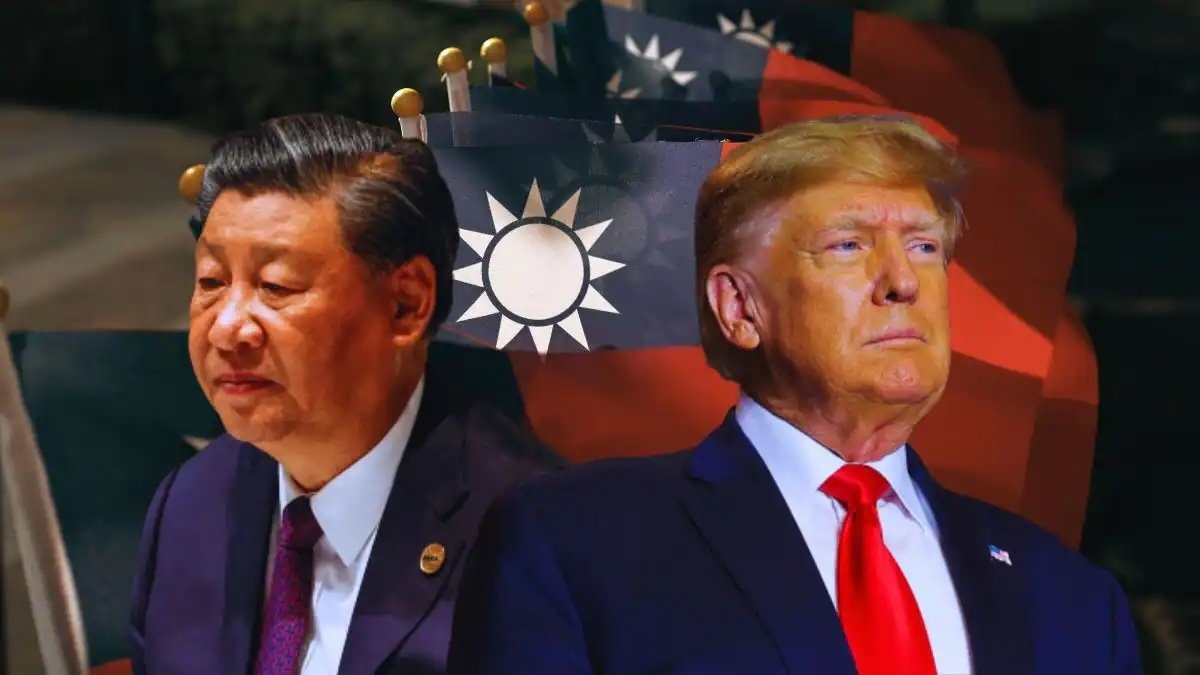
When Donald Trump told reporters in February 2026 that he had discussed arms sales to Taiwan with Xi Jinping, the headlines wrote themselves. Commentators warned of betrayal; Taiwanese shows speculated about secret releases.
However, policy data shows continuity. The administration reconfirmed the commitments based on Taiwan Relations Act. of December 2025 Weapons Package move forward. Existing contracts for HIMARS missiles, Harpoon coastal defense missiles and Stinger systems remained in production queues that had already been strained by US replenishment after Ukraine aid and NATO demand. These pressures are further compounded by competing US priorities in the Middle East, stretching limited production capacity.
Delays of two to four years in some systems predate Trump’s remarks; they stem from limited production lines rather than diplomatic hesitation.
So why mention Taiwan at all in talks with Beijing?
Because arms sales are signals as much as logistics. They form expectations from all sides. Trump’s public ambiguity using words like “a good talk” and “very soon” fits a pattern: Preserve negotiating space ahead of the rescheduled Trump-Xi summit on May 14-15, 2026, while keeping policy intact.
The delay of the summit, caused by the US focus on tensions in the Middle East, reinforced the logic of calibrated ambiguity. It sounded dramatic, but it was consistent with a well-known reality of great-power diplomacy: Opponents often discuss the very issues that divide them most.
Transactional diplomacy and its risks
Trump’s foreign policy instinct is based on the ledger. feesenforcement of fentanyl precursors, technology export controls, and arms shipments to Taiwan remain in a negotiated framework. Taiwan’s rise to Xi is not giving it veto power; it reminds Beijing that US leverage operates in all domains.
In early 2026, this framework was expanded with the US-Taiwan Reciprocal Trade Agreement, linking economic engagements with strategic cooperation. Washington cut tariffs on Taiwanese goods from 20% to 15%, while Taipei pledged about $85 billion in purchases over 2029-2030. The agreement strengthened semiconductor and AI supply chains while embedding defense ties within the broader economic interdependence.
There are practical reasons to speak up. First, consultations reduce surprise. Beijing reacts less harshly when it believes its objections have been heard, even if they are ignored. Second, slowing down announcements without canceling contracts helps a protectionist-industrial base that maintains a Taiwan’s $32 billion shutdown as of January 31, 2026, including systems approved years ago but not yet delivered. Third, dialogue clarifies trade-offs. Washington calls for tighter chemical export controls; Beijing wants softer rhetoric towards Taiwan. Each side signals flexibility without changing key commitments.
But transactional diplomacy carries real risks.
Beijing may interpret the consultation as proof that pressure is working. Allies such as Japan or the Philippines may fear that US policy will become negotiable. Ambiguous rhetoric can cause miscalculations if Chinese planners mistakenly signal reluctance. Trump’s style magnifies these risks because unpredictability is central to his influence.
The trade-defense nexus raises a more subtle risk: Beijing could see Taiwan’s decisions as transactional, encouraging tightening negotiations across the board.
The question, then, is not whether the dialogue is wrong. It is a matter of whether the ambiguity is calibrated well enough to discourage without encouraging circumvention.
The problem of backwardness is structural
The strongest criticism of Trump’s comments focuses on delivery delays. Taiwan’s defense planners worry that weapons arriving in 2029 do little good in 2026. That concern is valid. But it is not new.
Harpoon coastal defense missiles approved at the beginning of the decade are still in production. Stinger inventories dropped significantly after transfers to Ukraine. HIMARS request grew among NATO members.
American factories can build only so many launchers, seekers and rocket engines per year. Taiwan is competing with allies and rebuilding US stockpiles.
Recent developments point to rising profits, not structural adjustments. Lockheed Martin has expanded production of the F-16V in two shifts, with deliveries to Taiwan expected from 2026, possibly in the third quarter. A March 2026 price proposal for additional HIMARS also signals continued procurement momentum.
Therefore, the test of credibility for Washington is industrial, not rhetorical. Expanding missile production, funding multi-year procurement contracts and coordinating with co-production partners would do more for deterrence than any summit communique.
Dialogue with Beijing does not solve this problem. But neither is the anger about it. The bottleneck is steel, electronics and skilled labour.
Taiwan politics: argument within the consensus
From the outside, Taiwan’s politics may appear divided. However, the major parties share a common ground: Avoid war, maintain autonomy, maintain ties with the US.
Under President Lai Ching-te, the Democratic Progressive Party (DPP) emphasizes close security coordination with Washington, the extension of recruitment in one year AND increasing the domestic production of rockets. He argues that apparent US support deters aggression.
The Kuomintang (KMT) emphasizes economic stability and dialogue, questioning whether expensive systems delivered late improve deterrence. Critics see tenderness; supporters see realism about Taiwan’s fiscal limits and exposure to retaliation.
Taiwan People’s Party (TPP) Presses procurement reform, anti-corruption oversight and phased spending plans, arguing that Taiwan should absorb weapons effectively rather than simply buy them.
These differences have converged on a major flashpoint: a proposed NT$1.25 trillion (US$39–40 billion) defense budget for 2026–2033. As of March 27, 2026, the Legislative Yuan is deadlocked, with opposition parties proposing alternatives emphasizing oversight and phased spending. Meanwhile, US officials expect Taiwan to move towards defense spending close to 5% of GDP.
These debates reflect real exchanges. Taiwan spends approximately 2.5% to 3% of GDP on defense, below some US recommendations, but high for a densely populated democracy facing economic pressure. Voters support stronger protections but resist large tax increases. The parties control these contradictions.
Trump’s comments produced a muted reaction in Taipei because leaders recognize this pattern. The same muted response has followed the mutual trade framework and summit diplomacy: rhetoric changes, but procurement schedules and budget execution matter more.
Beijing’s strategy: pressure without war
China’s response was predictable: warnings for red lines, sanctions against US defense firms AND flights near Taiwan’s air defense zone. These moves signal solutions without crossing thresholds that risk war.
Within China, military reforms and anti-corruption campaigns aim to strengthen political control. Analysts disagree about their operational impact. Some argue that they break the unit’s cohesion; others say they improve discipline. However, large-scale reform rarely coincides with immediate invasion planning.
China also faces structural economics pressures such as property debt, youth unemployment, export volatility. War over Taiwan would exacerbate those tensions. Gray zone tactics, which include cyber operations, economic leverage and military exercises, provide pressure without disaster.
Chinese media glorified Trump’s willingness to discuss arms sales, framing it as an acknowledgment of Beijing’s influence. This propaganda costs Washington little, but it allows both sides to back away from escalation.
However, Beijing is watching carefully. If the consultation appears as hesitation, the pressure will intensify. If shipments accelerate, the rhetoric will harden. China’s strategy fits with perceived US resolve.
What will really matter
Two developments will matter more than February’s headlines.
First, the Trump-Xi summit, now scheduled for May 14-15, 2026. Even modest deals like restored military lines, precursor controls on fentanyl and application of tariffs it can stabilize relations while arms sales continue quietly. Diplomacy often works through incremental steps that seem trivial until crises erupt.
secondly, Taiwan’s defense reform. Prioritizing rapidly deployable systems such as coastal missiles and droneshardened bases and reserve training would strengthen deterrence regardless of the outcome of the summit. Resolving the defense budget impasse would signal resolve and reinforce transactional burden-sharing in US-Taiwan ties.
Regional allies are watching. Japan’s defense planners closely track delivery timelines. The Philippines measures US credibility by presence and logistics, not speeches. The Indo-Pacific deterrence architecture depends on sustainability over time.
The real lesson
Trump’s remarks were not a turning point in Taiwan policy. They were a reminder that prevention is built on three ingredients: skill, credibility and communication. Remove any and the structure weakens.
The emerging framework is increasingly transactional, linking defense cooperation to energy procurement, supply chains and economic engagements.
Washington can talk to Beijing without abandoning Taipei. Taipei can debate budgets without losing its resolve. Beijing can threaten war without wanting to. Each side maneuvers within constraints it cannot escape.
The danger lies not in the conversation itself, but in misunderstanding the purpose of the conversation. If words are confused with concessions, crises follow. If dialogue is treated as weakness, the pressure escalates.
But when opponents talk openly about the weapons they still intend to offer, they reveal an uncomfortable truth of geopolitics: Peace sometimes survives not because there is trust, but because all sides understand exactly how much destruction and how much economic interdependence lies behind every sentence.
Tang Meng Kit is a freelance analyst and commentator based in Singapore.



