

trials
The exhibition opened with photos from Impressions of Minglingevoking stories of migration and survival away from the homeland. Most of the photographs are Selenium-toned Kallyte prints on paper, giving them the appearance of vintage photographs. The serial was shot in three cities – Delhi, Mumbai and Kolkata.
Migrant workers are seen carrying heavy loads and moving through the narrow and gloomy lanes of the city; Tangled electrical wires hanging from old buildings and cramped work spaces are also visible. Images of brief moments of respite between long hours of low-wage urban labor are equally evocative. Instead of dramatic scenes, the photographs focus on everyday moments from the workers’ lives. The film interweaves these pictures with video.
Chaudhuri said he “makes films that are like memory catcher – you need a different sensibility to see and feel the memories”.
Each of the three films represents a distinct journey. Lovingshot mainly in Varanasi and Lucknow, takes inspiration from the Bengali novel Apparajito by Bibhutibhushan Bandyopadhyay, and the character Apu, famously adapted by director Satyajit Ray; Young Apu is a restless traveler searching for the meaning of life. “A lot of my inspiration for life comes from that particular book, and it shaped the philosophical tone of the film,” the director said.
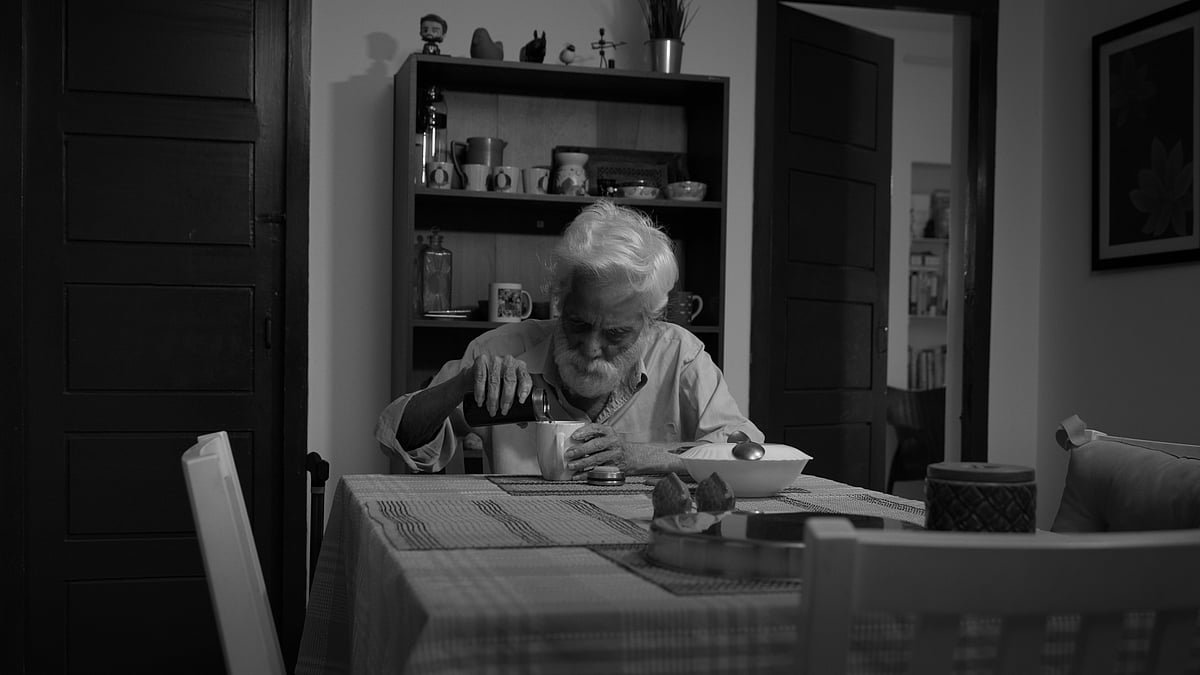
The film revolves around a lone traveler who wanders through the ghats of Varanasi and the ruins of the old fort; these places speak of a connection between the individual and the universe. ‘Dhushor’, in Bengali, means ‘grey’ – “something that is colourless”. Interestingly, most of the film is shot in black and white. Chaudhuri explained: “The moment you start seeing things in black and white, it gives a very different meaning to what you see. You don’t get distracted by the color – you go straight to the subject.” The stark monochrome palette, he adds, also adds depth to the character, with a vivid display of light and shadow.



