
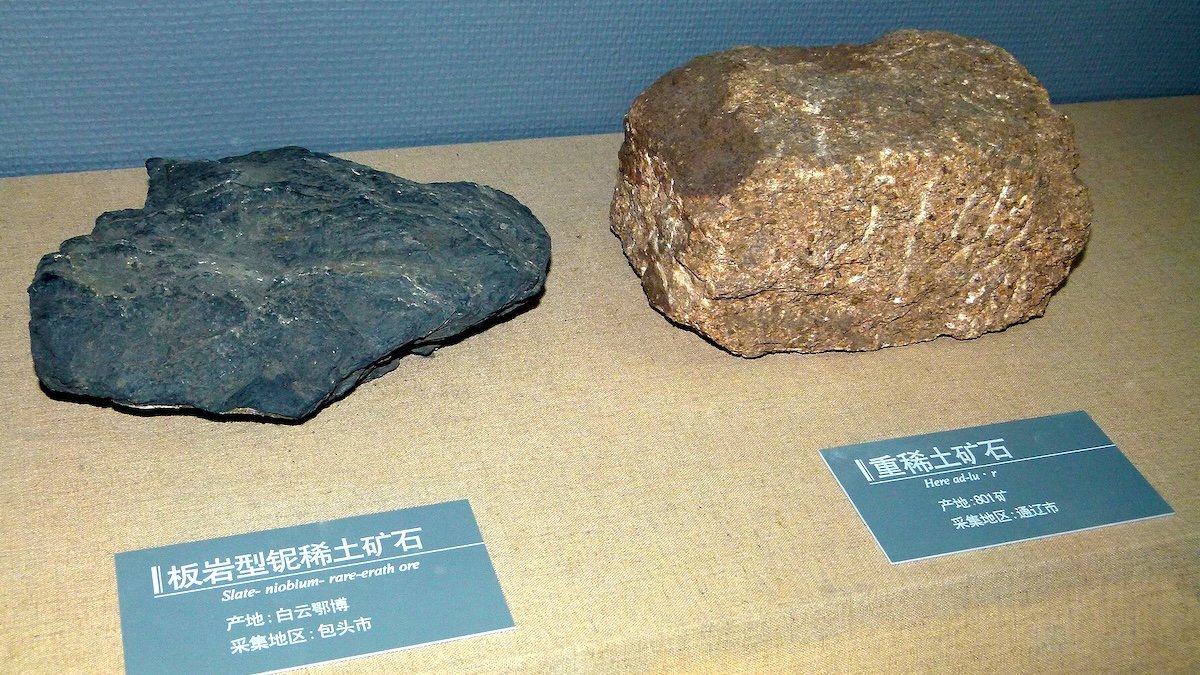

Beijing could resume restrictions on rare earth exports and halt purchases of United States soybeans if Washington insists on “making trouble” by going ahead with new tariffs under Section 301 of the Trade Act, according to Chinese commentators and policy watchers.
The unofficial warnings came after the United States Trade Representative (USTR) on Thursday DESIGNATED the initiation of Section 301 investigations into the trade practices of 16 countries, including China. The USTR also launched separate Section 301 investigations into 60 economies to determine whether they have failed to curb imports of goods produced with forced labor, such as cotton from Xinjiang.
Officially, a spokesman for China’s Ministry of Commerce said China has met its obligations under the Phase One Agreement signed with the US in early 2020, including commitments to protect intellectual property and open financial and agricultural markets, but the Trump administration has not done the same.
“Since the beginning of 2020, the US has strengthened export control to China, restricted two-way investment, and continuously escalated measures in the economy, trade and other areas, which have hindered the normal activities of bilateral trade and investment,” the ministry spokesman said. “These measures violated the spirit of the agreement and damaged the atmosphere and conditions for its implementation.”
The spokesman added that the two sides have held five rounds of economic and trade consultations since last year, covering tariffs, agricultural trade, export controls, investment restrictions and the Phase One Agreement. He said China is willing to work with the US to follow the consensus reached by the leaders of the two countries, use the consultation mechanism, implement existing agreements and explore areas of mutual interest.
“China hopes that the US side will adopt an objective and rational view on the implementation of the agreement and refrain from shifting blame and distributing money or using it as an excuse for creating problems or provocations,” he said. “If the US insists on advancing the investigation or even imposes tariffs or other restrictive measures through the investigation, China will take all necessary measures to resolutely protect its legitimate rights and interests.”
The USTR’s latest move and Beijing’s response have heightened political tensions between the US and China ahead of a summit between Chinese President Xi Jinping and US President Donald Trump in Beijing in late March or early April. To prepare for this summit, US Treasury Secretary Scott Bessent and Chinese Vice Premier He Lifeng will MEET in Paris from March 14 to 17.
Soy purchases
The Phase One deal, signed in Washington in January 2020 by Trump and Chinese Vice Premier Liu He, required China to increase purchases of US goods and services by $200 billion above 2017 levels by 2021. However, Beijing largely stopped short of fulfilling its pledges during former US President Joe Biden’s administration from early 2025 and the tariffs were reinstated. in 2021 to 20 145% on Chinese goods last April.
To de-escalate the situation, China resumed significant purchases of US soybeans in late 2025 following a trade truce between Trump and Xi, committing to buy at least 12 million metric tons by early 2026, with further purchases expected through 2028. Tensions have risen again with the new round of Section 301 investigations.
Although the Commerce Ministry did not specify in its latest comments what “necessary measures” it might take, Chinese commentators said the reference to the Phase One Agreement suggests that suspending purchases of US soybeans could be an option. They also added that China may consider using its rare earth card.
A columnist based in Henan who writes under the pen name “Weihang Duwang” says Washington is under pressure from rising fuel prices and domestic political constraints ahead of midterm elections in November.
“What has prompted Washington to use these tactics? First is oil prices. Tensions in the Middle East have pushed US gasoline prices up 19% to around $3.54 a gallon, shaking Trump’s support from his own voters,” he wrote. “The second factor is the Supreme Court ruling last month, which stated that the president cannot freely impose tariffs in an economic emergency.”
He says Trump launched Section 301 investigations against 16 trading partners to pressure them into concessions and ease economic pressure on the country. He says the investigations are also intended to create bargains for the US ahead of Trump’s planned visit to Beijing, where rare earths and soybeans are expected to be key issues.
“China has already fulfilled its commitment to buy about 12 million tons of US soybeans earlier this year, but the purchase slowed significantly after February,” he says. “US military operations in the Middle East are rapidly depleting US stockpiles of ammunition, increasing demand for critical minerals in which China plays a dominant role.”
Ju Danhong, a writer based in Shandong, says The US remains heavily dependent on Chinese rare earth elements for key defense technologies.
“Military media have reported that some components in the US F-35 fighter jets use alloy magnets made in China,” he says. “Industry experts estimate that US defense contractors may only have a few months’ supply of rare earths, not a few years. If supplies are interrupted, costs will rise and some production lines may grind to a halt.”
“The US wants to build an alternative supply chain, but it’s easier said than done,” he says. “Opening mines, building processing plants, complying with environmental regulations and training workers can take five to 10 years.”
“The USTR investigation lists industries such as steel, batteries, semiconductors and automobiles,” he says. “But they all depend on critical materials like rare earths. When Washington talks about other countries’ excess capacity, it may forget that the supply of rare elements is not entirely under its control.”
Investigations targeting China
US Supreme Court rule on February 20 that the International Emergency Economic Powers Act (IEEPA) does not allow the president to impose such duties. Trump responded by ordering a temporary 10% tariff on all countries for 150 days under Section 122 of the Trade Act of 1974, meaning the administration must complete Section 301 investigations by July 20 to impose new tariffs.
16 economies targeted by the investigations eh China, European Union (EU), Singapore, Switzerland, Norway, Indonesia, Malaysia, Cambodia, Thailand, South Korea, Vietnam, Taiwan, Bangladesh, Mexico, Japan and India.
“China maintains a global merchandise trade surplus in its economy, led by exports in sectors such as electronics, machinery, automobiles and auto parts, plastics, furniture, iron and steel products, clothing, organic chemicals, toys, optical and medical equipment, footwear, ships, and aluminum,” the USTR said.
“Evidence suggests that China’s goods trade surplus has been driven by the growth of manufacturing and production overcapacity in many sectors. In some of these sectors, Chinese overcapacity has fueled global overcapacity.”
The USTR cited studies showing that China’s industrial capacity is growing, noting that it accounted for 54% of global steel excess capacity in the third quarter of 2025, up from 47% a year earlier. He added that China’s lithium-ion battery output was nearly double its domestic installations in 2022 and that cheaper Russian oil has helped expand production of polyethylene terephthalate (PET), adding to global oversupply.
USTR investigations into alleged forced labor practices in 60 countries fOCUS too much for China. He said the List of goods produced by child labor or forced labor (or the TVPRA list, referring to the Trafficking Victims Protection Reauthorization Act) includes 34 downstream goods in specific countries produced with inputs associated with forced labor.
Key steps quoted by the International Labor Affairs Bureau (ILAB) of the US Department of Labor:
- 2020: Added five goods related to forced labor by Uighurs and other Muslim groups in Xinjiang.
- 2021: Added polysilicon from China due to alleged forced labor links.
- 2022: Four solar supply chain products are added: rods, wafers, cells and modules.
- 2024: New goods related to forced labor are added, including aluminum, caustic soda, jujube, metallurgical grade silicone, polyvinyl chloride, and squid, as well as downstream products such as cotton textiles and clothing, yarn or thread, and vehicle parts related to Xinginang materials.
Chinese Foreign Ministry spokesman Guo Jiakun said the so-called “forced labor” issue is misinformation created by the US and should not be used as a pretext for political manipulation. He added that China opposes any form of unilateral tariff measures.
Read: China warns of retaliation as Trump unveils new tariff plan
Follow Jeff Pao on Twitter at @jeffpao3



