
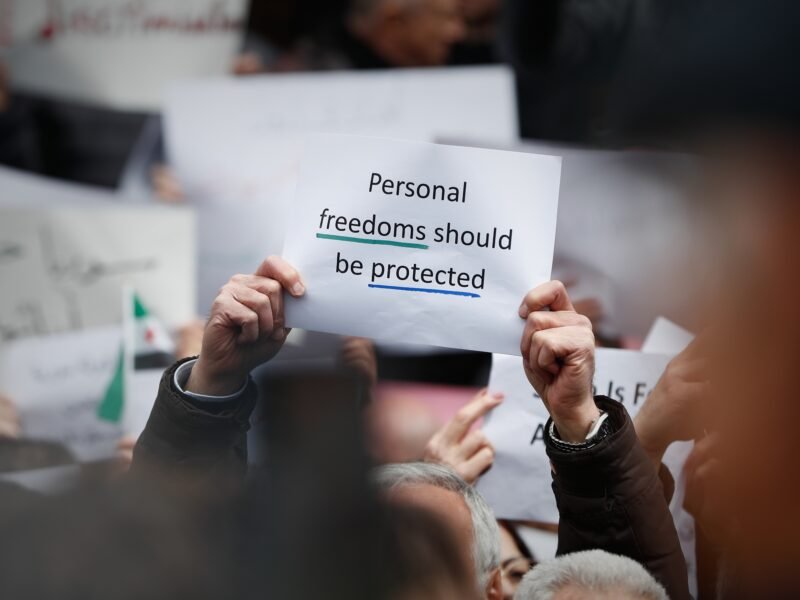

“This is not about whether we want to drink alcohol; this is about personal freedom,” said Isa Qazah, a 45-year-old sculptor from the area who joined the protest. “We came here to defend an idea.”
DAMASCUS, Syria (AP) — Crowds of Syrians gathered Sunday to protest efforts by authorities to restrict the sale and consumption of alcohol in Damascus, reflecting growing anxiety in the cosmopolitan capital that Syria’s new Islamist government could threaten long-held secular freedoms.
Hundreds of residents from a variety of religious sects poured into a grassy square in Bab Touma, a Christian neighborhood in Damascus, chanting “Syrians are united!” and waving signs asking the government to protect personal liberties and religious minorities.
“This is not about whether we want to drink alcohol; this is about personal freedom,” said Isa Qazah, a 45-year-old sculptor from the area who joined the protest along the medieval stone lanes near Damascus’ old city. “We came here to defend an idea.”
Heavily armed security forces surrounded the protesters. The protest passed without incident.
The dispute erupted last week when the governor of Damascus issued a decree banning “the provision of alcoholic beverages of all kinds in restaurants and nightclubs” across the capital. Within three months, he says, restaurants must have dropped their wine lists and bar and club owners must have exchanged their licenses for cafe permits.
The decision, which authorities said was taken “at the request of the local community”, came as the interim government of former Islamist rebel and now President Ahmed al-Sharaa faces growing pressure from hardliners to impose more conservative religious values. Al-Sharaa has not commented publicly on the alcohol debate.
More than a year after his move ousted former President Bashar Assad, Syria is still reeling from 14 years of civil war and five decades of dictatorship as it struggles to determine its future.
A member of the Alawite religious minority, Assad espoused a secular ideology to maintain the support of other minorities in the Sunni-majority nation. Under his family dynasty, Syrians had very little civil or political freedom. But they could drink alcohol, party in nightclubs and dress however they wanted.
After being named interim president, al-Sharaa vowed to unite the country and respect pluralism. He has so far tread lightly when it comes to imposing social restrictions. However, many of Syria’s religious and ethnic groups remain at risk.
Sectarian attacks by pro-government Sunni fighters have killed hundreds of Alawites and Druze over the past year.
Concerns about new violence
Protesters on Sunday said they feared the latest alcohol restrictions could fuel these tensions further, as the decree allows alcohol to be sold in three predominantly Christian neighborhoods.
However, establishments in Bab Touma, al-Qassaa and Bab Sharqi cannot serve alcoholic beverages on site, and shops in those three areas can only sell alcohol in sealed bottles. Vendors must also keep at least 75 meters (246 feet) away from mosques and schools, and 20 meters (65 feet) away from police stations and government offices.
Some said that by singling out Christians, authorities are holding them responsible for what the decree describes as “violations of public morality.” Although Islamic law prohibits the consumption of alcohol, Damascus is full of secular Muslims.
“How are our neighborhoods violating public etiquette? The division this creates is unjust and irresponsible,” said Fawaz Bahauddin Khawja, a Christian lawyer at the rally. “This is the real face of Damascus. The only flag we raise is the Syrian flag.”
As criticism erupted ahead of the protest, Damascus authorities issued a statement late Saturday apologizing to the city’s Christian population “for any misunderstanding or misinterpretation of the decision.” He also clarified that hotels will be exempted from liquor restrictions.
“This decision does not interfere with the personal freedoms of citizens,” the statement said. “Regulation of the sale of alcohol exists in all countries, with differences in how it is implemented and enforced.” By OMAR SANADIKI Associated Press
Subscribe to our free newsletters
Our weekly newsletter Closing arguments provides the latest on ongoing trials, major litigation and decisions in courts around the US and the world, while monthly Under the lights feeds legal dirt from Hollywood, sports, Big Tech and the arts.



