
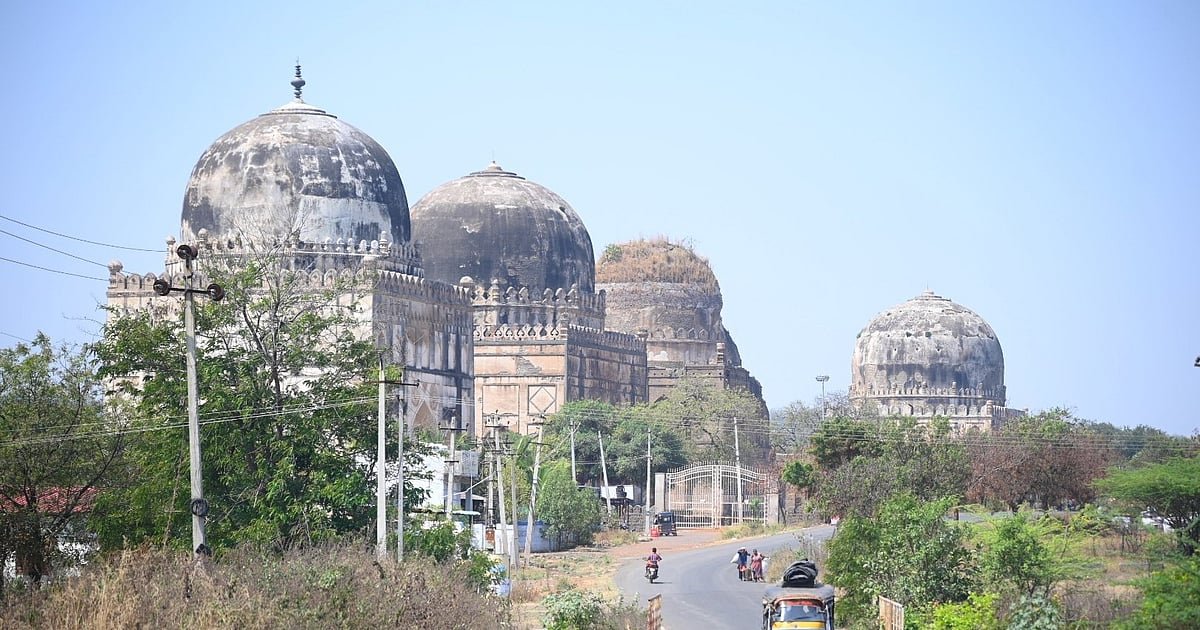

About 10 km from Bidari the city lies Ashtur, a village that houses the tombs of several rulers of the Bahmani Sultanate, which ruled the Deccan region during the 15th and 16th centuries.
As you travel from Bidari towards Ashtur, massive mausoleums begin to appear along the approach road to the village. Standing in a row near the Bidar fort, these structures resemble the world-famous Gol Gumbaz of Vijayapura.
With their thoughtful design and amazing Indo-Islamic architecture, some of these tombs contain tile decorations and inscriptions recording the details of the rulers, along with verses from the Quran and Persian poetry.
The magnificent necropolis has also served as a favorite location for photographs and as a location for film shoots.
Amidst the necropolis stands the mausoleum of Alauddin II Ahmad Shah, known for promoting the famous Bidariware craft. He was the son of Ahmad Shah al-Wali, the ruler who moved the capital from Kalaburagi to Bidar. It was also during the period of Alauddin II that the eminent scholar and administrator Mahmud Gawan arrived in Bidar. Under his influence, the region saw significant progress in education, literature and administration.
Among the Bahmani rulers, Humayun was considered particularly ruthless. He was the third ruler of Bidar and his mausoleum at Ashtur has been partially damaged by lightning.
Next to it stands the tomb of Humayun’s wife, Nargis Begum, known as Malika-i-Jahan or Queen of the World. She played an active role in administrative matters. Before his death, Humayun had formed a regency council of three members, including Nargis Begum. When their son Nizam Shah ascended the throne at the age of eight, she effectively managed the administration.
When Nizam Shah was 11 years old, his marriage was arranged. However, during the wedding celebrations, the young ruler passed away, turning the festivities into mourning. Later, Nargis Begum placed her second son, Muhammad Shah III, on the throne and continued to oversee the government. The tomb of Muhammad Shah III is also located in the same complex.
In total, the funerary complex houses the tombs of eight rulers, along with those of several queens and other members of the royal family. However, none match the grandeur of Ahmad Shah al-Wali’s tomb.
Beautiful inscriptions, reflecting an interface of two cultures, can be found at the Dargah of Ahmed Shah Wali. His memorial is regarded by Hindus as the temple of Allamprabhu and by Muslims as the Wali Dargah and is home to a rare form of communal devotion. It has been adorned with beautiful verses of Nimatullah, a Sufi poet, engraved in gold and other colors.
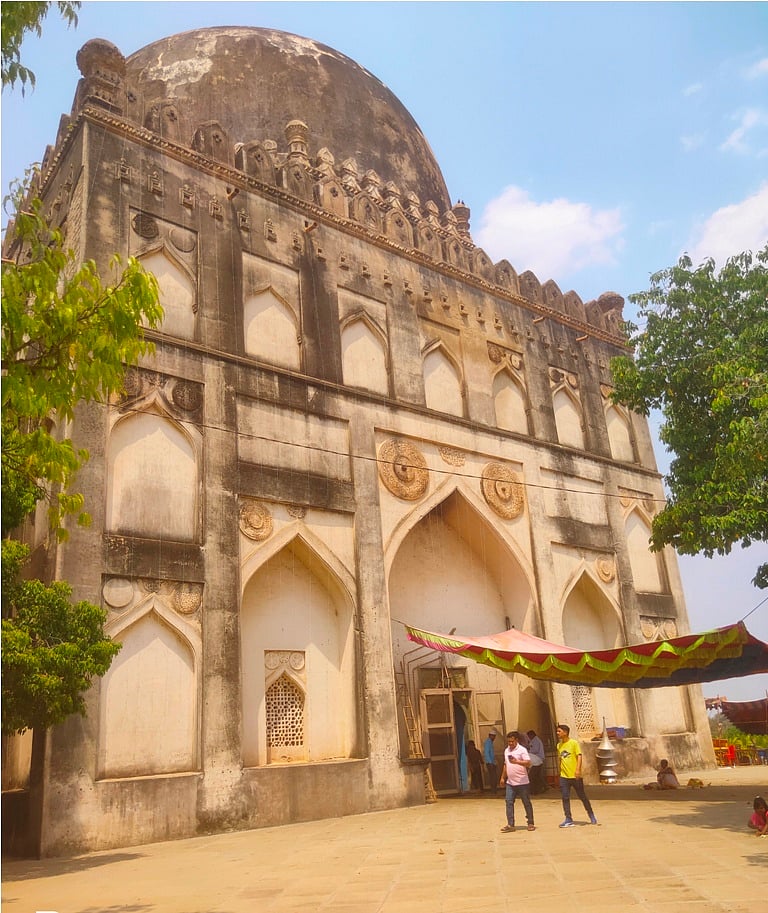
Mausoleum of Ahmad Shah al-Wali in Ashtur.
Appearance of neglect
Today, however, the site suffers from a lack of maintenance. Neither the Archaeological Survey of India nor the district administration has taken effective measures to develop the area or provide adequate facilities to visitors. Bushes have grown around the monuments and there are no guides to explain their historical significance.
Every year, the birth anniversary of Ahmad Shah aI-Wali is celebrated as Sandal Sharif (fair) in Ashtur. This year, the 609th Sandal of Sharif Urs began at the Dargah of Hazrat Sultan Ahmad Shah Wali in the village on March 5 and will continue till March 15 with various religious programs.
On the day of his birth anniversary, Sandal Sharif’s ceremony is held at the tomb. The grave is cleaned with rose water and decorated with flowers PAPERSfollowed by devotional recitations.



