
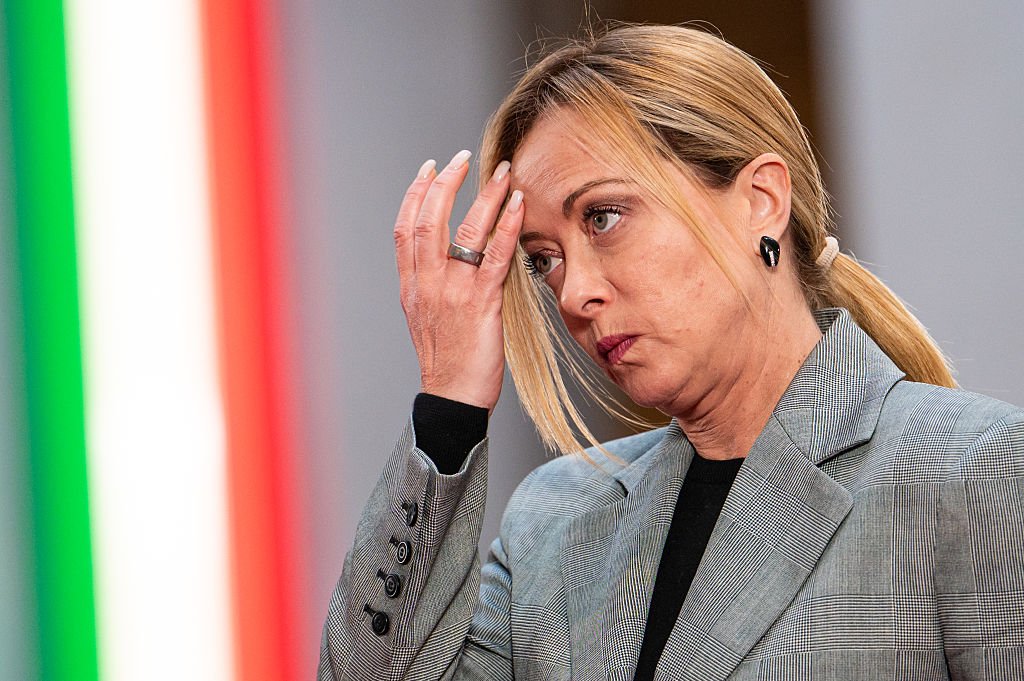

Italian Prime Minister Giorgia Meloni began a surprise visit to Saudi Arabia on Friday as part of a tour of the Persian Gulf to boost “national energy security”, a government source said, as war in the Middle East flares.
Meloni began her unannounced trip in the Red Sea port city of Jeddah, the source said, adding that she was the first leader of a European Union or NATO country to visit the region since the war began on February 28.
The source said the far-right prime minister would meet with officials from Saudi Arabia as well as Qatar and the United Arab Emirates, although it was not immediately clear whether she would also visit those two countries.
All three countries have been targeted by Iranian drone and missile attacks in retaliation for the US-Israeli bombing of Iran.
“The goal is to strengthen relations with these countries and to reiterate Italy’s support against Iranian attacks,” the source said.
“The mission also aims to strengthen national energy security,” the source said, adding that the Gulf was a “crucial source of oil and gas for Italy.”
Italy is heavily dependent on energy imports and has seen rising energy prices with increasing concern.
The government has reduced fuel excise duty until May 1 in an effort to curb the rise in petrol prices.
Meloni on March 25 visited Algeria, which already provides about 30% of Italy’s natural gas, in the hope of increasing gas imports.
She is also one of the European leaders closest to US President Donald Trump and has sought to bridge the European and American positions.
But in line with European allies, Meloni has repeatedly said Italy does not want to join the war effort despite Trump’s encouragement.
“I continue to believe that, from a geopolitical point of view, Europe has little to gain from a growing gap with the United States,” she was quoted as saying by Italian media on Friday.
“But our duty is above all to protect our national interests and when we disagree we must say so. And this time we don’t agree,” she said.
Trump has urged countries affected by Iran’s selective blockade of the Strait of Hormuz to intervene to free the vital waterway.
The shipping route accounted for about a quarter of global seaborne oil trade and 20 percent of liquefied natural gas supplies before the war.
(sma)



