
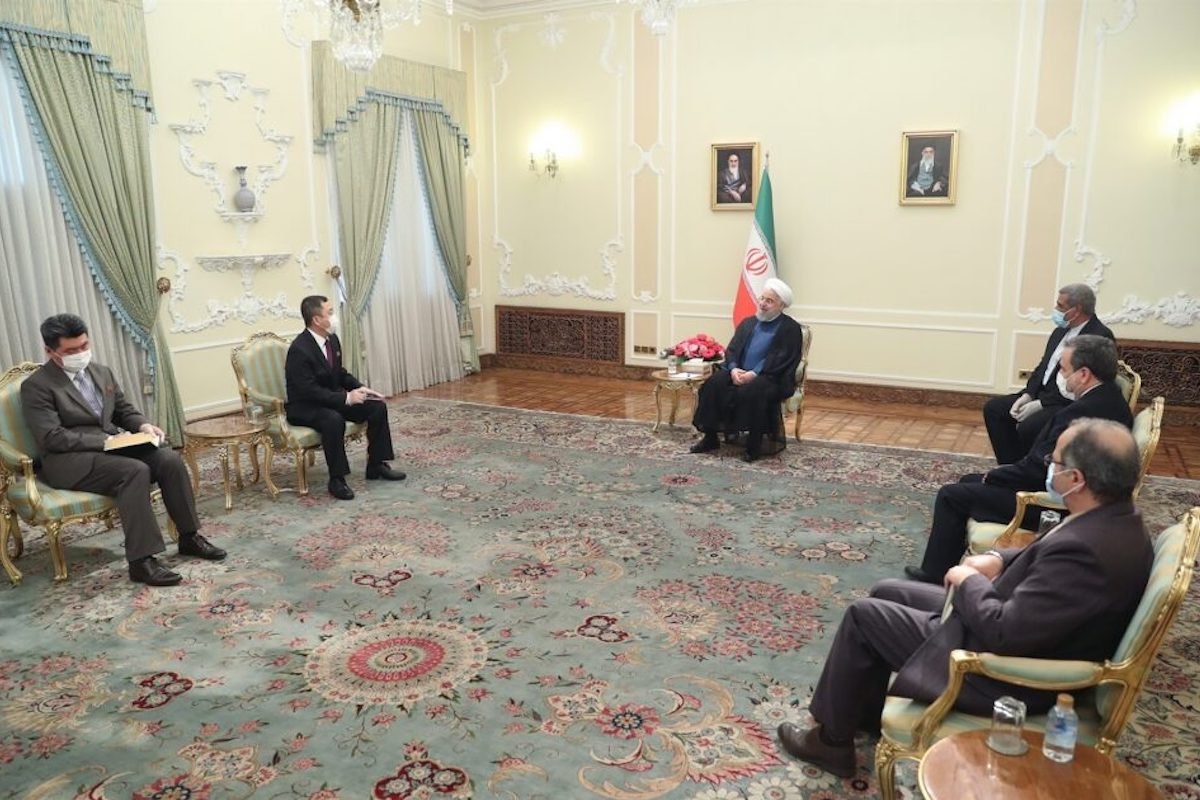

The list of North Korea’s close partners continues to dwindle. After the overthrow of Bashar al-Assad’s regime in Syria in December 2024, Iran became North Korea’s only ally in the Middle East. Now, after the US-Israeli attacks on Iran and the death of Ayatollah Ali Khamenei, it appears that even that once close relationship is at risk.
The Iran crisis will reinforce the belief that nuclear weapons are the ultimate guarantor of regime survival. The fate of non-nuclear “rogue” states under US military pressure serves as a cautionary tale for Kim Jong Un.
A justified North Korean nuclear posture could have real implications for the US-South Korea alliance. Kim is likely to double down on expanding and refining his nuclear and missile capabilities rather than holding diplomatic talks with the United States. Such action, in turn, could intensify pressure on the US government to demonstrate the credibility of enhanced deterrence in visible and tangible ways. It could also reignite the debate in Seoul over whether reliance on the US nuclear umbrella is sufficient in the long term.
At the very least, the Iran crisis will strengthen North Korea’s conviction that nuclear weapons are necessary, making diplomacy even more difficult and coordination in the US-South Korea alliance more essential.
Partners for decades
Anti-Americanism and anti-Westernism pushed North Korea and Iran together. For most of the past half century they have been united in their struggle against American hegemony. In May 1989, then-President Ali Khamenei visited North Korea and passed through Pyongyang in a motorcade with North Korean leader Kim Il Sung. Thousands of North Koreans took to the streets and cheered for the two leaders. According to his biographyAyatollah Ruhollah Khomeini chose Khamenei as his successor because of the perceived success of that trip.
During Khamenei’s more than three-decade reign as Iran’s supreme leader, North Korea and Iran cooperated on multiple fronts, particularly in the military. Both governments sold each other advanced weapons and military technology. For example, during the Iran-Iraq War in the 1980s, North Korea sold Scud missiles in Iran. The arms trade between the two governments developed into a more sophisticated collaboration on solid-fuel missile technology and the sale of the largest Hwasong-7 missile in Iran.
While geographic distance and cultural dissimilarity did not prevent the two countries from becoming full allies, the two regimes respected each other’s idiosyncrasies. In 2013, openly anti-religious North Korea even opened one Shia mosque in Pyongyang for Iranian diplomats. In 2017, amid heightened tensions between the United States and North Korea, Iranian state media applauded the latter for his “success in humiliating the Great Satan.”
Nuclear weapons assessment
While North Korea criticizes attacks on Iran like the “hegemonic and gangster-like actions” of the US military, the Kim regime must also feel justified in its pursuit of a nuclear arsenal. Despite international pressure and sanctions, the North Korean regime managed to do something the much wealthier Iranians could not: develop and support a nuclear weapons program.
But North Korea must also feel that its already small group of friends is now even smaller. While Iran was never as important to the North Korean economy as China or Russia, North Korea and Iran shared many of the same values and principles. Like the North Korean system, the Iranian regime opposed Western notions of democracy and human rights. Both leaders saw each other as comrades. On a symbolic level, the loss of another friend in the Middle East is a blow to the already isolated Kim regime.
With Iran facing a growing US-Israeli military campaign widely perceived to be aimed at regime change, North Korea is forced to consider whether entering the conflict would advance its strategic position. Skeptics once doubted that North Korea would meaningfully support Russia’s war in Ukraine, but it surprised observers by sending 12,000 troops to aid Russia’s war effort.
But it is highly unlikely that North Korea will actively help the Iranian regime. It is too far away to provide any meaningful military support. Furthermore, although North Korea and Iran have maintained military cooperation over the years, their relationship lacks deep economic or cultural foundations. They do not share a common communist heritage, nor do they have overlapping religious traditions that would compel solidarity at all costs.
Finally, North Korea already considers Russia to be its main military patron. North Korea would likely draw important operational lessons from the Kursk battlefield, and seeking additional combat experience in Iran would provide limited strategic advantages while dramatically increasing risk.
A familiar lesson
North Korea will learn a familiar lesson from the Iran crisis: Regimes without nuclear weapons are vulnerable, and those with them are much less so. For the Kim regime, the bomb was never just a prestige project – it was a survival strategy. Recent events in the Middle East will strengthen, not weaken, this conviction.
This reality sharpens, rather than diminishes, the stakes of the US-South Korea alliance. North Korea already has a growing nuclear and missile arsenal capable of threatening South Korea, Japan and US forces in Asia. The US-South Korea alliance is bound by treaty and credibility to contain that threat.
If Pyongyang believes its nuclear posture has been vindicated, it will continue to refine it. The question is not whether North Korea intervenes in Iran. It is whether Washington and Seoul are prepared to manage a legacy dictatorship that sees its nuclear weapons program as non-negotiable.
Benjamin R. Young is a non-resident fellow of the Korea Economic Institute of America (KEI) and assistant professor of intelligence studies at Fayetteville State University. Originally published from KEI, this article is reprinted with permission.



