
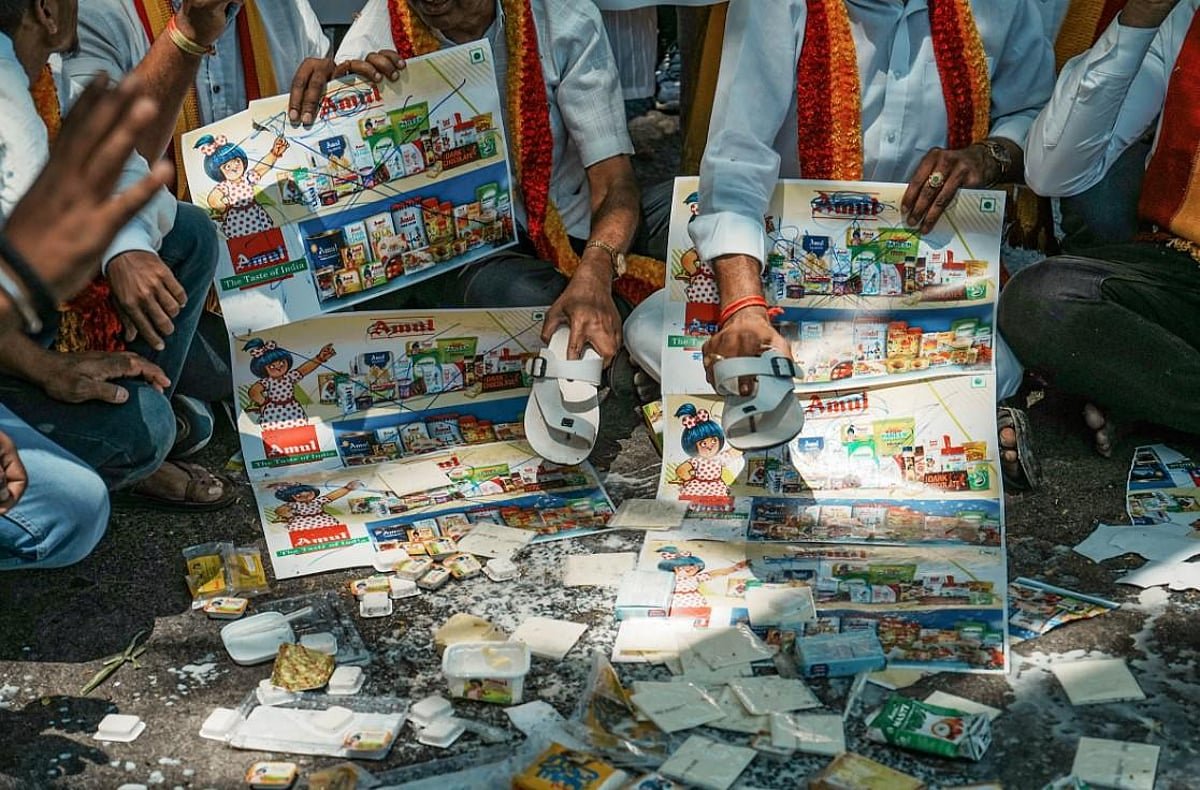

There is another feather in Amul’s cap. India’s largest milk brand has become the largest consumer packaged goods company in India, with its turnover exceeding 1 lakh crore in 2025-2026. For the brand’s promoter, the Gujarat Cooperative Milk Marketing Federation, success stemmed from diversification over time — from milk to products like butter, ghee, cheese and ice cream, and then to chocolate, sweets, probiotics, flavored drinks and frozen products. Above all, it represents the story of India’s largest cooperative succeeding in eliminating exploitation by middlemen and maximizing profits for primary producers. Along the way, Amul garnered many accolades, including being recognized in 2024 as the world’s strongest food brand by British consultancy Brand Finance, after scoring high on recognition, consideration and recommendation metrics.
This unique combination of farmer power and effective marketing began as a small dairy farmers’ union in Kaira district near Anand in 1946. The impetus came from a series of strikes by farmers who had driven out the region’s milk traders. Over the decades, it became a three-layered movement—village and district cooperatives and a state-level federation—engaging 36 lakh farmers. In 1970, the National Milk Development Board adopted Amul as a pan-Indian model for state cooperatives. Verghese Kurien’s leadership and founding of the marketing federation in 1973 made the brand synonymous with the ‘White Revolution’. However, the raw power of the farmers might not have succeeded had it not been for clean corporate governance. Popular ad campaigns and jingles like “Textually Delicious” continue to capture customers’ imaginations.



