


At the heart of the Ladakhi documentary Nomads Under the Stars is not just a landscape, but a worldview – one where identity is collective, memory is oral, and survival is deeply intertwined with nature. Directed by Ladakhi filmmaker Stanzin Dorjai Gya, the film traces the lives of the Changpas of Korzok Tegazung, a nomadic pastoral community living along the sacred Tso Moriri Lake in the Changthang Plateau of eastern Ladakh.
Stanzin frames Changpa’s philosophy simply but profoundly: “They always say ‘we’, they hardly say ‘I’, because it includes not only humans, but all sheep, goats, yaks and wild animals. This sense of shared existence shapes everything—from seasonal migration to rituals, from grief to celebration.
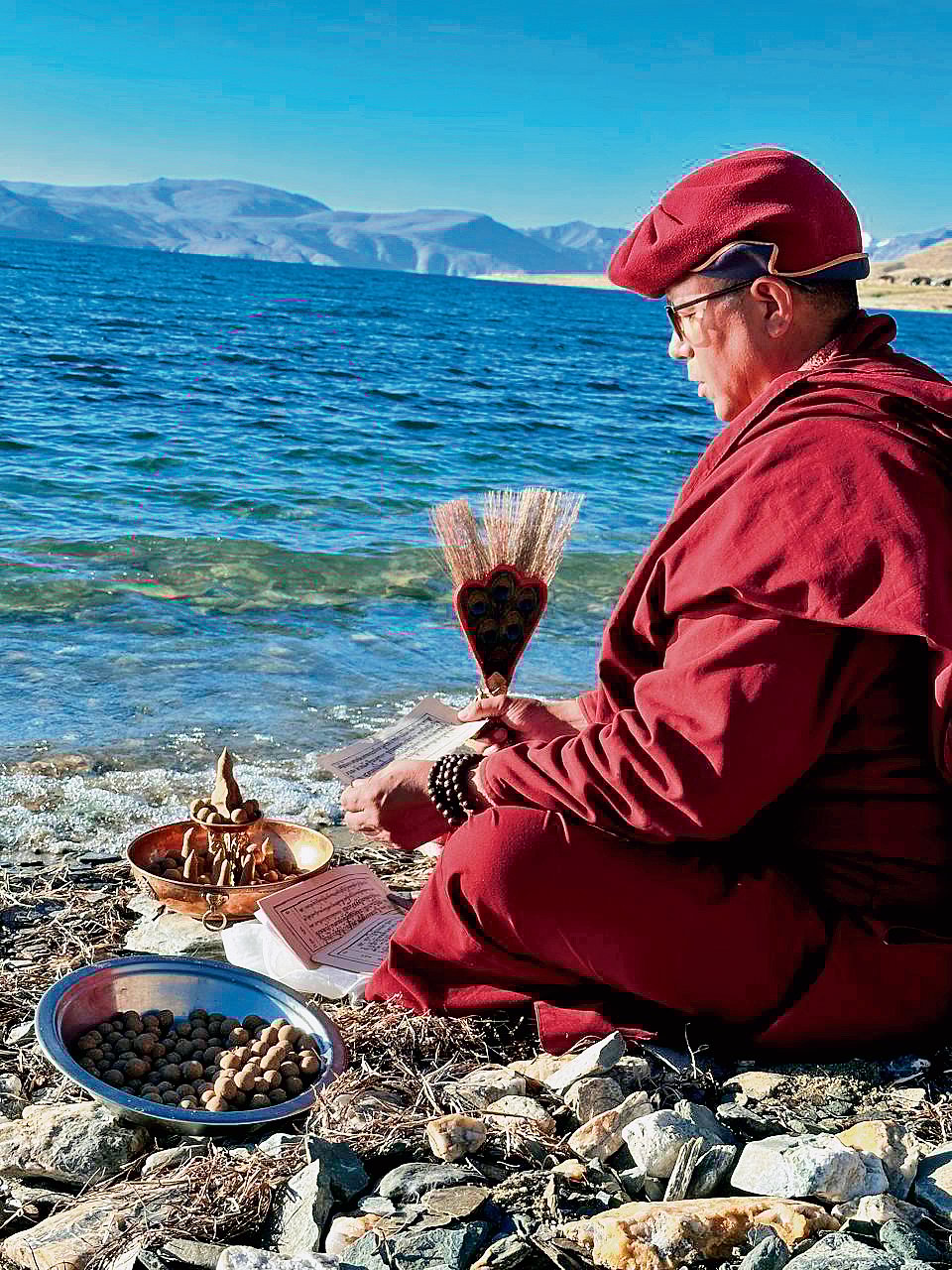
Shot over six years, the 69-minute film captures not only the breathtaking terrain, but the quiet anxieties of a changing climate. Elders speak of shifts that are both subtle and catastrophic. “The glaciers are melting year after year, so herders have to travel further for water,” says Stanzin. “But goats and sheep are too small to walk that far, and that’s why shepherds sometimes lose their animals.” Snowfall, once predictable, has become erratic: “It snows in March, April and sometimes May.” The most terrible memory remains the year 2013: “More than 20,000 sheep and goats died because of the heavy snow. I used the archive footage of that time in the film.”
The film functions as what Stanzin calls “a living encyclopedia, a living library.” It foregrounds knowledge that rarely enters formal education – how to read landscapes, predict the weather and survive in extreme conditions. “The knowledge of the elderly nomads is practical and scientific,” he says. “If we don’t record their stories now, we will lose all their knowledge.” However, even as the film preserves the memory, reality is changing. Younger Changpas are moving to the cities for education and employment, leaving the elders to maintain both the flocks and the inheritance.
The documentary resists romanticizing nomadic life as something remote or exotic. “It should not be seen as exotic or exclusionary,” insists Stanzin. “In modern texts, there is not a single word about their culture or way of life.”
For Stanzi, the story is also deeply personal. Reflecting on his childhood in the village of Gya, he says: “I used to feel that my life was very difficult, but now I feel that my sheep, yak and goats are my classmates. The valleys are my school; the wolf, snow leopard and eagles are my friends.” The line quietly reframes hardship as education and isolation as a form of belonging.
Nomads Under the Stars finally asks what happens when a way of life disappears not because it failed, but because the world around it changed too quickly. Listening to Changpas, the film suggests that what is at stake is not just a community, but entire ways of knowing – and ways of being – that modern life has yet to replace.



