
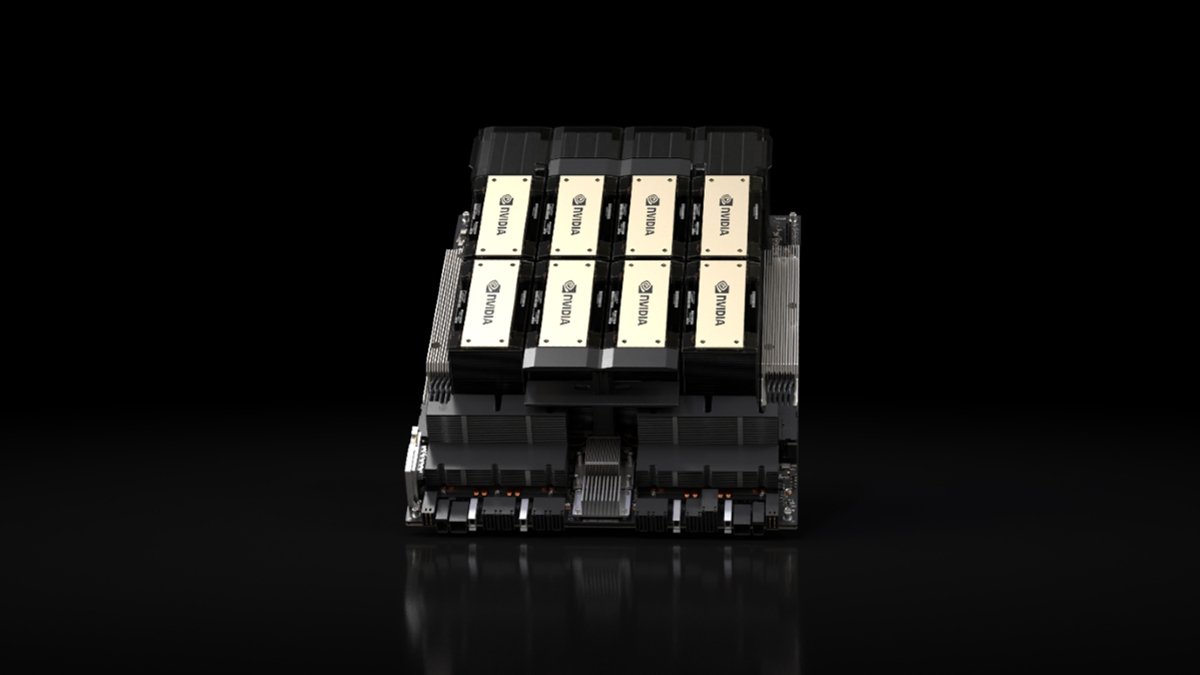

Nvidia has reportedly halted production of its H200 artificial intelligence (AI) chips destined for China amid rising political tensions between the United States and China and Beijing’s policy of supporting domestic chips.
The company has reallocated manufacturing capacity at Taiwan Semiconductor Manufacturing Company (TSMC) away from making H200 chips to its next-generation hardware Vera Rubin, Financial Times reportedciting two people familiar with the situation.
The report said Nvidia decided it could not remain in regulatory limbo between the US and China and needed to focus on products with clearer market prospects, especially as demand for its cutting-edge chips remains strong.
US President Donald Trump said on December 8 last year, Washington would allow exports of H200 chips to China for civilian use. Media reports said Chinese internet giants Alibaba, Tencent and ByteDance were looking to buy 400,000 units.
However, after Trump formally approved limited exports of H200 to China on January 13, Chinese customs authorities informed Nvidia that the chips will not be allowed to enter the country. At the end of January, Beijing well tuned its line saying that Chinese companies can buy the H200 but should consider local chips first. Until now, there have been no H200 chipssold yet for Chinese customers, according to US officials.
Some Chinese commentators said Beijing’s decision to curb imports of H200 was due to the United States’ interception of 1.8 million barrels of Venezuelan oil destined for China on December 20 last year.
“A tanker that had just left Venezuela was intercepted offshore, with armed personnel on board and diverted,” Xia Yuanqi, a Shanghai-based columnist. writes in an article. “The vessel was flying a Panamanian flag, the operator was based in Hong Kong and the owner of the cargo indicated a Chinese petrochemical company. The interception was less about oil and more about demonstrating the power of US law enforcement.”
“Captured heavy crude oil can be worth more than a billion dollars at market prices, but Nvidia’s H200 chips cost 10 times that much,” he says. “Nvidia wanted Chinese firms to buy its H200 chips. It obviously felt the pressure.”
“By seizing Venezuela’s oil, the US wants to show its muscles to the whole world,” a Guizhou-based writer. says. “But China no longer accepts this. Over the past two years, China’s chip technology has advanced rapidly. In addition, we also hold the rare earth card.”
“The US wants to use H200 chips to squeeze bottom line profits from China, but the Chinese market has changed. The global supply of AI computing power is also diverse,” he says.
Climb 950 PT
Chinese media and commentators had previously welcomed the prospect of Nvidia’s H200 chips entering the Chinese market. They said the H200 will be used to train AI models such as DeepSeek, while native chips will handle AI inference, a stage where trained models answer user questions or perform tasks in real time.
Jin Canrong, a professor and vice dean of the School of International Affairs at Renmin University of China, said on December 19 that Trump had given China a good opportunity to improve its AI sector.
After the seizure the next day of the Venezuelan tanker, Jin AMENDED his views. He said on Dec. 25 that China might not need the H200 chips after all, as domestic chipmakers were preparing replacements that could soon enter the market.
On the same day, Fudan Development Institute published a research report stating that Trump’s approval of H200 exports was primarily a strategy to help Nvidia maintain its dominance in the AI chip market, rather than a sign that Washington was easing its technology blockade against China.
Some Chinese commentators said the ban on Nvidia’s devices could provide more market space for Huawei Technologies’ Ascend AI chips.
“China’s ban on Nvidia’s H200 chips appears to be a one-off issue, but reflects broader technology competition.” says a columnist based in Guangdong who writes under the pen name “HY Skywalk”. “Washington’s approach is to provide China with advanced technology and maintain chipmaker market share. Beijing’s response is to endure short-term pain by accelerating the development of core technologies so that the country controls its technological future.”
He points out that Huawei’s Ascend 910B, Cambricon’s Siyuan 590 and Biren Technology’s BR100 are now being used for AI training and termination. It says Huawei’s Ascend roadmap includes the Ascend 950PR slated for 2026, followed by the Ascend 960 in 2027 and the Ascend 970 in 2028.
High bandwidth memory
Nvidia’s Hopper AI chips, including the H100 and H200, are more powerful than most Chinese alternatives, largely because they rely on high-bandwidth memory (HBM), a type of dynamic random-access memory (DRAM) made by South Korea’s SK Hynix. In a personal computer, insufficient DRAM can cause the system to slow down or freeze.
The Hopper chips use SK Hynix’s HBM3 and improved HBM3e, while the newer Blackwell processors use HBM3e. Vera Rubin’s next-generation architecture is expected to adopt HBM4. The higher the bandwidth of these memory chips, the faster data can move between AI processors during training.
SK Hynix began mass production of HBM3 in June 2022 for Nvidia’s H100 GPU. It wasn’t until December 2024 that the Biden administration blocked South Korea from exporting HBM chips and related manufacturing equipment to China.
Huawei said Last September it developed its own HBM chips, called HiBL 1.0 and HiZQ 2.0. He said HiBL 1.0 is expected to be used in the Ascend 950PR chip, scheduled for release in the first quarter of 2026.
It remains unclear how Huawei and its supplier, ChangXin Memory Technologies (CXMT), can advance HBM technology so quickly.
South Korean police have repeatedly arrested former chipmaker employees for stealing semiconductor secrets and passing them on to China.
In April 2024, a Chinese national who had worked at SK Hynix for about a decade was arrested at a South Korean airport after allegedly printing 3,000 pages of confidential company documents for Huawei.
Last May, there was a former employee of SK Hynix, surnamed Kim accused copying more than 11,000 documents at the company’s China office and later trying to apply for a job at Huawei. Last December, South Korean prosecutors unsuspecting 10 people suspected of leaking Samsung’s HBM technology to CXMT.
On January 19 this year, the South Korean police said they arrested 378 suspects linked to HBM-related technology leaks and arrested six of them in 2025. They said more than half of last year’s overseas technology leak cases were linked to China.
Read: Beijing to approve Nvidia H200 imports, noting excess support
Follow Jeff Pao on Twitter at @jeffpao3



