
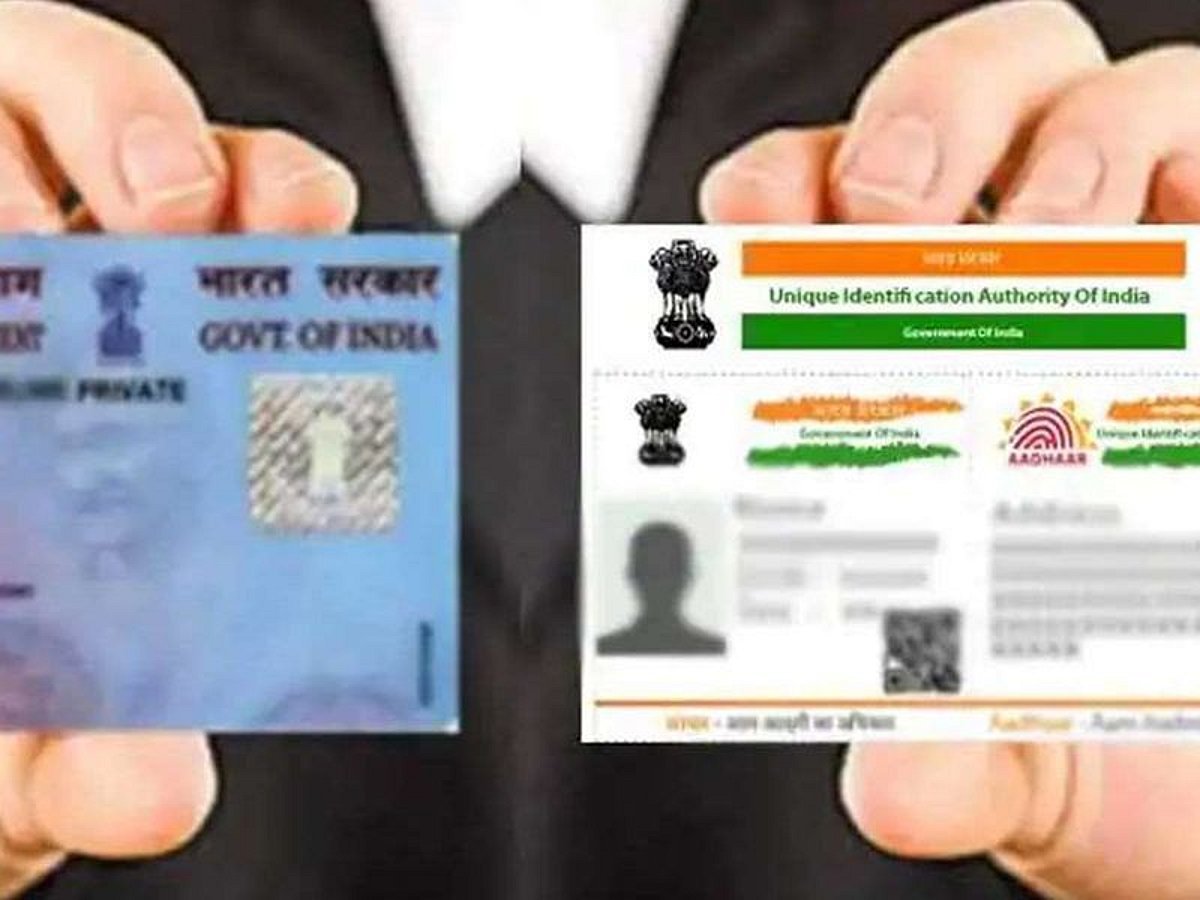

The changes are part of updates to India’s income tax rules aimed at tightening identity verification and reducing inconsistencies.
Until March 31, applicants can still use the simplified Aadhaar-only route. After that, Aadhaar alone will no longer be sufficient for PAN applications or updates, requiring additional supporting documents.
PAN-Aadhaar rules tighten
The move comes after years of efforts by the Income Tax Department to link PAN with Aadhaar to curb duplication and improve tax compliance. Linking the two has now become mandatory for most taxpayers, with unlinked PANs becoming non-functional for financial use in recent years.
The Aadhaar-only application route was introduced to simplify issuance and widen access. However, authorities have flagged risks around data accuracy and identity mismatches when applications rely on a single document, prompting a shift towards stricter multi-document verification.
Aadhaar-only path ends
The most important change is the removal of the Aadhaar-only application process. This route, introduced to simplify issuance of PAN, allowed applicants to complete the process using only their Aadhaar number.
From April 1, 2026, applicants must submit additional proof of identity and date of birth along with Aadhaar. These can include a passport, voter ID, birth certificate, driver’s license or other government-issued proof.
For UAE-based NRIs, this change is particularly important. Many rely on passport-based applications or Aadhaar-linked processes when managing tax or financial compliance in India.
New forms, stricter verification
The application process itself is also being redesigned. The new PAN application forms will replace the existing ones, which will no longer be accepted after the rule change.
The updated system aims to strengthen identity checks and ensure consistency between documents. Authorities are aiming to reduce duplication and errors that arise when individuals apply using limited or inconsistent identification.
Applicants will also need to ensure that personal details, especially names, are consistent across documents, as inconsistencies can delay approvals.
What it means for NRIs in UAE
For NRIs, the impact is practical rather than procedural. Those who do not already have a PAN card or need to update their details will need to prepare additional documentation in advance.
A passport is likely to become the primary supporting document for most NRIs, along with other evidence where required. Removing the Aadhaar-only route means applications may take longer and involve more verification steps.
NRIs who were planning to apply using Aadhaar alone before returning to India or completing tax filings may need to reconsider the timelines. The current window before March 31 effectively serves as the last opportunity to use the simplified process.
Why the rules are changing
The move comes after a period where Aadhaar-based PAN issuance became the dominant route. While it improved speed and access, it also raised concerns about data accuracy and duplication.
By requiring multiple documents, the authorities aim to improve the reliability of PAN as a financial identifier. PAN is used to track high-value transactions, tax filings and financial activity, making accuracy critical for compliance and enforcement.
Relationship for Indians based in UAE
The upcoming rule change does not change who needs a PAN card, but changes how easily one can be obtained or updated. The process is moving from ease to stricter verification.
For UAE-based NRIs, the key question is timing. If you plan to apply for a PAN or update your details, doing so before March 31 can avoid additional documentation requirements. After that, expect a heavier process for documents with closer scrutiny.

Justin is a seasoned personal finance author and business journalist with over a decade of experience. He makes it his mission to break down complex financial topics and make them clear, relatable, and relevant—helping everyday readers confidently navigate today’s economy. Before returning to his Middle Eastern roots, where he was born and raised, Justin worked as a business correspondent at Reuters, reporting on stocks and economic trends in both the Middle East and Asia-Pacific regions.



