
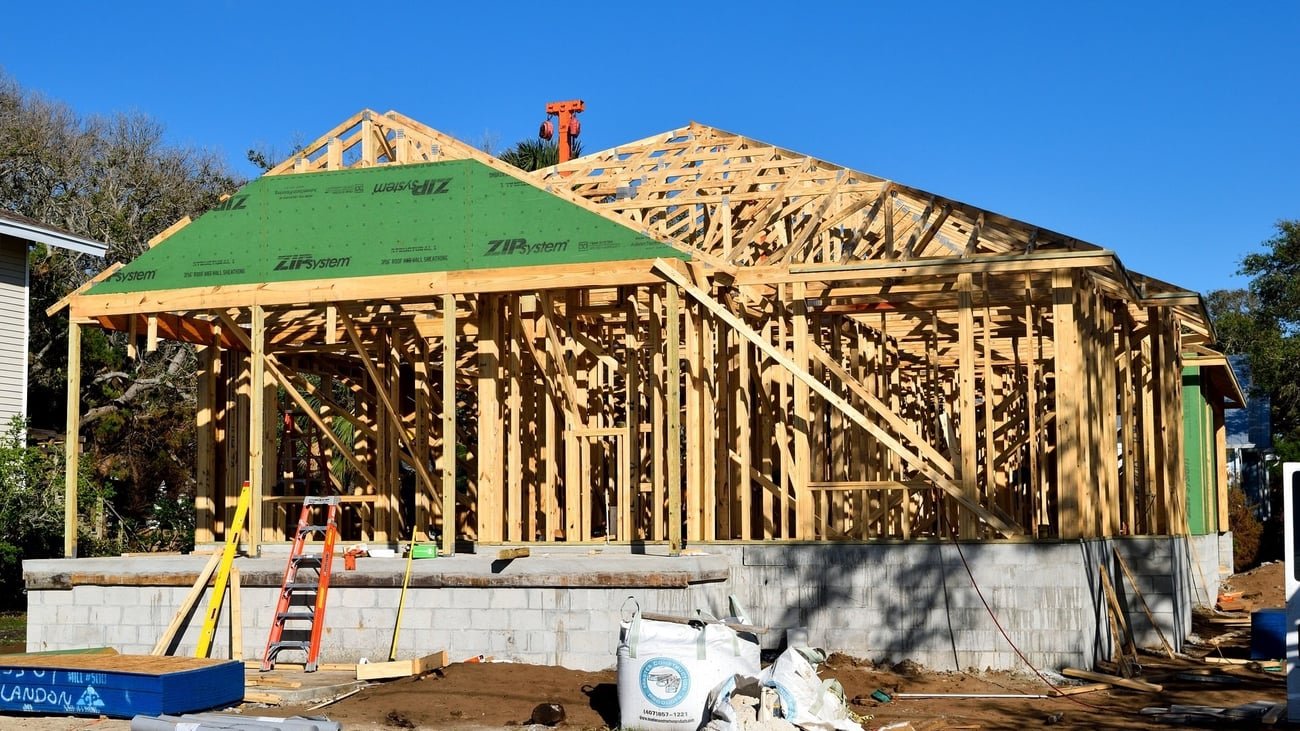

A group of single-family homeowners failed to convince the Montana Supreme Court that housing reform laws are unconstitutional.
(CN) – Montana Supreme Tuesday unanimously kept in force a list of the 2023 housing reform laws.
The seven-judge panel threw out a lower court’s ruling that had declared a provision intended to curb “not in my backyard” opposition to the housing development process as unconstitutional.
The high court further vacated the lower court’s declaratory judgment that one of the statutes could not supersede the more restrictive accessory dwelling unit (ADU) and duplex rules.
However, the lower court had found that housing reform statutes generally do not violate equal protection, and the high court agreed.
Montana Governor Greg Gianforte praised the Supreme Court’s decision, calling it a historic victory for families and the state of Montana as it works to increase the supply of affordable housing.
“Home ownership is a key part of the American dream,” Gianforte said in a statement. “By upholding the constitutionality of our reforms, it will help achieve the American Dream for Montanans across our state.”
The contested laws were part of Gianforte’s bipartisan 2023 housing package, dubbed the “Montana Miracle.”
Senate Bill 323 requires cities of certain sizes to allow duplexes in single-family zoning, and Senate Bill 528 requires all cities to allow ADUs. Senate Bill 382 requires larger cities to change their zoning regulations to allow duplexes, as well as broader changes to state land-use planning rules.
Montanans Against Irresponsible Densification sued the state in late 2023, arguing that some measures were unconstitutional. The group is comprised of property owners living in single-family neighborhoods in cities across the state.
The group argued that the housing reform bills unfairly burdened single-family neighborhoods and undermined its members’ ability to participate in the planning and land-use approval process.
A judge in Gallatin County sided with the homeowners’ group, blocking two of the bills from taking effect in December 2023. The Montana Supreme Court in 2024 reversed the decision and remanded it for further proceedings.
The lower court issued a split decision in 2025, declaring that provisions of Senate Bill 382 violate the state Constitution’s right to participation and stating that laws cannot supersede homeowner association agreements.
The Montana Supreme Court on Tuesday overturned those holdings.
The homeowners’ group argued that Senate Bill 382’s public participation process was constitutionally deficient because it did not allow for public input at every stage of land use development, but the high court noted the broad participation required by the law.
“The Act (Montana Land Use Planning Act) provides for ample public participation during the adoption, amendment and updating of land use plans, zoning regulations and subdivision regulations,” Montana Supreme Court Justice Beth Baker wrote in a 34-page opinion. “The plain language is clear that continued and broad public participation is encouraged at this stage.”
The court found that while Senate Bill 382 limits public participation in country-specific developments, the public has already had an opportunity to participate during earlier stages of the process. Plus, it allows for public participation when projects deviate from the original plan.
“Because the Legislature has ‘statutoryly provided’ a detailed provision for public notice and participation, we conclude that (Montanans v. Irresponsible Densification) has not met its heavy burden of showing that Senate Bill 382 is unconstitutional in all of its applications,” Baker wrote.
The high court also upheld the lower court’s ruling that the homeowners’ group failed to prove that the housing reform laws violated the right to equal protection.
“The (Montana Land Use Planning Act) and other housing reform statutes do not violate the right to equal protection merely because the law treats people who are not subject to private covenants differently, “since discrimination exists only when people in similar circumstances are treated unequally,” Baker wrote.
The homeowners group did not respond to a request for comment before press time.
Subscribe to our free newsletters
Our weekly newsletter Closing arguments provides the latest on ongoing trials, major litigation and decisions in courts around the US and the world, while monthly Under the lights feeds legal dirt from Hollywood, sports, Big Tech and the arts.



