

Speaking in Beijing on March 26, Chinese Foreign Minister Wang Yi warned International Atomic Energy Agency Director General Rafael Mariano Grossi said of “immeasurably serious consequences” if energy and nuclear facilities are targeted amid the widening Middle East conflict.
The warning echoes Wang’s March 8 MeSSAge at the 14th National People’s Congress: China and India should see each other “as partners rather than rivals and as opportunities rather than threats” — a message that resonates as energy security becomes a common concern for the two largest emerging economies.
Energy security has emerged as a defining priority for both countries. India’s Ministry of External Affairs spokesman Randhir Jaiswal recently emphasized that maintaining reliable supplies for 1.4 billion citizens remains New Delhi’s top concern, noting that “diversifying energy sources in line with market conditions and international development dynamics is at the core of our strategy.”
Together, these positions reveal a convergence of interests often overlooked in mainstream strategic discourse, which tends to focus narrowly on rivalry. As tensions spread across the Middle East and risks mount around the Strait of Hormuz, the two countries share a significant stake in global energy stability.
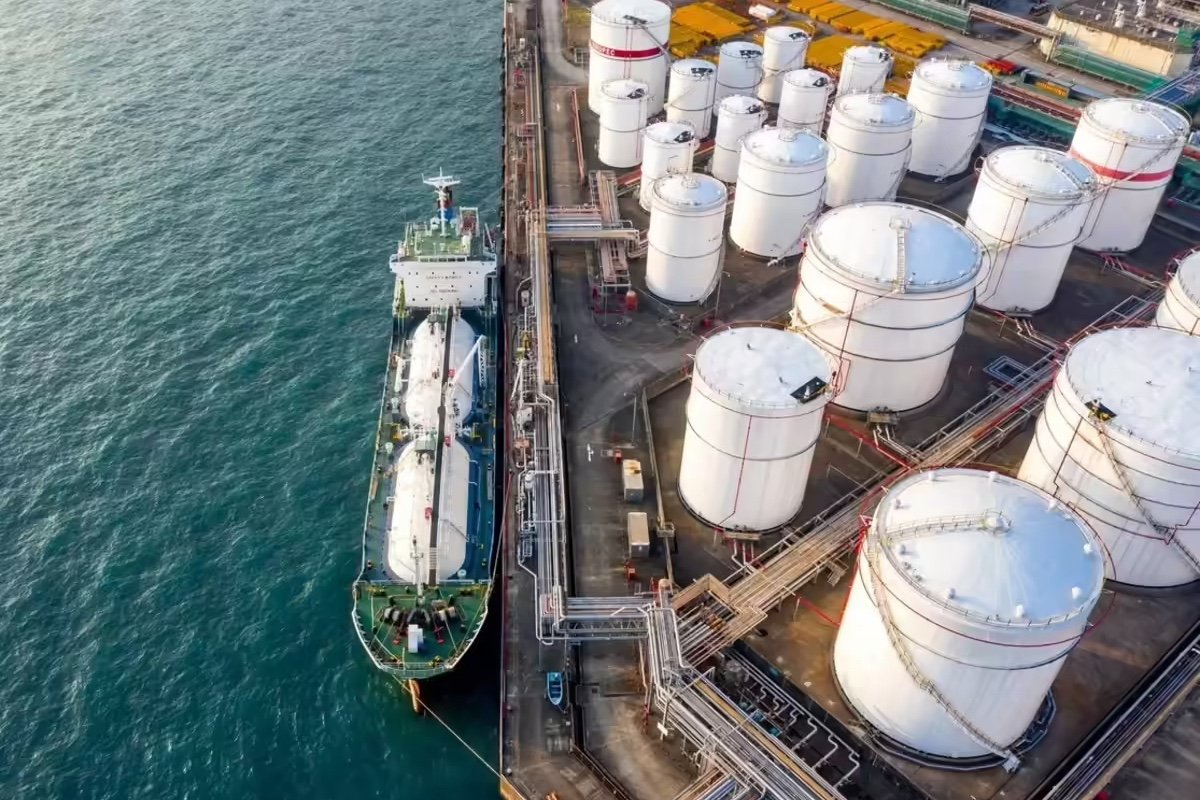
The growing conflict in West Asia is already shaking the global energy system. Tanker traffic through the Strait of Hormuz — the corridor for about 20 million barrels of oil a day and nearly a fifth of global liquefied natural gas trade — has slowed amid security warnings and rising insurance costs.
Some LNG carriers and oil tankers have rerouted, suspended travel or waited outside the Gulf following attacks on Iran and retaliatory attacks on energy infrastructure. For major importers such as China, disruptions in discounted crude oil flows underscore the fragility of supply agreements and the limits of strategic protection.
Oil markets reacted sharply: Brent crude briefly rose above $110 a barrel, while West Texas Intermediate reached $100. European natural gas prices rose nearly 60% after Qatar announced a ban on LNG shipments.
For Asia, the implications are profound. China and India together account for more than a third of global energy demand growth and remain heavily dependent on imported hydrocarbons, particularly from the Middle East.
China is the world’s largest importer of crude oil; India ranks third in oil consumption. Any disruption in Gulf shipping lanes reverberates across Asian economies, affecting energy prices, inflation, industrial production and broader macroeconomic stability.
The vulnerability is particularly acute when considering dependence on the Strait of Hormuz. About 45% of China’s oil imports – roughly 5 million to 6 million barrels per day – and about 50% of India’s imports – about 2.5 million to 2.7 million barrels per day – pass through the strait.
While Japan and South Korea are proportionally more dependent, China’s larger import volumes mean it will face the biggest disruption, with India also highly exposed. However, shared vulnerability also presents opportunity.
Rather than framing the relationship solely as rivalry, Beijing and New Delhi have growing incentives to cooperate as major energy buyers in a volatile global market. Pragmatic coordination need not dilute strategic competition; he can focus on areas where interests converge.
One opportunity lies in strategic market coordination. As two of the world’s largest energy consumers, China and India have significant purchasing power. Greater transparency in procurement strategies, coordinated responses to supply disruptions and joint participation in long-term supply agreements can stabilize prices and strengthen bargaining leverage.
Even limited coordination can reduce volatility and improve outcomes. Cooperation on strategic oil reserves and emergency supply mechanisms can further cushion shocks during geopolitical stress.
Maritime stability is another area of cooperation. Both countries rely on secure sea lanes from the Persian Gulf across the Indian Ocean to East Asia. Increased dialogue on maritime security, maritime transport security and crisis management can protect these routes. The increased commitment would signal a shared commitment to protect critical trade arteries.
Beyond crisis management, cooperation can extend to the energy transition. China and India are global leaders in renewable energy, electric mobility and clean technology manufacturing.
Joint research, technology partnerships and expanded regional supply chains for solar, wind and battery technologies can accelerate Asia’s shift to a more diverse and resilient energy mix.
This does not suggest that longstanding political differences will disappear overnight. Border tensions and strategic mistrust have shaped bilateral relations for decades. However, history shows that global disruptions can create openings for pragmatic recalibration, and the current turmoil in West Asia may represent such an inflection point.
For both Beijing and New Delhi, the central challenge is clear: energy security — and the economic well-being of nearly 3 billion people — increasingly depends on their ability to cooperate where interests align.
As the global energy map evolves under conflict, market volatility, and technological transition, China and India face a choice: remain locked in patterns of strategic suspicion, or recognize that cooperation between Asia’s two largest energy consumers may be not only desirable, but necessary.
Dr. Hriday Sarma is a lawyer at the Supreme Court of India and a senior fellow at the South Asia Democratic Forum in Brussels.



